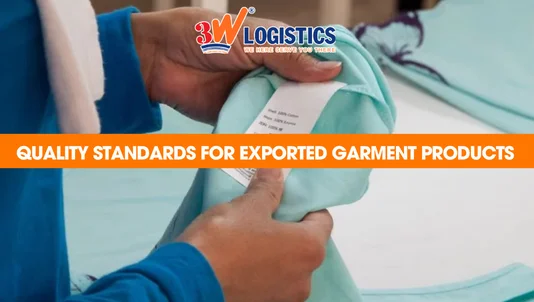
Meeting the correct quality standards for exported garment products is a prerequisite for Vietnamese textile and garment businesses to retain orders and expand into demanding markets, since each importer and each country sets its own requirements for chemical safety, mechanical durability, labeling, and social responsibility in production.
Vietnam is currently one of the world’s largest garment exporters, but most production is done on a contract manufacturing basis (CMT, FOB) for foreign brands, meaning businesses must comply simultaneously with the national technical regulation and the specific standards of the customer and target market.
In this article, 3W Logistics compiles the complete system of quality standards for exported garment products currently in effect – from the national technical regulation, mandatory safety and mechanical criteria, market-specific requirements, to required international certifications and the inspection process – helping businesses proactively prepare documentation and avoid the risk of returned shipments or denied clearance in the importing country.
1. General Standards for Vietnamese Exported Garment Products
Overview of the National Technical Regulation
The foundational regulation mandatorily applied to all textile and garment products circulated and exported in Vietnam is QCVN 01:2017/BCT (National Technical Regulation on the Limit of Formaldehyde and Aromatic Amines Derived from Azo Dyes in Textile Products), issued by the Ministry of Industry and Trade under Circular 21/2017/TT-BCT, effective from May 1, 2018, and subsequently amended and supplemented.
Besides this, businesses also need to cross-check technical standards specific to each product group, such as TCVN 4896:2009 (Textile Materials – Woven Fabric – Labeling), which specifies the mandatory content on a fabric label, together with the ISO/AATCC testing method standard system applied in parallel by domestic testing laboratories.
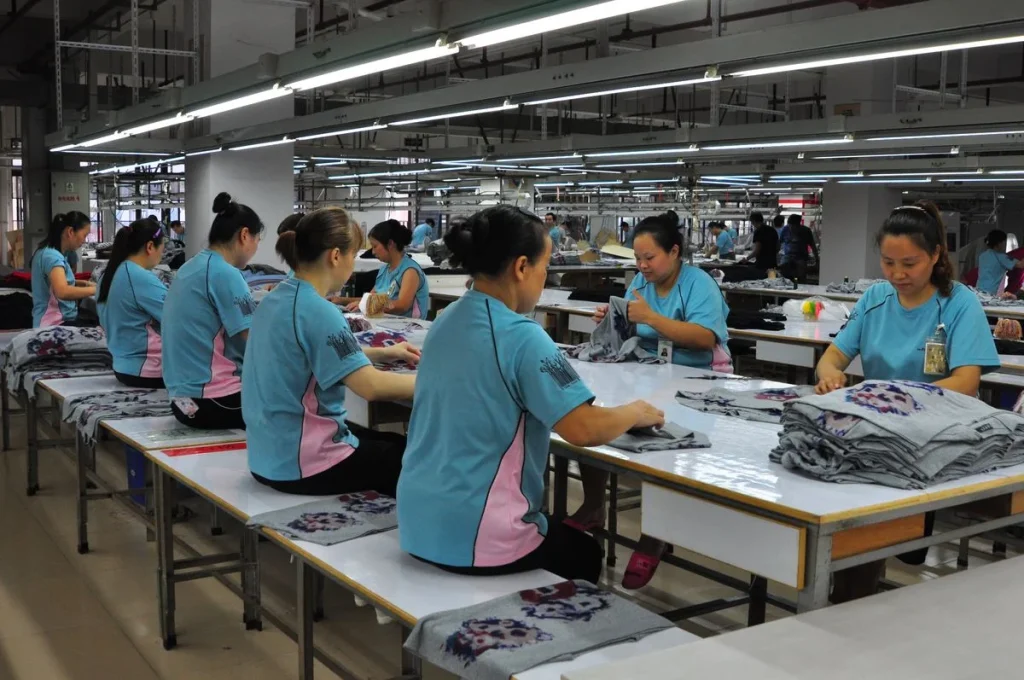
The scope of QCVN 01:2017/BCT covers most finished textile and garment products (clothing, fabric, towels, bedding) before being placed on the market or exported, except for certain specific groups such as technical fabric used in construction, tire lining fabric, and specialized flame-resistant clothing.
Classification by Export Production Method
Vietnamese exported garment production is mainly organized under the following methods, each carrying different quality control responsibilities between the buyer and the manufacturer:
- CMT (Cut – Make – Trim): the customer supplies the raw materials and pattern, and the business only performs cutting, sewing, and finishing; the responsibility for input material quality control belongs to the buyer.
- FOB (Free On Board): the business proactively purchases raw materials per the customer’s specification or standard, and is responsible for the entire quality until the goods are loaded onto the vessel.
- ODM/OEM: the business is involved from the design stage or produces under its own brand, requiring the most complete internal quality management system.
2. Mandatory Quality Criteria for Exported Garment Products
Under QCVN 01:2017/BCT and common international testing standards (ISO 105, AATCC), exported garment products must simultaneously control chemical safety and mechanical criteria. The table below summarizes the most important criteria.
| Criterion | Prescribed Level | Basis |
|---|---|---|
| Formaldehyde – products for children under 36 months | Maximum 30 mg/kg | QCVN 01:2017/BCT |
| Formaldehyde – products in direct skin contact | Maximum 75 mg/kg | QCVN 01:2017/BCT |
| Formaldehyde – products not in direct skin contact | Maximum 300 mg/kg | QCVN 01:2017/BCT |
| Aromatic amines derived from azo dyes | Each amine not exceeding 30 mg/kg | QCVN 01:2017/BCT |
| pH level | Typically in the range of 4.0 – 7.5 (human skin), 4.0 – 9.0 (other products) per common international eco-label requirements | Oeko-Tex Standard 100 / customer |
| Colorfastness (washing, rubbing, light) | Assessed by grey scale, with the minimum level per customer requirements | ISO 105 / AATCC |
| Shrinkage after washing | Limited according to fabric type, typically declared per the customer’s internal standard | ISO 5077 / AATCC 135 |
| Composition and origin labeling | Mandatory to state the manufacturer’s name, fabric code, main material composition, fabric width, and quality grade | TCVN 4896:2009 |
Formaldehyde and Aromatic Amine Regulations from Azo Dyes
These are the two key chemical safety criteria closely monitored by both domestic authorities and international customers, since residual formaldehyde and aromatic amines are substances capable of causing skin irritation and allergic reactions with prolonged contact. Products for children under 36 months are subject to the strictest limits under QCVN 01:2017/BCT.
Colorfastness and Shrinkage
Colorfastness (to washing, dry/wet rubbing, light, perspiration) and shrinkage after washing are two mechanical criteria that FOB/ODM brands specify very precisely in the technical documentation (tech pack) sent with the order, usually requiring testing at an independent laboratory before shipment.
Labeling and Product Information
Beyond safety criteria, the product label must fully state the fiber composition, care instructions, origin, and other information mandated by the importing market’s regulations – this is also a category that inspection teams at the destination port frequently cross-check against the actual shipment.
3. Quality Standards for Garment Products by Target Market
Beyond the domestic regulation, garment exporting businesses need to meet the specific requirements of each importing market. The table below visually compares the core requirements across the four main garment export market groups for Vietnam.
| Criterion | EU | United States | Japan | China |
|---|---|---|---|---|
| Managing authority/regulation | REACH (chemicals), the EU’s fiber composition labeling regulation | CPSC – CPSIA (consumer product safety, especially children’s goods) | Japan’s Act on the Control of Household Products Containing Harmful Substances | National GB standard (GB 18401, GB 31701 for children’s products) |
| Key control focus | Restricted chemicals (azo, formaldehyde, heavy metals), Non-GMO for natural fibers, supply chain traceability | Fabric flammability, lead and phthalates in children’s goods, safe drawstrings/buttons | Formaldehyde, pH, colorfastness to perspiration, safety of chemicals in skin contact | Formaldehyde, pH, and aromatic amine limits; products classified into Group A (children), B (skin contact), C (non-skin contact) |
| Labeling requirements | Fiber composition stated in the local language, care instructions per ISO 3758 | RN/CA number label, fiber composition, country of manufacture per FTC regulations | Labeling per the QUATEC Law (Quality Labeling), care symbols per JIS L0001 | Mandatory Chinese-language label, barcode, product safety classification |
| Tariff preferences | 0% tax rate under EVFTA if meeting the “from fabric onward” rule of origin | The standard MFN tax rate applies, with no bilateral FTA yet | Preferential tax rate under VJEPA/CPTPP if meeting the rule of origin | Per quota and bilateral trade agreement/ACFTA |
The European Market (EU): REACH and Supply Chain Responsibility
The EU market tightly controls restricted chemicals under the REACH regulation, while increasingly emphasizing environmental requirements and treatment of hazardous waste generated from weaving, dyeing, and printing per the ISO 14001 standard. Businesses need to pay particular attention to ensuring packaging protects the goods during transport and that the product label correctly and fully states the fiber composition. Textile goods meeting the rule of origin under the EVFTA Agreement enjoy a preferential 0% tax rate.
The US Market: Children’s Product Safety and Fabric Flammability
The CPSIA Act and the CPSC authority strictly regulate lead and phthalate limits in children’s products, together with fabric flammability testing requirements per federal standards. The product label needs an RN/CA number per Federal Trade Commission (FTC) regulations.
The Japan Market: Control of Skin-Contact Chemicals
Japan applies its own regulation on hazardous chemicals in household products, focusing on formaldehyde, pH level, and colorfastness upon contact with perspiration. Care instruction symbols on the label must follow the JIS L0001 standard, distinct from the common international ISO symbols.
The China Market: Safety Classification by Intended Use
The GB 18401 and GB 31701 standards (the latter specifically for children’s products) classify textiles into three safety groups A, B, and C by level of skin contact, each with different formaldehyde, pH, and aromatic amine limits. Product labels must be shown in Chinese.
4. International Certifications Required for Exported Garment Products
Quality and Environmental Management Systems: ISO 9001 and ISO 14001
ISO 9001 (quality management) and ISO 14001 (environmental management) are two foundational certifications that are almost mandatory for export garment factories, especially when working with European brands, which typically require strict compliance on dyeing wastewater and waste treatment.
Eco-Labels and Chemical Safety: Oeko-Tex Standard 100 and GOTS
Oeko-Tex Standard 100 is the most common certification confirming a product does not contain harmful chemicals beyond the permitted threshold, required by many European and American brands. GOTS (Global Organic Textile Standard) applies specifically to textile products made from organic fiber, controlling the entire chain from cultivation to the finished product.
Social Responsibility in Production: WRAP, BSCI/amfori, SA8000, Sedex-SMETA
This is a group of certifications that assess working conditions, working hours, and factory safety – usually a prerequisite for being included in the supply chain of major retail groups (Nike, H&M, Uniqlo, Target, etc.), independent of the product’s technical quality.
Sustainability Impact Measurement Certification: Higg Index
The Higg Index (a toolkit from the Sustainable Apparel Coalition) is increasingly required by many major brands to assess a factory’s environmental and social impact, becoming an important supplier evaluation criterion alongside traditional certifications.
5. Inspection and Quality Certification Process for Exported Garment Products
Step 1: Prepare samples and technical documentation (tech pack)
Cross-check the customer’s tech pack against the domestic regulation, determining the criteria to be tested before entering bulk production.
Step 2: Testing at an accredited laboratory
Fabric samples, accessories, and finished products are tested for chemical criteria (formaldehyde, aromatic amines, pH, heavy metals) and mechanical criteria (colorfastness, shrinkage, tensile strength) at an ISO/IEC 17025-accredited laboratory, typically international units such as SGS, Intertek, Bureau Veritas, or TÜV.
Step 3: Declaration of conformity under QCVN 01:2017/BCT
The business carries out a self-declaration of conformity based on its own assessment results, or a declaration of conformity based on certification/inspection results from a designated organization, before placing the product on the market or exporting it.
Step 4: Factory assessment and social responsibility certification
In parallel with product quality inspection, the factory undergoes an on-site audit to obtain WRAP, BSCI, or Sedex-SMETA certification per each customer’s specific requirements, completing the documentation set to proceed with export.
FAQ – Frequently Asked Questions About Exported Garment Quality Standards
Question 1: What is the formaldehyde limit for exported garment products?
Under QCVN 01:2017/BCT, the maximum formaldehyde limit is 30 mg/kg for products for children under 36 months, 75 mg/kg for products in direct skin contact, and 300 mg/kg for products not in direct skin contact.
Question 2: What certification should a business new to exporting garments prioritize first?
A new business should prioritize completing, in order: declaration of conformity under QCVN 01:2017/BCT, building an ISO 9001 quality management system, and then adding certifications per customer requirements such as Oeko-Tex Standard 100 (chemical safety) and WRAP or BSCI (social responsibility), depending on the market and partner brand.
Question 3: Do care instruction symbols on labels differ between markets?
Yes. Most European and international markets use symbols per ISO 3758, while Japan applies its own symbol system per JIS L0001; businesses need to correctly cross-check the labeling standard of each target market to avoid discrepancies in product information.
3W Logistics Accompanies Garment Exporting Businesses
Fully meeting quality standards for exported garment products is only a necessary condition; for a shipment to reach the importing partner on time and at the right quality also requires a professional logistics process that understands each market’s specific requirements. With experience handling a wide range of exported textile and fashion products, and registration as an OTI-NVOCC with an FMC (Federal Maritime Commission) bond in the United States, 3W Logistics provides an end-to-end garment export service for businesses:
- Documentation consulting by market: Support in preparing documentation matching the specific requirements of the EU, US, Japan, or China.
- Connecting with reputable testing and inspection units: Helping businesses work with independent inspection bodies (SGS, Intertek, Bureau Veritas) to obtain test results on time.
- Support with declaration of conformity procedures: Assisting from documentation preparation through to completing the declaration of conformity under QCVN 01:2017/BCT.
- Expertise in long-haul textile transport: Ensuring appropriate packing and moisture protection conditions to preserve product quality throughout the export journey.
- Electronic customs declaration and handling issues at the border checkpoint: Quickly handling any requests for additional documentation that arise during the export process.
- Sea freight and air freight shipping to the EU, US, Japan, and other markets: Optimizing routes, transit times, and costs for each market and each garment product segment.
Contact 3W Logistics for specific guidance on a path to meeting standards and export procedures for garment products suited to your business’s target market.
Address: 34 Bach Dang, Tan Son Hoa Ward, Ho Chi Minh City
Hotline: +84 28 3535 0087
____________________________
3W Logistics Hanoi Branch
Address: 81A Tran Quoc Toan, Cua Nam Ward, Hanoi
Hotline: +84 24 3202 0482
____________________________
3W Logistics Hai Phong Branch
Address: 8A Lot 28 Le Hong Phong, Gia Vien Ward, Hai Phong
Hotline: +84 225 355 5939
____________________________
3W LOGISTICS CO., LTD – We here serve you there!
Email: info@3w-logistics.com
Website: www.3w-logistics.com

Ms. Apple is the CCO (Chief Commercial Officer) at 3W Logistics, with over 10 years of experience in sales and business operations management.
At 3W Logistics, Ms. Apple is responsible for commercial strategy, corporate customer development, managing a team of more than 50 sales professionals, and improving business performance in the logistics sector.
With practical experience in sales management and market development, Ms. Apple shares professional insights on business logistics solutions, international transportation, freight forwarding, customer management, trade lane development, and growth strategies in the logistics industry.


