
Importing playing cards into Vietnam falls under the category of conditional import goods, subject to specialized management by the Ministry of Culture, Sports and Tourism in addition to standard customs procedures. Unlike many other consumer goods, playing cards (card decks) must undergo content appraisal and obtain an import license before the shipment is permitted to enter Vietnam.
An important point businesses need to understand when carrying out the playing card import procedure is that even though this product is not on the prohibited or restricted import list under Decree 187/2023/ND-CP, businesses are still required to apply for a cultural product import license and go through content appraisal at the provincial/municipal Department of Culture and Sports before the goods arrive at port — a step many new businesses easily overlook, resulting in goods being held in storage pending the license.
In this article, 3W Logistics presents the complete playing card import procedure under the latest legal regulations and tariff schedule — from legal conditions, HS codes, tax calculation, and required documentation, through the step-by-step process and practical risks, from the perspective of a forwarder experienced in handling imported cultural products and recreational goods.
1. Legal conditions for importing playing cards into Vietnam
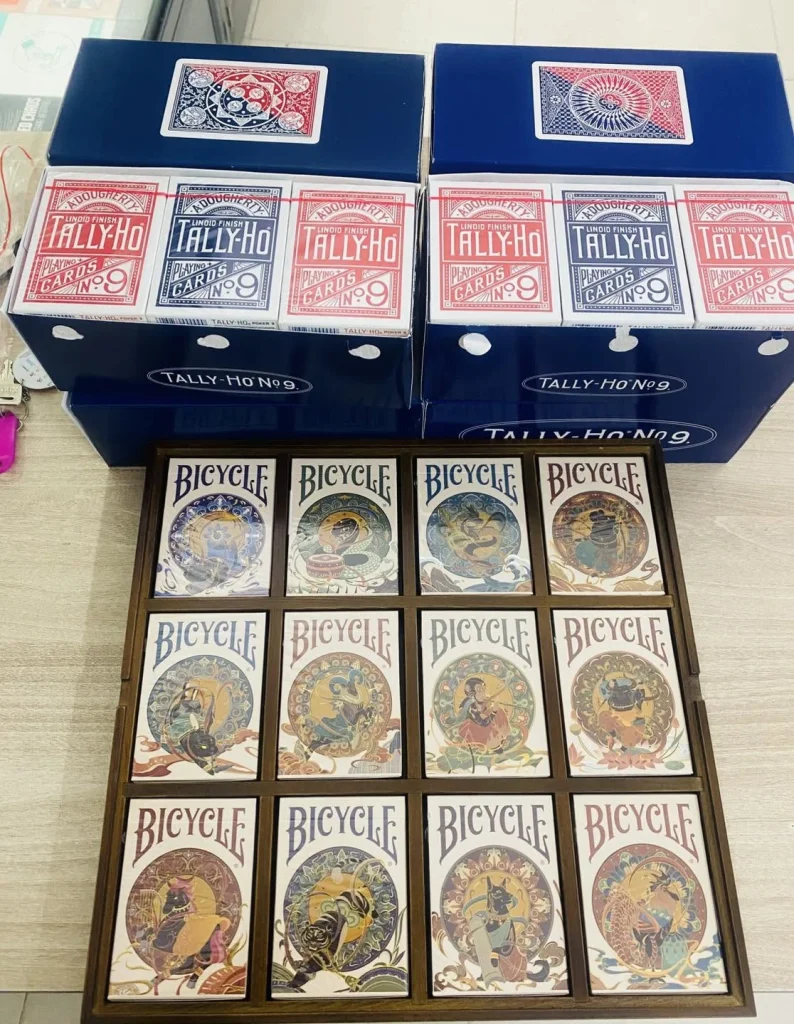
Playing cards are not on the list of prohibited import goods under Decree 187/2023/ND-CP; however, they are a conditional import item subject to specialized management by the Ministry of Culture, Sports and Tourism under Circular 24/2018/TT-BVHTTDL (amending and supplementing Circular 28/2014/TT-BVHTTDL).
| Condition | Detailed Content |
|---|---|
| Cultural product import license | A prerequisite condition under Appendix 2 of Circular 24/2018/TT-BVHTTDL; issued by the provincial/municipal Department of Culture and Sports after content appraisal |
| Content appraisal of the card sample | The business must send an actual sample of the playing cards to the Department of Culture and Sports for appraisal before the goods arrive, to ensure the imagery and content do not violate social norms, and contain no offensive content or disguised gambling elements |
| Distinguishing playing cards from toy trading cards | If the product is classified as a children’s toy (collectible trading cards, or cards included in a children’s toy set) rather than a standard deck used for card games, businesses generally do not need a cultural product license and instead follow children’s toy management regulations |
| Product labeling | Under Decree 43/2017/ND-CP and 111/2021/ND-CP: a Vietnamese supplementary label stating material, number of cards, origin, and manufacturer/importer |
Practical note: The most important point in the playing card import procedure is preparing the card sample and the content appraisal application in parallel with contract negotiation — not waiting until the goods reach port to start applying for the license. Many businesses mistakenly assume that playing cards are an ordinary consumer good requiring no specialized license simply because they are not on the prohibited list, only to discover upon the goods’ arrival at port that the cultural product import license is missing — forcing storage while awaiting appraisal and incurring container and yard demurrage costs.
2. HS code and import tax for playing cards
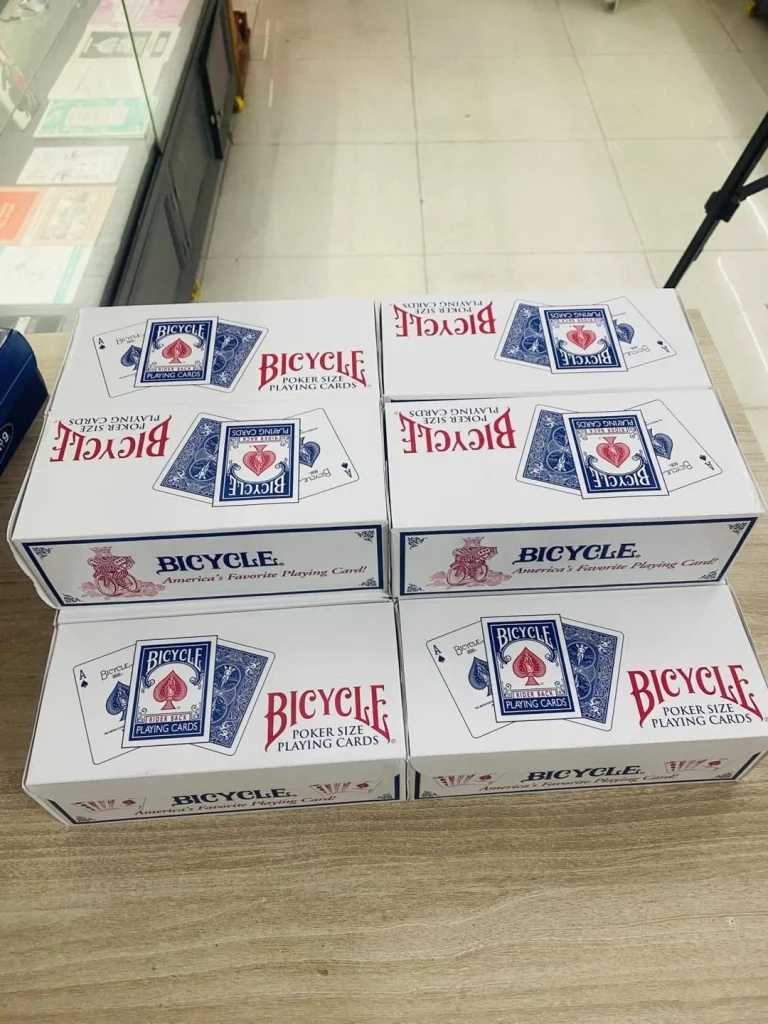
Playing cards fall under heading 95.04 of the Import-Export Tariff Schedule (Chapter 95) — the recreational games and equipment category, alongside billiard tables and automatic bowling equipment.
| Heading/HS Code | Detailed Description | Import Tax |
|---|---|---|
| 95.04 — Video game consoles and machines; articles for funfair, table or parlor games, including pintables, billiards, special tables for casino games and automatic bowling alley equipment | ||
| 9504.40.00 | Playing cards, card decks — the exact HS code used to declare the playing card import procedure | MFN 25% / Ordinary 37.5% |
Important note on tax: This is the most important update to note in the current playing card import procedure: HS code 9504.40.00 carries a fairly high preferential (MFN) import tax rate of about 25%, and the ordinary rate reaches as high as 37.5% if the country of origin does not have most-favored-nation status. Businesses should request a C/O from suppliers in countries with an FTA with Vietnam (China under ACFTA, ASEAN countries under ATIGA) in order to benefit from a rate lower than the MFN level. In addition to import tax, the item is also subject to the standard 10% VAT.
3. Documentation for the playing card import procedure
The documentation set for the playing card import procedure includes an additional layer of licensing and content appraisal documents compared to ordinary consumer goods.
| Document | When to Prepare | Important Note |
|---|---|---|
| Cultural product import license application | Before goods arrive at port | Submitted at the Department of Culture and Sports where the business is headquartered, together with an actual card sample for appraisal |
| Appraisal record and Import License Decision | Before customs declaration | Issued by the Department of Culture and Sports once the content appraisal is approved; a mandatory document required before clearance |
| Sales Contract | Before deposit | Clearly state design, number of decks, material, and terms for providing the C/O |
| Commercial Invoice & Packing List | Before goods are shipped | A signed and stamped copy, with the signatory’s title clearly stated (a certified-true-copy stamp is not required) |
| Bill of Lading | After goods are loaded onto the vessel | An original bill, telex bill, or surrender bill (copy) is accepted under current customs regulations |
| C/O (Certificate of Origin) | Before goods are shipped | Original copy, needed to benefit from special preferential FTA import tax instead of the 25% MFN or 37.5% ordinary rate |
| Electronic customs declaration (VNACCS/VCIS) | Once documentation is complete | Declare the correct HS code 9504.40.00, together with the cultural product Import License Decision number on the declaration |
4. Step-by-step playing card import procedure
Step 1: Determine the product type and prepare the card sample
Clearly determine whether the product is a standard playing card deck (requiring a cultural license) or children’s toy trading cards (subject to different regulations); request an actual sample from the supplier to prepare the content appraisal application.
Step 2: Submit the content appraisal application at the Department of Culture and Sports
Prepare the license application together with the card sample, and submit it at the Department of Culture and Sports where the business is headquartered for content appraisal under Circular 24/2018/TT-BVHTTDL.
Step 3: Receive the Appraisal Record and Import License Decision
Once the card sample’s content passes appraisal (does not violate social norms and does not promote disguised gambling), the Department of Culture and Sports issues an appraisal record and an import license decision.
Step 4: Negotiate the contract and transport goods to Vietnam
In parallel with or after obtaining the license, sign the formal contract and arrange transport of the playing card shipment to a Vietnamese port or airport.
Step 5: Customs declaration together with the import license
File the VNACCS/VCIS declaration with the full HS code 9504.40.00, attaching the cultural product Import License Decision and the content appraisal record for customs to cross-check.
Step 6: Pay tax and clear the shipment
Once the documentation is accepted, the business pays import tax and VAT as required, the goods are cleared, and are formally permitted to be sold on the market.
5. How to calculate import tax on playing cards
Playing cards are not subject to special consumption tax, only import tax and 10% VAT. As an example, for a playing card shipment imported from China (HS code 9504.40.00) with a CIF price of VND 500 million, comparing the case with and without a valid ACFTA C/O:
| Tax / Cost Item | Without C/O (MFN 25%) | With a valid ACFTA C/O |
|---|---|---|
| CIF price | VND 500,000,000 | VND 500,000,000 |
| Import tax | 25% × 500M = VND 125,000,000 | Per the ACFTA special preferential tariff schedule (typically significantly lower than the 25% MFN rate; check the current FTA schedule per the reduction roadmap) |
| VAT (10%) | 10% × (500+125)M = VND 62,500,000 | 10% × (CIF + preferential import tax) |
| Total tax payable (without C/O) | VND 187,500,000 (~187.5 million) | Significantly lower with a valid C/O |
| Note | Because the MFN rate for code 9504.40.00 is quite high (25%), obtaining a C/O from a supplier in a country with an FTA with Vietnam produces a very large cost difference for high-value playing card shipments — businesses should negotiate the C/O provision terms right when signing the contract. | |
From 3W Logistics’ practical experience: With playing cards, the most common mistake we see is that many businesses focus solely on goods cost and tax while skipping the step of applying for the cultural product import license from the outset — resulting in goods arriving at port and having to wait for content appraisal, incurring storage and yard costs that stretch on for weeks. In addition, failing to negotiate C/O terms with the supplier leaves many businesses paying the 25% MFN import tax rate, far higher than the preferential FTA rate if properly prepared from the start. — Ms. Apple, CCO, 3W Logistics
6. Common risks in the playing card import procedure
| Risk | Manifestation | Prevention |
|---|---|---|
| Importing goods before the license is obtained | Ordering and shipping goods to port before content appraisal is complete — goods are held in storage awaiting the license, incurring extended container demurrage costs | Submit the content appraisal application as soon as the card sample is available, before or in parallel with the shipment date |
| Card sample content fails appraisal | Imagery printed on the cards contains offensive content, violates social norms, or relates to disguised gambling — the license is denied | Carefully review the design sample before placing a bulk order, and consult the Department of Culture and Sports if there are any sensitive elements |
| Confusion between playing cards and toy trading cards | Applying the wrong management process (cultural product versus children’s toy), causing the prepared documentation to not match the actual product type | Clearly determine the product’s function (standard recreational card game or children’s collectible toy) before preparing documentation |
| Skipping the step of obtaining a C/O | Not requesting a C/O from the supplier, resulting in the 25% MFN import tax rate instead of a lower FTA preferential rate | Include the C/O provision term in the sales contract from the outset |
| Dampness or packaging failure during transport | Playing cards become damp, warped, or the wrapping comes loose due to substandard packaging in the container over a long journey | Require the supplier to use moisture-resistant packaging to standard, and purchase adequate cargo insurance before shipping |
FAQ – Frequently asked questions about the playing card import procedure
Question 1: What documents are required for the playing card import procedure?
The complete documentation set for the playing card import procedure includes: cultural product import license application together with the card sample; the appraisal record and Import License Decision issued by the Department of Culture and Sports; Sales Contract; Commercial Invoice and Packing List; Bill of Lading; C/O (if seeking FTA preferences); and electronic customs declaration (VNACCS/VCIS).
Question 2: Do playing cards require an import license?
Yes. Although not on the prohibited or restricted import list under Decree 187/2023/ND-CP, playing cards remain subject to specialized management by the Ministry of Culture, Sports and Tourism under Circular 24/2018/TT-BVHTTDL, requiring mandatory content appraisal and licensing before import — this is the core point of the playing card import procedure that businesses need to prepare for early.
Question 3: How many types of tax must be paid when importing playing cards?
Playing cards are subject to two layers of tax: (1) Import tax calculated on the CIF price under HS code 9504.40.00, at a preferential (MFN) rate of about 25%, an ordinary rate of up to 37.5% without most-favored-nation status, potentially lower with a valid FTA C/O; (2) VAT at the standard 10% rate, calculated on the total of CIF plus import tax. Playing cards are not subject to special consumption tax.
Question 4: How long does the playing card import procedure take?
The timeline depends mainly on the content appraisal step at the Department of Culture and Sports, which typically takes about 10-15 working days from submission of the complete documentation and card sample. Once the license is obtained, shipping and customs clearance time is similar to ordinary consumer goods, roughly 5-10 days depending on the shipping route.
How does 3W Logistics support the playing card import procedure?
With experience handling a wide range of imported cultural products and recreational goods, and registration as an OTI-NVOCC with an FMC Bond (Federal Maritime Commission) in the United States, 3W Logistics provides end-to-end service for businesses on the playing card import procedure — from cultural product license consulting through to goods arriving at the distribution warehouse.
Full-package logistics services at 3W Logistics:
- Consulting and support in obtaining the cultural product import license: Preparing documentation and card samples for submission to the Department of Culture and Sports for appraisal through the correct process, avoiding delays.
- Determining the HS code and calculating actual tax under the current tariff schedule: Advising on the optimal cost approach through the right C/O for each export market.
- Support in obtaining the correct FTA C/O form from the supplier: Guiding Chinese and ASEAN suppliers in obtaining the appropriate C/O to significantly reduce the 25% MFN tax rate.
- Electronic customs declaration via VNACCS/VCIS and resolving issues at the border gate: Declaring the correct HS code, and coordinating submission of the cultural product import license within the required timeframe.
Why choose 3W Logistics for your imported playing card shipment? The playing card import procedure requires a clear understanding of the cultural product licensing process, content appraisal, and staying up to date with the tariff schedule to optimize cost. We stand alongside you from the licensing step through to goods arriving at the warehouse — helping businesses shorten clearance time and avoid unnecessary added costs. Contact 3W for specific advice before signing your import contract.
Address: 34 Bach Dang, Tan Son Hoa Ward, Ho Chi Minh City
Hotline: +84 28 3535 0087
____________________________
3W Logistics Hanoi Branch
Address: 81A Tran Quoc Toan, Cua Nam Ward, Hanoi
Hotline: +84 24 3202 0482
____________________________
3W Logistics Hai Phong Branch
Address: 8A Lo 28 Le Hong Phong, Gia Vien Ward, Hai Phong
Hotline: +84 225 355 5939
____________________________
3W LOGISTICS CO., LTD – We here serve you there!
Email: info@3w-logistics.com
Website: www.3w-logistics.com

Ms. Apple is the CCO (Chief Commercial Officer) at 3W Logistics, with over 10 years of experience in sales and business operations management.
At 3W Logistics, Ms. Apple is responsible for commercial strategy, corporate customer development, managing a team of more than 50 sales professionals, and improving business performance in the logistics sector.
With practical experience in sales management and market development, Ms. Apple shares professional insights on business logistics solutions, international transportation, freight forwarding, customer management, trade lane development, and growth strategies in the logistics industry.


