Nghi Son Port Receives 2 Million Barrels of Iraqi Crude
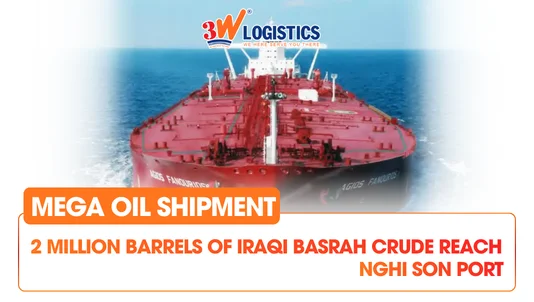
On May 31, 2026, Nghi Son Port in Thanh Hoa Province, Vietnam, received the VLCC tanker AGIOS FANOURIOS I, carrying nearly 2 million barrels of Basrah Medium crude oil from Iraq.
The shipment was arranged by PetroVietnam Oil Corporation (PVOIL) through its Singapore-based subsidiary PVOIL Singapore (PVOSN) and delivered to the Nghi Son Refinery and Petrochemical LLC (NSRP), one of Vietnam’s largest refining facilities.
The arrival highlights the importance of maritime logistics and crude oil supply chain management in maintaining stable refinery operations across Asia. It also demonstrates how large-scale energy cargoes continue to move efficiently through major global shipping routes despite ongoing geopolitical uncertainties affecting international energy markets.
Nghi Son Port: A Key Hub for Crude Oil Imports
Located within the Nghi Son Economic Zone in Thanh Hoa Province, Nghi Son Port is one of Vietnam’s leading deep-water industrial ports. The facility is designed to accommodate Very Large Crude Carriers (VLCCs), enabling the import of large crude oil volumes required by domestic refining operations.
Its strategic location along Vietnam’s central coastline provides direct access to major shipping lanes connecting the Middle East with Southeast Asia. This positioning allows crude oil cargoes from key producing regions, including the Persian Gulf, to reach Vietnamese refineries efficiently.
| Specification | Details |
|---|---|
| Location | Nghi Son Economic Zone, Thanh Hoa Province, Vietnam |
| Port Type | Deep-water industrial port |
| Vessel Class | VLCC (Very Large Crude Carrier) |
| Receiving Facility | Nghi Son Refinery and Petrochemical LLC (NSRP) |
| Cargo | Nearly 2 million barrels of Basrah Medium crude oil |
| Origin | Iraq |
| Arrival Date | May 31, 2026 |
AGIOS FANOURIOS I and the Strait of Hormuz Route
AGIOS FANOURIOS I is a VLCC tanker, a vessel category commonly used for long-haul crude oil transportation. VLCCs typically have a carrying capacity ranging from 200,000 to 320,000 DWT and can transport up to 2.5 million barrels of crude oil in a single voyage.
The cargo originated in Iraq and traveled through the Strait of Hormuz, one of the world’s most critical maritime chokepoints for energy transportation. A significant share of global seaborne oil exports passes through this route before reaching major markets across Asia.
The successful completion of this voyage demonstrates the resilience of international energy logistics networks and the continued importance of strategic shipping corridors linking Middle Eastern producers with Asian refining centers.
Crude Oil Supply Chain and Logistics Coordination
Large-scale crude oil imports involve multiple stakeholders, including crude traders, shipowners, terminal operators, customs authorities, and refinery operators.
For shipments of this scale, logistics planning typically includes:
- Crude oil procurement and contract negotiations.
- VLCC vessel chartering and voyage planning.
- Loading operations at export terminals.
- Ocean transportation through international shipping routes.
- Port handling and customs clearance procedures.
- Cargo discharge into refinery storage facilities.
Efficient coordination across these stages helps reduce operational risks, optimize transportation costs, and ensure uninterrupted refinery feedstock supply.
Why This Shipment Matters
Beyond its size, the shipment illustrates the role of maritime transportation in supporting refinery operations and fuel supply stability. Reliable crude oil logistics remain essential for industrial economies that depend on imported feedstock to meet domestic energy demand.
For logistics professionals, traders, and supply chain managers, the voyage provides a practical example of how global energy cargoes move from production regions in the Middle East to refining centers across Asia through an integrated network of shipping, port infrastructure, and downstream processing facilities.
Conclusion
The arrival of AGIOS FANOURIOS I at Nghi Son Port with nearly 2 million barrels of Iraqi crude oil highlights the scale and complexity of modern energy logistics.
From crude sourcing and vessel chartering to international shipping and refinery delivery, the shipment demonstrates how coordinated supply chain management enables the efficient movement of critical energy commodities across continents.
Learn More About 3W Logistics International Transportation Services
Large-scale shipments such as crude oil, bulk commodities, liquid cargo, and project cargo require careful coordination across multiple stages of the supply chain. From vessel booking and transportation planning to customs clearance and port operations, every step plays a crucial role in ensuring cargo moves safely and efficiently.
3W Logistics provides comprehensive international logistics solutions, including ocean freight, NVOCC services, customs brokerage, and supply chain management. With extensive experience supporting importers and exporters across global trade lanes, we help businesses optimize transportation costs, improve cargo visibility, and minimize operational risks.
Whether you are shipping containerized cargo, bulk commodities, oversized equipment, or specialized freight, our team works closely with customers to develop tailored logistics solutions that meet both operational and commercial requirements.
Explore 3W Logistics’ international transportation services to discover how we can support your global supply chain and freight forwarding needs.
Learn More About 3W Logistics Ocean Freight Services →

Hello, I’m Nguyen Phuong Nhan (Ms. Nina)
I currently serve as Trade Lanes Supervisor at 3W Logistics, with more than 10 years of experience in international logistics and freight forwarding.
My primary responsibility is developing and managing global logistics partnerships, building strategic trade lanes, and working closely with overseas agents to provide reliable and competitive transportation solutions for customers.
I regularly collaborate with agents and logistics partners worldwide to explore new business opportunities, negotiate freight rates, develop trade routes, and support import-export shipments. I also work closely with our sales team to design logistics solutions tailored to specific markets and customer requirements.
My expertise includes Ocean Freight, Air Freight, Trade Lane Development, Global Agent Network Management, International Logistics Solutions, and Import-Export Support.
Through the articles I share on the 3W Logistics website, I aim to provide practical insights into the international logistics industry, global transportation trends, overseas agent cooperation, and effective logistics strategies that help businesses optimize their supply chain operations.
I believe that strong global partnerships and well-developed trade lanes are essential to delivering sustainable logistics solutions and long-term value to customers worldwide.


