

Coal export procedures in Vietnam are highly distinctive compared to most ordinary export goods, as coal is a strategic mineral resource directly tied to national energy security — especially at a time when demand for coal to supply domestic thermal power plants, cement factories, and metallurgical industries continues to rise.
Vietnam has now shifted from being a coal exporter to a net importer, meaning coal export activity is now only carried out with surplus production, of the correct type, and in strict compliance with the coal industry master plan.
Unlike many other mineral products, coal export procedures require businesses to prove legal mining origin, obtain quality test results from a VILAS-accredited laboratory, and in many cases seek approval from the Ministry of Industry and Trade before proceeding.
The article below compiles the full legal basis, conditions, HS codes, procedures, costs, and common risks involved in coal export procedures, updated according to the latest applicable regulations.
1. Context of Vietnam’s coal industry and export direction
Coal is an important fuel source for Vietnam’s domestic thermal power, cement, metallurgical, and chemical industries. In recent years, sharply rising domestic coal demand has led Vietnam to primarily import coal from India, Indonesia, Australia, Russia, South Africa, and Mongolia to ensure sufficient supply for power projects, rather than pushing exports as it did in the past — an important factor to understand when learning about coal export procedures.
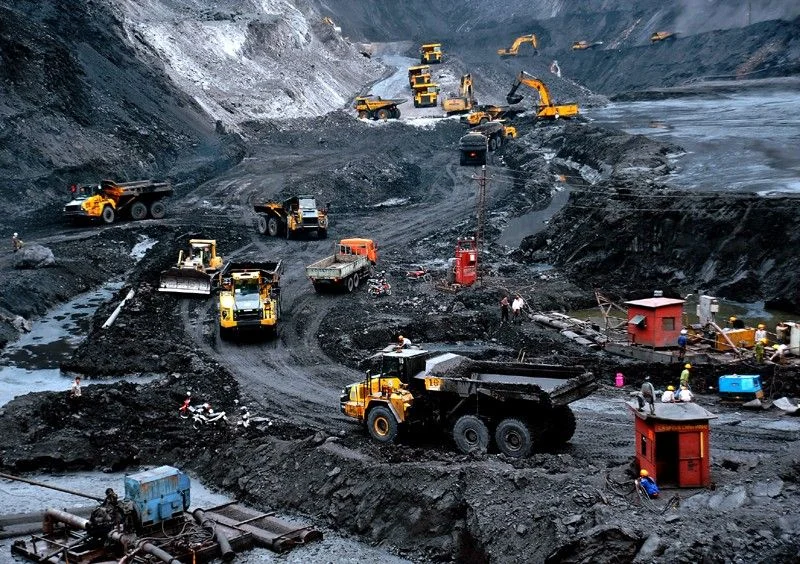
In practice, Vietnam’s current coal exports mainly consist of specific coal types with no domestic demand, or surplus production remaining after fully prioritizing domestic consumption under the coal industry development plan, typically exported through border gates with Laos and China, or by sea in volumes much smaller than import activity.
2. Legal basis governing coal export procedures
| Legal document | Content regulated |
|---|---|
| Circular 14/2013/TT-BCT | Regulates conditions for coal trading and requirements for legal origin of mined coal |
| Circular 15/2013/TT-BCT | Specific regulations on conditions and procedures for coal export, and the documentation required for customs declaration |
| Mineral Law 2010, Geology and Minerals Law 2024 | Regulates mining licenses and financial obligations (resource tax, environmental protection fee) for mined coal |
| Decree 26/2023/ND-CP | Export tariff schedule applicable to coal and coal products under Chapter 27 |
| Vietnam Coal Industry Development Plan, and the Prime Minister’s periodic decisions on managing the coal import-export balance | Determines the coal types and volumes permitted for export in each period, prioritizing domestic energy security |
This is the fundamental legal framework that businesses need to understand clearly in order to correctly carry out coal export procedures, avoiding both legal and industry-planning complications.
3. Conditions for businesses and exported coal products
| Condition | Issuing/managing authority | Note |
|---|---|---|
| Legal origin of mined coal | Business holding a valid mining license | Under Circular 14/2013/TT-BCT, coal blended from illegal sources must never be exported |
| Coal quality analysis report | A VILAS-accredited laboratory (Vinacontrol, SGS, etc.) | Confirms the calorific value, moisture content, and ash ratio of the export coal shipment meet the standard |
| Completed resource and environmental tax obligations | Local tax authority | A prerequisite condition before exporting any coal shipment |
| Compliance with the coal industry development plan | Ministry of Industry and Trade | Unwashed, unsorted fine coal or coal types outside the permitted plan may not be exported |
4. HS codes and export duties for coal
Coal falls under Chapter 27 — “Mineral fuels, mineral oils and products of their distillation; bituminous substances; mineral waxes” — heading 27.01, “Coal; briquettes, ovoids and similar solid fuels manufactured from coal.” Correctly determining the HS code based on coal type (anthracite, bituminous coal, etc.) is an important step in coal export procedures.
| Product type | HS code (Vietnam) | Vietnam export duty | Note |
|---|---|---|---|
| Anthracite coal | 2701.11 | 10% – 20% | Vietnam’s flagship coal type; the specific rate depends on the detailed subheading |
| Other bituminous coal | 2701.12/2701.19 | 10% – 20% | Requires careful cross-checking based on carbon content and volatile matter |
| Briquettes and ovoids manufactured from coal | 2701.20 | 0% – 5% | A processed product, compressed into blocks |
| Coke | 2704.00 | Per separate regulation | A coking product, entirely different from raw coal |
Practical note: Export duty on coal in Vietnam remains fairly high, typically ranging from 10-20% depending on the type and detailed HS subheading — entirely different from the 0% policy applied to most agricultural and forestry products. This is a regulatory tool aimed at prioritizing coal to meet domestic energy needs, though some businesses may be considered for duty exemption or reduction quotas if they meet the conditions of the state’s plan for that period.
5. Documentation package for coal export procedures
| Document | When to prepare | Important note |
|---|---|---|
| Documentation proving legal origin of the exported coal | Before beginning export procedures | Cross-checked against the mining license and any intermediary purchase invoices (if applicable) |
| Coal quality analysis report | Before loading the goods | Issued by a VILAS-accredited laboratory, mandatory under Circular 15/2013/TT-BCT |
| Sales Contract | Before delivery | Must clearly state Incoterms, coal type, calorific value, moisture, and ash criteria |
| Commercial Invoice and Packing List | Before customs declaration | Value must match the contract and the bill of lading |
| Approval document from the Ministry of Industry and Trade (if approval is required) | Before signing a large export contract | Applicable when the type or volume falls outside the normal scope of export under the plan |
| Export customs declaration (VNACCS) | Before customs clearance | Declare the correct HS code for the coal type, and declare the export duty in full |
6. Coal export procedure steps
Step 1: Confirm the origin and type of coal to be exported
The business cross-checks the coal intended for export against its mining license, ensuring the type complies with the coal industry development plan — this is the foundational first step in coal export procedures.
Step 2: Take quality assessment samples at a VILAS-accredited laboratory
The business sends coal samples to an assessment body such as Vinacontrol or SGS to obtain an analysis report confirming calorific value, moisture, and ash ratio meet the export standard agreed with the partner.
Step 3: Submit an export approval application (if approval is required)
For shipments with a coal type or volume exceeding the normal scope, the business submits an application to the Ministry of Industry and Trade or the relevant competent authority depending on the specific requirement; if adjusting a license (changing coal type or export market), the business submits supplementary documentation for review.
Step 4: Sign the contract and load the goods according to export specifications
Agree with the importer on quality criteria, volume, and delivery method, then proceed with loading the goods onto the transport vehicle.
Step 5: Complete the documentation package and declare customs export
The enterprise or its forwarder prepares the invoice and packing list, and declares the electronic customs declaration on the VNACCS system, attaching the quality analysis report and documentation proving legal origin, and declares and pays the export duty under the corresponding HS code.
Step 6: International transport and import clearance in the destination country
Once the declaration is cleared, the goods are handed over to a road carrier (via border gates such as Cha Lo – Quang Binh for the Laos market) or a sea carrier by dedicated vessel, depending on shipment volume and destination market.
7. Common risks in coal export procedures
| Risk | Manifestation | Prevention |
|---|---|---|
| Exporting unwashed, unsorted fine coal | Regulatory violation, goods held, possible administrative penalty | Ensure coal has been properly washed and sorted to standard before export |
| Missing documentation proving legal origin | Unable to complete export procedures, risk of criminal liability for coal of unclear origin | Keep complete invoices and purchase documentation from mining through to export |
| Incorrect HS code between different coal types | Retroactive tax collection, delayed customs clearance, need to amend the declaration | Carefully cross-check the HS code against the quality analysis report with a customs unit experienced in mineral cargo |
| Exporting beyond the quota or outside the coal industry plan | Approval denied or export activity suspended | Regularly track the Government’s coal import-export balance directives |
8. FAQ – Frequently asked questions about coal export procedures
Question 1: Does Vietnam still export as much coal as before?
No. Due to rising domestic coal demand for thermal power and other industries, Vietnam now primarily imports coal, and export activity is limited to surplus production of the correct type under the coal industry plan.
Question 2: Does exporting coal require approval from the Ministry of Industry and Trade?
It depends. For shipments with a coal type or volume outside the normal scope, businesses need to submit an approval application to the Ministry of Industry and Trade or the relevant competent authority before carrying out coal export procedures.
Question 3: What is the current export duty on coal in Vietnam?
Coal under HS heading 2701 typically carries a fairly high export duty, ranging from 10-20% depending on the type — a significant difference from agricultural and forestry products, which enjoy a 0% rate.
Question 4: Which document is mandatory and most commonly missed when exporting coal?
The quality analysis report issued by a VILAS-accredited laboratory and the documentation proving legal origin are the two mandatory documents under Circular 15/2013/TT-BCT, and also the two most commonly overlooked by businesses during customs procedures.
How does 3W Logistics support coal export procedures?
As a freight forwarding company registered as an OTI-NVOCC with an FMC bond in the United States, holding an SCAC Code to self-file AMS/ISF declarations directly, 3W Logistics supports businesses through the entire coal export procedure — from HS code advisory and coordinating quality assessment through to customs clearance in the importing country.
Full-package logistics service at 3W Logistics:
- Accurate HS code and export duty advisory by coal type: Helping businesses correctly classify anthracite, bituminous coal, and briquettes for accurate declaration from the start.
- Support connecting to VILAS-accredited quality assessment: Coordinating with reputable assessment bodies such as Vinacontrol and SGS so shipments have complete analysis reports on time.
- Booking vessels and bulk transport: Arranging road transport through border gates or sea transport by dedicated vessel suited to the coal shipment volume.
- Electronic customs declaration (VNACCS): A professional team handles declarations and accurate export duty reporting; as an OTI-NVOCC with FMC and an SCAC Code, 3W Logistics directly issues its own HBL and self-files AMS/ISF for shipments bound for the U.S.
Why choose 3W Logistics: With offices in Ho Chi Minh City, Hanoi, and Hai Phong, and a team knowledgeable in the coal industry’s specific regulatory policies, 3W Logistics ensures shipments clear customs on time and to standard, avoiding legal risk right from the very first export. – Ms. Apple, CCO of 3W Logistics
Head Office – 3W Logistics Ho Chi Minh City Branch
Address: 34 Bach Dang, Tan Son Hoa Ward, Ho Chi Minh City
Hotline: +84 28 3535 0087
____________________________
3W Logistics Hanoi Branch
Address: 81A Tran Quoc Toan, Cua Nam Ward, Hanoi
Hotline: +84 24 3202 0482
____________________________
3W Logistics Hai Phong Branch
Address: 8A Lot 28 Le Hong Phong, Gia Vien Ward, Hai Phong
Hotline: +84 225 355 5939
____________________________
3W LOGISTICS CO., LTD – We here serve you there!
Email: info@3w-logistics.com
Website: www.3w-logistics.com

Ms. Apple is the CCO (Chief Commercial Officer) at 3W Logistics, with over 10 years of experience in sales and business operations management.
At 3W Logistics, Ms. Apple is responsible for commercial strategy, corporate customer development, managing a team of more than 50 sales professionals, and improving business performance in the logistics sector.
With practical experience in sales management and market development, Ms. Apple shares professional insights on business logistics solutions, international transportation, freight forwarding, customer management, trade lane development, and growth strategies in the logistics industry.


