
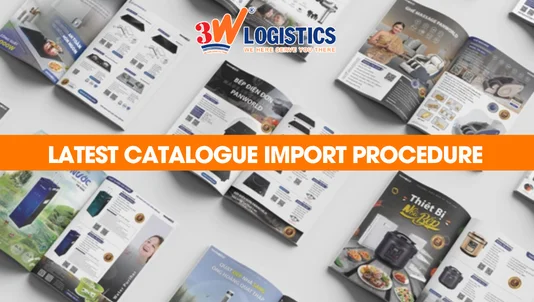
Importing catalogues (commercial catalogues, product catalogues, sample product-introduction books) is a distinctive category that falls under printed matter – an area where customs regulations intersect with publishing regulations, which trips up quite a few businesses the first time they handle it.
The biggest difference between the catalogue import procedure and ordinary goods is this: customs is not only concerned with the HS code and dutiable value, but must also determine whether the catalogue is considered a “publication” under the Publishing Law – a factor that decides whether the catalogue needs an import license before clearance, or can be processed as an ordinary commercial advertising print item.
Demand for importing catalogues into Vietnam typically comes from distributors, exclusive agents, and showrooms displaying foreign products (furniture, fashion, machinery, cosmetics…) that need the original catalogue issued by the manufacturer for sales, exhibitions, or staff training. Many businesses run into difficulties with the catalogue import procedure when they confuse a purely advertising catalogue with a book-form publication, or overlook the content requirements when the import quantity is large.
In this article, 3W Logistics presents the complete catalogue import procedure under current regulations – from legal conditions, the 8-digit HS code, tax calculation, documentation, the step-by-step process, to real-world risks, from the perspective of a forwarder experienced in handling imports of printed matter and advertising materials.
1. Legal conditions for importing catalogues into Vietnam
Commercial catalogues are not on the list of prohibited imports; however, since they are printed matter by nature, catalogues are still subject to publishing regulations – this is what gives the catalogue import procedure an extra layer of control that many other goods categories don’t have. Businesses need to understand the conditions below before getting started.
| Condition | Details |
|---|---|
| Determining whether it is a “publication” | Under the 2012 Publishing Law, a purely commercial advertising catalogue (product introduction, pricing, technical specifications) is usually not considered a publication; a catalogue with book- or magazine-style editorial content (multiple articles, artistic imagery, editorial information) may fall under publishing management |
| Non-commercial publication import license | Mandatory if the catalogue is deemed a publication and is imported not for the purpose of commercial distribution, under Decree 195/2013/NĐ-CP; documentation is submitted to the Department of Publication, Printing and Distribution before the goods arrive |
| Content review | Catalogue content must not violate Article 10 of the Publishing Law (opposing the State, misrepresenting territorial sovereignty, offensive content); customs has the authority to inspect the actual content when there is doubt |
| Quantity and intended use | Small quantities for display or gifting to customers are usually processed more simply; large quantities are more likely to raise customs suspicion of commercial distribution intent, requiring a clear explanation of intended use |
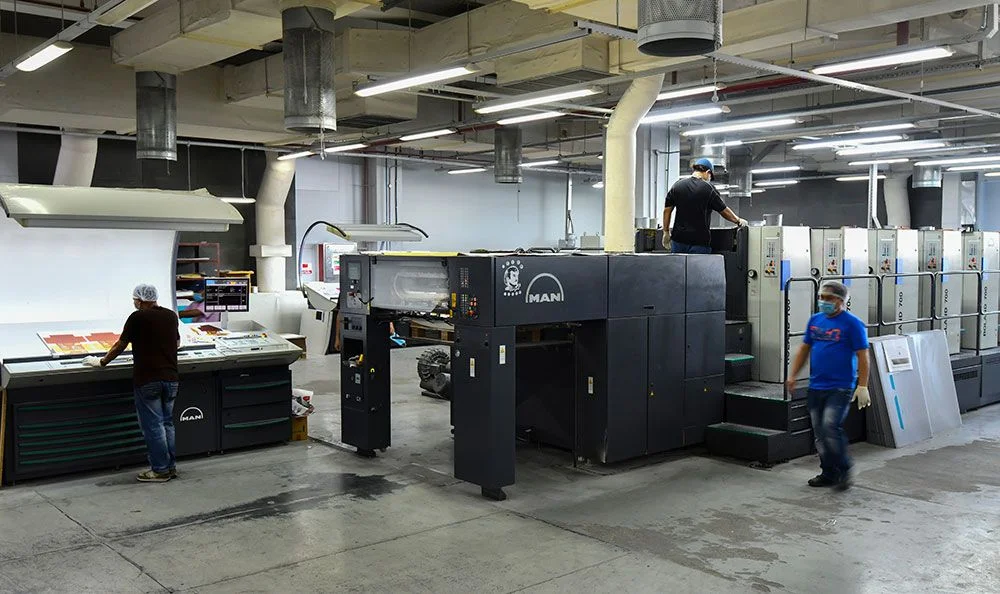
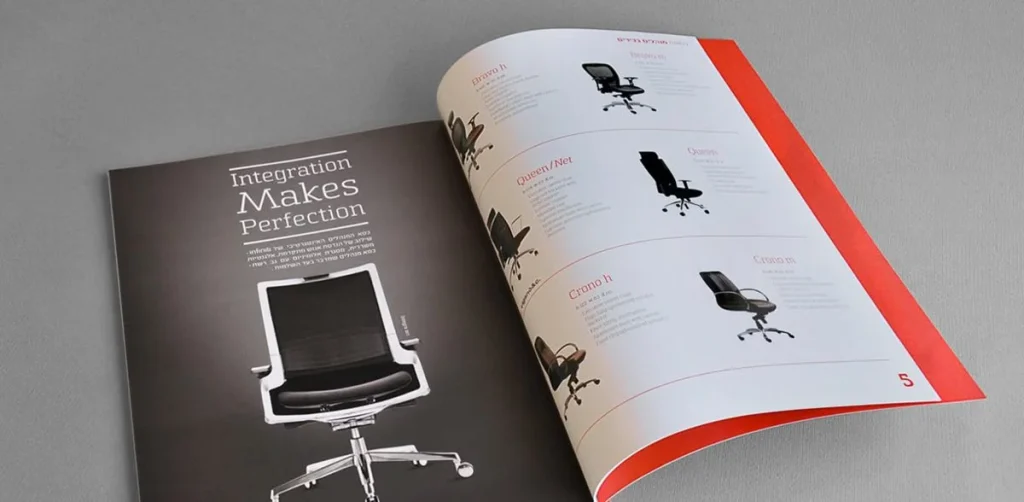
Practical note: The most common mistake in the catalogue import procedure is businesses assuming that all catalogues are exempt from licensing simply because they think of it as “advertising material.” In reality, a thick, book-bound catalogue with brand storytelling, product narratives, and elaborately designed imagery (commonly seen in furniture, high-end fashion, and cosmetics) can easily be classified by customs as a publication requiring a non-commercial import license, even if the business has no intention of selling the catalogue itself. Reviewing the catalogue’s content and format with a publishing consultant or an experienced forwarder beforehand helps avoid having the shipment held while awaiting supplementary licensing.
2. 8-digit HS code and import duty for catalogues
Catalogues fall under Chapter 49 (Printed books, newspapers, pictures and other products of the printing industry). Determining the correct HS code within the catalogue import procedure depends on the presentation format (loose sheets or bound volumes) and the specific intended use.
| Product Type | 8-Digit HS Code | Description | Import Duty (MFN) |
|---|---|---|---|
| Commercial catalogue, advertising material | 4911.10.00 | Commercial advertising material, product-introduction catalogues – the most common code for importing catalogues | 0% |
| Catalogue bound as a book (hardcover/glue-bound) | 4901.99.00 | A catalogue presented as a complete, bound book – more likely to be cross-checked against book-form publication regulations | 0% |
| Printed pictures, colour sample cards (color card) | 4911.91.00 | Printed pictures accompanying a catalogue, fabric/paint/tile colour sample cards that come with a product catalogue set | 0–5% |
| Other printed matter not elsewhere specified | 4911.99.00 | Flyers, brochures, and instructional materials accompanying a catalogue that don’t fall under the subheadings above | 0–5% |
Important note on HS codes and duty: Most codes under heading 4911 used for catalogues enjoy an MFN import duty rate of 0%, since this is printed matter without direct commercial consumption value. This is a major difference from many other goods categories – whether or not a C/O is provided usually has little impact on the import duty payable. However, within the catalogue import procedure, the tax-related risk lies in misclassifying a commercial advertising catalogue (4911.10) versus a book-form publication (4901.99) or accompanying printed pictures (4911.91) – each subheading carries different content-review requirements even though the duty rates are similar.
3. Documentation required for the catalogue import procedure
The documentation set for the catalogue import procedure includes additional requirements on the content/format of the printed matter compared to ordinary goods, especially when the catalogue falls under the publishing license requirement.
| Document | When to Prepare | Key Notes |
|---|---|---|
| Commercial Invoice & Packing List | Before goods are shipped | Clearly state the item name, number of copies, and unit price (even for a gift/non-commercial catalogue, a reference value must still be shown) |
| Bill of Lading / Airway Bill | After the goods are shipped | Catalogues are usually lightweight and imported in small quantities, so most shipments go by air (Airway Bill) rather than by sea |
| Sample catalogue (file/content scan) | Before declaring | Serves as the basis for customs and the publishing management authority (if needed) to determine whether the catalogue requires a license |
| Non-commercial publication import license (if applicable) | Before the goods arrive at port/airport | Only applies if the catalogue is determined to be a publication; applied for at the Department of Publication, Printing and Distribution, processing typically takes 5-10 working days |
| Explanatory letter on intended use | When requested by customs | States clearly that the catalogue is for display or internal product introduction purposes, not for commercial publication distribution |
| Electronic customs declaration (VNACCS/VCIS) | Once documents are complete | Declare the correct HS code under heading 4911 or 4901, and record the publishing license number on the declaration if applicable |
4. Step-by-step catalogue import procedure
Step 1: Determine whether the catalogue falls under publishing management
This is the first and most important step in the entire catalogue import procedure. Before importing, review the catalogue’s format and content (loose sheets or bound book, editorial articles or purely product information) to determine whether a non-commercial publication import license is needed.
Step 2: Prepare documentation and apply for a license (if needed)
If the catalogue is deemed a publication, submit the non-commercial import license application to the Department of Publication, Printing and Distribution before the goods arrive, along with a sample catalogue for content review by the management authority.
Step 3: Ship the goods to Vietnam
For small quantities, catalogues are usually sent via courier or air freight; for large quantities serving a showroom/agent network, sea freight can be combined with other sample shipments to optimize cost.
Step 4: File the customs declaration
File the declaration through VNACCS/VCIS with the appropriate HS code under heading 4911 or 4901, attaching the publishing license (if applicable) and a sample catalogue for cross-reference when needed.
Step 5: Physical inspection of the goods (if applicable)
For a first-time shipment or a large quantity, customs may require a physical inspection of the catalogue’s content to cross-check against the declaration and ensure no violation of content regulations for printed matter.
Step 6: Clearance and putting the catalogue into use
After clearance, the catalogue is moved to the warehouse or showroom for product introduction, sales staff training, or display at trade events and exhibitions.
5. How import duty on catalogues is calculated
The tax portion of the catalogue import procedure is relatively simple. Catalogues are not subject to special consumption tax, only import duty (mostly 0% MFN) and VAT. For example, take a shipment of furniture catalogues imported from Italy (HS code 4911.10.00) with a declared value of VND 80 million for 2,000 copies serving the agent network:
| Duty / Cost Item | Advertising catalogue (4911.10, MFN 0%) | Misclassified as printed pictures (4911.91, 5%) |
|---|---|---|
| Dutiable value | VND 80,000,000 | VND 80,000,000 |
| Import duty | 0% × VND 80M = VND 0 | 5% × VND 80M = VND 4,000,000 |
| VAT (10%) | 10% × VND 80M = VND 8,000,000 | 10% × (80+4)M = VND 8,400,000 |
| Total duty payable | VND 8,000,000 (~8 million) | VND 12,400,000 (~12.4 million) |
| Difference due to HS code misdeclaration | ~VND 4,400,000 – this difference can be back-collected along with a late-payment penalty if customs discovers the misclassification after clearance. | |
From 3W Logistics’ practical experience: With catalogues, the most common mistake we see in the catalogue import procedure isn’t tax-related – since most advertising print already enjoys 0% import duty – it’s businesses failing to determine in advance whether the catalogue would be considered a publication, resulting in the shipment being held at the airport/port awaiting supplementary licensing, directly affecting the timeline of a product launch event or showroom opening that had already been scheduled. We always recommend that clients send a sample catalogue in advance to review the content and format before ordering a large print run from overseas. – Ms. Apple, CCO, 3W Logistics
6. Common risks in the catalogue import procedure
Below are the most common risks in the catalogue import procedure that 3W Logistics has observed from handling shipments for clients.
| Risk | Symptom | Prevention |
|---|---|---|
| Mistaking an advertising catalogue for a book-form publication | A thick, editorially-designed catalogue is flagged by customs for a supplementary publication import license right at the point of clearance | Send a sample catalogue to a forwarder or publishing consultant for review before ordering a large print run |
| Content violating map/territorial sovereignty regulations | A catalogue with a business/market-area map that doesn’t correctly represent Vietnam’s territorial sovereignty – the shipment is held, and destruction or re-export may be required | Carefully check every map image and geographic reference in the catalogue before sending the print file to an overseas printer |
| Misapplying the HS code among Chapter 49 subheadings | Confusing a catalogue (4911.10), accompanying printed pictures (4911.91), and other printed matter (4911.99) – customs reclassifies the goods and collects the duty difference | Clearly describe the composition of the catalogue set on the invoice (including any colour cards or fabric samples) before declaring |
| Large quantities raising suspicion of commercial distribution intent | Importing a catalogue quantity exceeding normal display needs without an explanatory letter – customs suspects commercial publication distribution intent | Prepare an explanatory letter on internal intended use in advance, along with a distribution plan for the agent/showroom network |
| Delays from waiting on the publication license | Not applying for the license before the goods arrive, resulting in processing wait time at the Department of Publication once the goods have already reached port/airport – generating storage fees | Apply for the publication import license (if applicable) in parallel with the shipping time from overseas |
FAQ – Frequently Asked Questions about the Catalogue Import Procedure
Question 1: What documents are needed for the catalogue import procedure?
The full documentation set for the catalogue import procedure includes: Commercial Invoice and Packing List; Bill of Lading or Airway Bill; Sample catalogue; Non-commercial publication import license (if applicable); Explanatory letter on intended use (if requested by customs); Electronic customs declaration (VNACCS/VCIS).
Question 2: Is a license required to import a catalogue?
It depends on the case. A purely commercial advertising catalogue (product introduction, pricing, technical specifications) usually doesn’t need a license. A catalogue in book-bound form with elaborate editorial content may be considered a publication and require a non-commercial import license – this is something businesses need to determine before carrying out a large-volume catalogue import procedure.
Question 3: How many types of tax apply when importing a catalogue?
Catalogues are subject to only two layers of tax: (1) Import duty, calculated on the declared value, mostly enjoying the 0% MFN rate for catalogues under heading 4911.10; (2) 10% VAT, applied consistently in all cases. Catalogues are not subject to special consumption tax.
Question 4: How long does the catalogue import procedure take?
For catalogues not subject to the publication license requirement, the time from the goods arriving to clearance is usually just 1-3 working days. If subject to the non-commercial publication import license requirement, add another 5-10 working days for processing at the Department of Publication, Printing and Distribution before the goods can be cleared.
How 3W Logistics supports the catalogue import procedure
With experience handling a wide range of printed matter and advertising material imports and its registration as an OTI-NVOCC with an FMC bond (Federal Maritime Commission) in the US, 3W Logistics provides a full-package service for businesses on the catalogue import procedure – from content review consulting through to the goods arriving at the showroom/distribution warehouse.
- Pre-review of catalogue format and content: Determine whether the catalogue requires a publication import license, helping businesses plan their timeline proactively.
- Accurate HS code determination consulting based on the catalogue set’s composition: Correctly classify between an advertising catalogue (4911.10), a book-form publication (4901.99), and accompanying printed pictures (4911.91).
- Support applying for the non-commercial publication import license: Prepare documentation and liaise with the Department of Publication, Printing and Distribution when the catalogue falls under management.
- Expertise in shipping samples and small-quantity printed matter: Optimize the shipping method (courier/air freight) suited to the lightweight nature of catalogues that need to arrive on an event deadline.
- Electronic customs declaration via VNACCS/VCIS and resolving issues at the border gate: Declare the correct HS code and coordinate a quick response to any content-inspection requests that arise.
Why choose 3W Logistics for your catalogue import shipment? The catalogue import procedure may seem simple, but it can easily run into issues at the publishing-regulation layer that many businesses don’t anticipate. We accompany you from content review and HS code determination through to the catalogue arriving at the showroom – helping businesses avoid delays to important product launch events. Contact 3W for specific advice before ordering your catalogue print run from overseas.
Address: 34 Bach Dang, Tan Son Hoa Ward, Ho Chi Minh City
Hotline: +84 28 3535 0087
____________________________
3W Logistics Hanoi Branch
Address: 81A Tran Quoc Toan, Cua Nam Ward, Hanoi
Hotline: +84 24 3202 0482
____________________________
3W Logistics Hai Phong Branch
Address: 8A Lo 28 Le Hong Phong, Gia Vien Ward, Hai Phong
Hotline: +84 225 355 5939
____________________________
3W LOGISTICS CO., LTD – We here serve you there!
Email: quote@3w-logistics.com
Website: www.3w-logistics.com

Ms. Apple is the CCO (Chief Commercial Officer) at 3W Logistics, with over 10 years of experience in sales and business operations management.
At 3W Logistics, Ms. Apple is responsible for commercial strategy, corporate customer development, managing a team of more than 50 sales professionals, and improving business performance in the logistics sector.
With practical experience in sales management and market development, Ms. Apple shares professional insights on business logistics solutions, international transportation, freight forwarding, customer management, trade lane development, and growth strategies in the logistics industry.


