Laser engraving machine import procedures depend almost entirely on one question: new or used. For brand-new laser engraving machines, businesses import them like ordinary goods — preferential import duty is 0% and no permit is required. For used laser engraving machines, however, the dossier must satisfy requirements on equipment age, manufacturing standards, and inspection certificates, all of which were updated as of 05/9/2026.
Specifically, the legal basis for laser engraving machine import procedures has changed with the issuance of Circular 56/2026/TT-BKHCN from the Ministry of Science and Technology, effective 05/9/2026, replacing the framework under Decision 18/2019/QĐ-TTg (as amended by Decision 28/2022/QĐ-TTg). In addition, VAT remains at 8% through 31/12/2026 under Resolution 204/2025/QH15. Applying the wrong HS code, submitting an incomplete inspection dossier, or still referencing outdated regulations can all result in shipments being held at port.
This article presents the complete laser engraving machine import procedure under current regulations — covering legal requirements, HS codes, taxes, required documents, step-by-step process, and real-world risks, from the perspective of a freight forwarder with over 10 years of experience handling imported machinery and industrial equipment.
1. Legal Requirements for Laser Engraving Machine Import Procedures
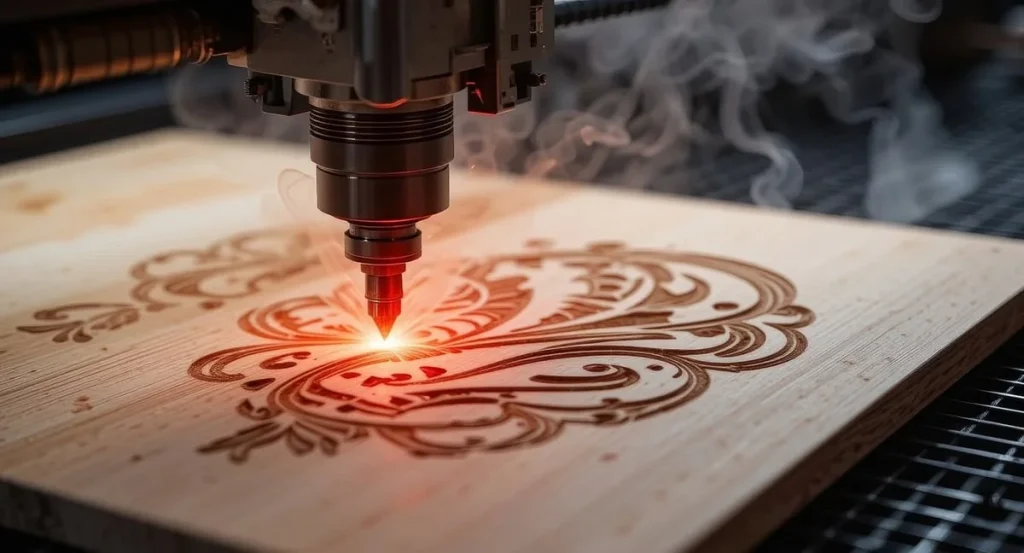
New laser engraving machines are not on the prohibited import list and do not require a separate import permit. Therefore, the key legal focus in laser engraving machine import procedures falls on used machines with HS codes under Chapter 84, which are governed by Circular 56/2026/TT-BKHCN.
| Requirement | Details |
|---|---|
| Brand-new laser engraving machine | Imported as ordinary goods; no import permit required — only correct HS code declaration. The business must have a business registration, tax code, digital signature, and an active VNACCS electronic customs account. |
| Purpose of importing used machinery | Used laser engraving machines may only be imported to directly support the business’s own manufacturing operations in Vietnam — not for resale. |
| Equipment age | Equipment age must not exceed 10 years, calculated as the import year minus the year of manufacture (certain equipment types listed in Appendix I are permitted up to 15–20 years); refurbished machines are still counted from the original year of manufacture. |
| Manufacturing standards | The machine must have been manufactured in compliance with national technical regulations on safety, energy efficiency, and environmental protection; where no QCVN exists, conformance with Vietnam’s national standards or those of a G7 country or South Korea is acceptable. |
| Documents proving year of manufacture | Machines manufactured in G7 countries or South Korea: submit a manufacturer’s confirmation letter (consularly legalized, with a Vietnamese translation). All other cases: submit an inspection certificate issued by a designated inspection organization. |
| Over-age used machines | Businesses currently operating manufacturing facilities in Vietnam may apply for an exception for over-age equipment, provided the remaining capacity or efficiency is at least 85%, consumption does not exceed 115% of design specifications, and a genuine operational need can be demonstrated. |
| Machines with integrated wireless modules | Models equipped with Wi-Fi, Bluetooth, or similar modules must be checked against Circular 36/2026/TT-BKHCN (effective 01/7/2026) by HS code and transmission power to determine whether a conformity declaration is required. |
Practical note: The most significant change affecting laser engraving machine import procedures is the new legal framework effective 05/9/2026. Customs dossiers or inspection registration files accepted before that date continue to be processed under Decision 18/2019/QĐ-TTg; new dossiers must comply with Circular 56/2026/TT-BKHCN. Many businesses are still preparing documentation under the old regulations and arriving at the border short on year-of-manufacture evidence and manufacturing standard documentation.
2. HS Code and Import Duty for Laser Engraving Machines
Laser engraving machines fall under heading 8456 (machine tools for working any material by laser or other light or photon beam). For laser engraving machine import procedures, the correct sub-heading must be identified: 8456.11 covers machines operated by laser beam, while 8456.12 covers machines operated by other light or photon beam. The preferential import duty (MFN) for the most common codes is 0%; the standard (non-MFN) duty is approximately 5%.
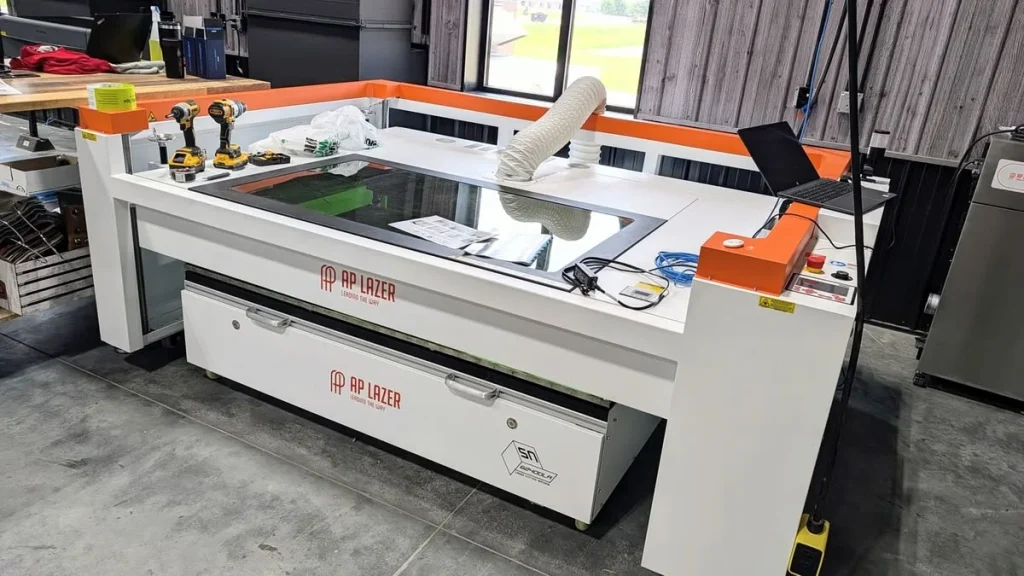
| Machine Type | Reference 8-Digit HS Code | Preferential Import Duty (MFN) | Standard Import Duty |
|---|---|---|---|
| Laser engraving machines primarily used for manufacturing printed circuits, PCB assemblies, telephone components, or data processing equipment | 8456.11.10 | 0% | approx. 5% |
| Other laser engraving machines (fiber laser, CO2, UV; engraving metal, wood, acrylic, leather, etc.) | 8456.11.90 | 0% | approx. 5% |
| Machines operated by other light or photon beam | 8456.12.10 / 8456.12.90 | 0% | approx. 5% |
| Laser machines dedicated to semiconductor or flat panel display manufacturing | Heading 8486 | Check tariff schedule | Check tariff schedule |
Important note on laser engraving machine HS codes: The HS code is determined by the machine’s primary function, not its commercial name. When declaring in the laser engraving machine import procedure, you must describe the laser source type (fiber, CO2, UV, etc.), power output, primary function (engraving, cutting, marking), and materials processed. Multi-function machines that both engrave and cut generally still fall under heading 8456, but may be classified elsewhere if a specialized function predominates. The HS codes and duty rates in the table above are for reference only and must be verified against the current tariff schedule at the time of customs declaration.
Import Duty and VAT for Laser Engraving Machines
Since the preferential import duty is 0%, the main tax in laser engraving machine import procedures is VAT. Under Resolution 204/2025/QH15, VAT has been reduced to 8% from 01/7/2025 through 31/12/2026; laser engraving machines are not in the excluded categories such as telecommunications, finance, real estate, metal products, mining, or goods subject to special consumption tax.
| Tax Type | Rate | Taxable Base | Notes |
|---|---|---|---|
| Preferential import duty (MFN) | 0% | CIF value | Applies to goods originating from countries with normal trade relations; a C/O does not reduce the rate further. |
| Standard import duty | approx. 5% | CIF value | Applies when preferential duty cannot be claimed. |
| VAT | 8% (through 31/12/2026) | CIF + import duty | Returns to 10% from 01/01/2027 unless the reduction is extended. |
3. Documents Required for Laser Engraving Machine Import Procedures
The full dossier for laser engraving machine import procedures consists of standard customs documents plus, for used machines, a supplementary set of documents proving year of manufacture and manufacturing standards. Specifications on the catalogue, invoice, machine nameplate, and inspection certificate must be completely consistent in model, serial number, and year of manufacture.
| Document | When to Prepare | Key Notes |
|---|---|---|
| Sales Contract | Before placing deposit | Must clearly state model, serial number, power output, laser source type, condition (new or used), year of manufacture, Incoterms, and obligation to provide technical documentation. |
| Commercial Invoice | Before shipment | Full description of goods, model, unit price; for used machines, must clearly state the year of manufacture, matching the nameplate. |
| Packing List | Before shipment | Number of packages, dimensions, and gross weight per case; separate line items for laser source, laser head, and accessories if packed separately. |
| Bill of Lading / Air Waybill | After goods are handed to the carrier | Cargo description and consignee must match the contract and invoice. |
| Catalogue / technical documentation | Before customs clearance | Serves as the basis for determining the HS code: laser source type, power output, and primary function of the machine. |
| Manufacturer’s confirmation letter (used machines from G7 countries or South Korea) | Before shipment | Confirms year of manufacture and manufacturing standards; must be consularly legalized and accompanied by a Vietnamese translation. |
| Inspection certificate (used machines) | Before or after arrival, depending on the case | Issued by a designated inspection organization, concluding that the machine meets the import criteria; valid for a maximum of 6 months from the date of issue through to the date of arrival at the port of entry. |
| Copy of business registration certificate / import authorization letter | When submitting the used-machine dossier | Authorities may retrieve this from the national database; if importing under a consignment arrangement, an import authorization letter is required. |
| Certificate of Origin (C/O) | Before shipment | Does not reduce the duty further when the preferential rate is already 0%, but is recommended to substantiate origin and avoid being assessed at the standard rate. |
| Electronic customs declaration (VNACCS) | Once dossier is complete | Declare the correct 8-digit HS code and full machine description including laser source and power; attach required documents for used machines. |
4. Step-by-Step Laser Engraving Machine Import Procedure
Below are the six standard steps of the laser engraving machine import procedure that 3W Logistics follows for customers importing machinery into Vietnam:
Step 1: Determine whether the machine is new or used and classify the HS code
The business reviews the catalogue, determines whether the laser engraving machine is new or used, and identifies the laser source type, power output, and primary function in order to select the correct HS code. This step determines whether the laser engraving machine import procedure follows the standard import route or the route requiring inspection documentation.
Step 2: Check import conditions for used machines
At this step of the laser engraving machine import procedure, for used machines the business calculates equipment age (import year minus year of manufacture), confirms the machine will directly serve manufacturing operations in Vietnam, and verifies that manufacturing standards comply with Circular 56/2026/TT-BKHCN. Machines with faded or missing nameplates will require in-depth inspection, adding both time and cost.
Step 3: Obtain the manufacturer’s confirmation letter or register for inspection
Machines manufactured in G7 countries or South Korea may use a consularly legalized manufacturer’s confirmation letter. In all other cases, the business registers for inspection with a designated inspection organization. If no inspection certificate is available at the time of customs declaration, the goods may be taken into storage after submitting a confirmed inspection registration document; the inspection certificate must then be submitted to customs within 30 days. This step determines the timeline of the laser engraving machine import procedure for used machines.
Step 4: Transport the laser engraving machine
In the laser engraving machine import procedure, machines must be packed in sturdy wooden crates with moisture protection and adequate cushioning around the laser source, lenses, and rail system. The forwarder advises on sea freight or air freight depending on dimensions, weight, and installation schedule, and recommends cargo insurance given the vulnerability of optical equipment to impact damage.
Step 5: Customs declaration
When the goods arrive at port, the forwarder files a VNACCS declaration with the correct HS code, machine description, laser source information, and the complete set of used-machine documents (if applicable). Accurate electronic declaration from the outset helps avoid a red-channel examination, tax reassessment, and requests to clarify the year of manufacture.
Step 6: Pay taxes, clear customs, and take delivery
Once the dossier is complete, the business pays VAT (and import duty if applicable), receives the delivery order, and transports the machine to its facility. For used machines, customs will only release the shipment once the inspection certificate concludes that the machine meets the import criteria; if the result is unsatisfactory, the business is subject to administrative penalties. This is the final step to complete the laser engraving machine import procedure.
5. How to Calculate Tax on a Laser Engraving Machine Import
In the laser engraving machine import procedure, since the preferential import duty is 0%, total tax consists mainly of VAT. Using a fiber laser engraving machine (HS 8456.11.90) with a CIF value of VND 1 billion as an example, the table below compares the scenario where the 0% preferential duty applies versus the scenario where the standard 5% duty applies (e.g., where the preferential rate cannot be claimed), both at 8% VAT:
| Tax / Cost Item | Preferential duty (0%) | Standard duty (5%) |
|---|---|---|
| CIF value | VND 1,000,000,000 | VND 1,000,000,000 |
| Import duty | 0% × VND 1,000M = VND 0 | 5% × VND 1,000M = VND 50,000,000 |
| VAT (8%) | 8% × (1,000 + 0)M = VND 80,000,000 | 8% × (1,000 + 50)M = VND 84,000,000 |
| Total tax payable | VND 80,000,000 | VND 134,000,000 |
| Difference | VND 54,000,000 — the gap caused solely by applying the wrong duty rate on a single VND 1-billion shipment. If VAT returns to 10% from 01/01/2027, the VAT on the preferential-duty shipment would rise to VND 100,000,000. | |
In the laser engraving machine import procedure, the greater risk compared to tax is the cost of a detained shipment: if a used machine lacks year-of-manufacture documentation or the inspection certificate concludes a non-compliant result, the container sits at port accruing daily storage charges and potential penalties — costs that can easily exceed the tax amount itself.
From 3W Logistics’ practical experience: For laser engraving machines, we see two mistakes repeat most often. The first is purchasing used equipment without checking the year of manufacture on the nameplate or calculating equipment age — only to discover at the port that the 10-year limit has been exceeded. The second is preparing documentation under the old framework of Decision 18/2019/QĐ-TTg when new dossiers must now comply with Circular 56/2026/TT-BKHCN, resulting in missing manufacturer confirmation letters or inspection certificates. Both are entirely avoidable if the laser engraving machine import procedure is reviewed from the very beginning of the equipment selection stage. — Ms. Apple, CCO, 3W Logistics
6. Common Risks in Laser Engraving Machine Import Procedures
Based on our experience handling industrial machinery, the following risks appear most frequently in laser engraving machine import procedures — and all can be mitigated with early preparation:
| Risk | How It Manifests | How to Prevent It |
|---|---|---|
| Over-age machine or missing year of manufacture | Equipment age exceeds 10 years, or the nameplate is faded or missing, making it impossible to prove the year of manufacture; customs refuses clearance. | Confirm year of manufacture before purchase, calculate age to the year of port arrival, and photograph the nameplate before buying. |
| Importing used machines not for manufacturing use | Machine is imported for resale, leasing, or by an entity with no manufacturing operations in Vietnam — failing to satisfy the import principle. | Clearly establish the intended use and the direct manufacturing entity before signing the purchase contract. |
| Non-compliant or expired inspection certificate | Certificate has expired (maximum 6-month validity) or the conclusion is that the machine fails to meet the import criteria; administrative penalties apply. | Register for inspection at the right time; submit the certificate within 30 days of placing the goods in storage. |
| Still applying outdated regulations | Dossier prepared under Decision 18/2019/QĐ-TTg for a shipment arising after 05/9/2026. | Review Circular 56/2026/TT-BKHCN; only dossiers accepted before 05/9/2026 may still be processed under the old rules. |
| Incorrect HS code declaration | Confusion between headings 8456, 8486, or other specialized machine codes; incorrect duty and regulatory treatment. | Describe the laser source, power output, and primary function; consult an experienced forwarder or seek a binding classification ruling before filing. |
| Damage to laser source or optics during transit | Cracked lenses, misaligned rails, or damaged laser source due to inadequate packaging; disputes with supplier and carrier. | Use proper wooden crating with shock-absorbing and moisture-resistant padding, photograph at packing, and purchase cargo insurance. |
FAQ – Frequently Asked Questions about Laser Engraving Machine Import Procedures
Question 1: Is an import permit required for laser engraving machines?
Brand-new laser engraving machines do not require an import permit and are imported as ordinary goods. For used machines, the laser engraving machine import procedure does not require a separate permit, but the importer must demonstrate equipment age and manufacturing standards through either a manufacturer’s confirmation letter or an inspection certificate under Circular 56/2026/TT-BKHCN.
Question 2: What is the import duty on laser engraving machines?
In the laser engraving machine import procedure, the preferential import duty (MFN) for laser engraving machines under heading 8456.11 is currently 0%; the standard import duty is approximately 5%. Businesses also pay 8% VAT through 31/12/2026, after which it reverts to 10% unless the reduction is extended.
Question 3: Can used laser engraving machines be imported?
Yes, provided the machine directly supports manufacturing operations in Vietnam, its age does not exceed 10 years, and it meets standards on safety, energy efficiency, and environmental protection. When carrying out the import procedure for a used laser engraving machine, the business must also submit either a manufacturer’s confirmation letter or an inspection certificate.
Question 4: Can used laser engraving machines older than 10 years be imported?
In principle, no. Certain equipment types listed in Appendix I are permitted up to 15–20 years, so each machine type must be checked individually. Businesses currently operating manufacturing facilities in Vietnam may apply for an exception for over-age equipment, provided the remaining capacity or efficiency is at least 85% and consumption does not exceed 115% of design specifications.
Question 5: How long is the inspection certificate for used machines valid, and when must it be submitted?
The inspection certificate for machinery and equipment is valid for a maximum of 6 months, from the date of issue through to the date the goods arrive at the port of entry. If the certificate is not yet available at the time of customs declaration, the goods may be taken into storage after submitting a confirmed inspection registration document, and the certificate must then be submitted within 30 days. This is a critical deadline in the laser engraving machine import procedure for used machines.
How 3W Logistics Supports Laser Engraving Machine Import Procedures
As a freight forwarding company registered as an OTI-NVOCC with FMC Bond (Federal Maritime Commission) in the United States and with over 10 years of experience handling imported machinery and industrial equipment, 3W Logistics provides end-to-end services for businesses navigating laser engraving machine import procedures — from HS code and regulatory advice through to delivery at your facility.
- Machine classification and 8-digit HS code determination: Cross-referencing the catalogue, laser source type, power output, and primary function to select the correct HS code and identify the applicable import route.
- Used-machine import condition advisory: Reviewing the used laser engraving machine import procedure, verifying equipment age, manufacturing standards, and intended use under Circular 56/2026/TT-BKHCN; guiding clients on obtaining the manufacturer’s confirmation letter or registering for inspection.
- Coordination with designated inspection organizations: Tracking the inspection certificate schedule and ensuring timely submission within the 30-day window so the shipment is not interrupted.
- Sea freight and air freight: Advising on crating, cushioning, and moisture protection; arranging vessel or flight bookings; real-time shipment tracking.
- Electronic customs declaration (VNACCS): Filing with the correct HS code, cargo description, and complete used-machine dossier; rapid response when customs requests supplementary documents or clarification.
- Cargo insurance advisory: Assisting clients in obtaining appropriate insurance for optical equipment, coordinating inspection in the event of loss or damage.
Why choose 3W Logistics for your laser engraving machine shipment? The laser engraving machine import procedure requires managing multiple layers simultaneously: distinguishing new from used machines, preparing documentation under the new framework effective 05/9/2026, classifying the correct HS code, and safely transporting optical equipment. A single documentation error can leave a machine sitting at the port for weeks and generate costs that far exceed the tax amount. We accompany you from the equipment selection stage through to delivery at your facility. Contact 3W for specific advice before signing the purchase contract.
Address: 34 Bach Dang, Tan Son Hoa Ward, Ho Chi Minh City
Hotline: +84 28 3535 0087
____________________________
3W Logistics Hanoi Branch
Address: 81A Tran Quoc Toan, Cua Nam Ward, Hanoi
Hotline: +84 24 3202 0482
____________________________
3W Logistics Hai Phong Branch
Address: 8A Lot 28 Le Hong Phong, Gia Vien Ward, Hai Phong
Hotline: +84 225 355 5939
____________________________
3W LOGISTICS CO., LTD – We here serve you there!
Email: info@3w-logistics.com
Website: www.3w-logistics.com

Ms. Apple is the CCO (Chief Commercial Officer) at 3W Logistics, with over 10 years of experience in sales and business operations management.
At 3W Logistics, Ms. Apple is responsible for commercial strategy, corporate customer development, managing a team of more than 50 sales professionals, and improving business performance in the logistics sector.
With practical experience in sales management and market development, Ms. Apple shares professional insights on business logistics solutions, international transportation, freight forwarding, customer management, trade lane development, and growth strategies in the logistics industry.


