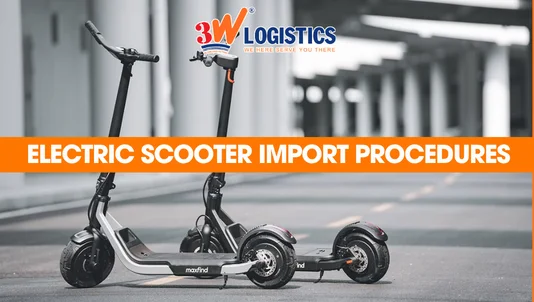
Electric scooter import procedures fall under a personal mobility device category regulated by an entirely different authority than electric motorbikes or electric bicycles – because they are not classified as “motorcycles, mopeds” under the Road Traffic Law, electric scooters (electric kick scooters, hoverboards) are subject to quality management by the Ministry of Science and Technology instead of the Vietnam Register under the Ministry of Transport.
Not every business fully understands the Electric scooter import procedures, especially the difference in regulatory authority compared to electric motorbikes, as well as the additional cultural-content inspection obligation if the product is designed for children and has toy-like characteristics. A mistake in identifying the regulatory authority or missing quality-inspection documentation can result in the entire shipment being held at port.
In this article, 3W Logistics presents the complete electric scooter import procedure according to current legal regulations and the latest tariff schedule – covering legal conditions, HS codes, tax calculation, required documents, step-by-step process, and real-world risks from the perspective of a forwarder experienced in handling personal mobility device imports.
1. Legal conditions for importing electric scooters
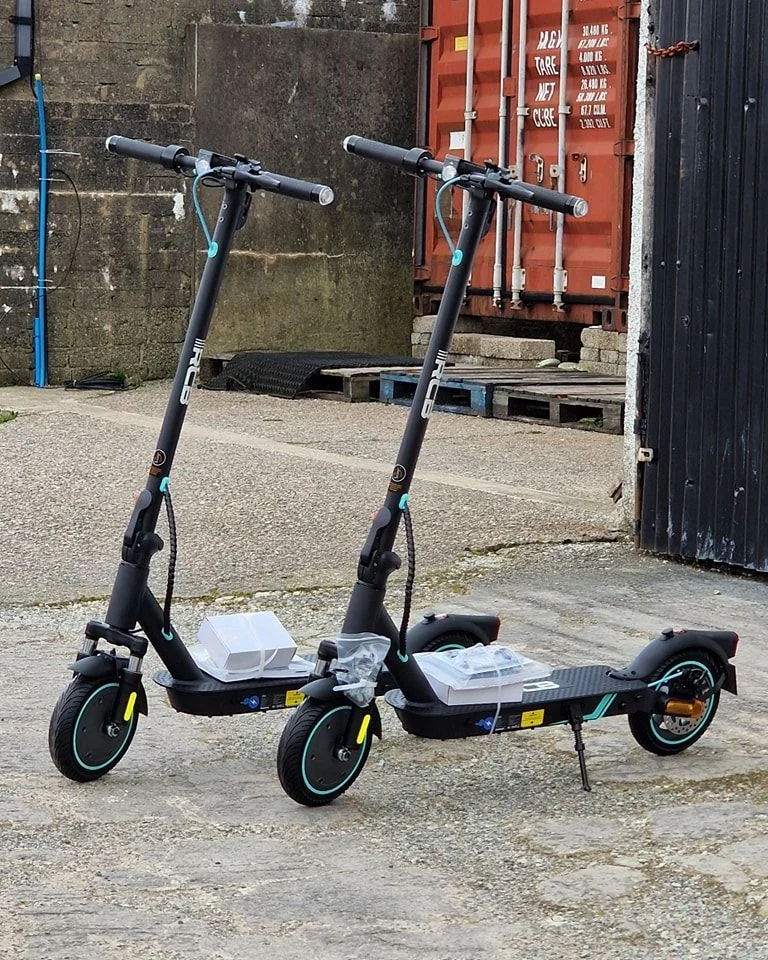
Electric scooters may only be imported brand new (100%); used units fall under the list of goods prohibited from import per Decree 69/2018/ND-CP. The key point in electric scooter import procedures is correctly identifying the specialized regulatory authority, since unlike electric motorbikes, this product category does not fall under the jurisdiction of the Vietnam Register.
| Condition | Detailed Content |
|---|---|
| Quality management authority | Electric scooters are managed under regulations of the Ministry of Science and Technology, unlike electric motorbikes (under the jurisdiction of the Vietnam Register – Ministry of Transport); businesses register quality inspection through the National Single Window Portal, approved by the Sub-Department of Standards, Metrology and Quality |
| Cultural content inspection (if toy-like) | For electric scooter products with educational features aimed at children, resembling toys, an additional cultural inspection of content and imagery is required alongside the standard technical safety quality inspection |
| Conditions for used goods | Used electric scooters fall under the list of goods prohibited from import per Decree 69/2018/ND-CP; businesses may only import brand-new (100%) units |
| Product labeling | Vietnamese-language supplementary label per Decree 43/2017/ND-CP: product name, model, motor power, voltage, battery capacity, origin, importing entity |
Practical note: Many businesses mistakenly apply the same registration process used for electric motorbikes (through the Vietnam Register, Ministry of Transport) to electric scooters, resulting in documents being submitted to the wrong regulatory authority and wasted time on corrections. In electric scooter import procedures, the person handling documentation needs specialized knowledge to correctly identify the responsible authority as the Sub-Department of Standards, Metrology and Quality under the Ministry of Science and Technology, and to separately check whether the product targets children, since this may trigger an additional cultural inspection requirement covering the content and imagery on the product and its packaging.
2. HS code and import tax for electric scooters
Electric scooters fall under heading 87.11 (Motorcycles, including mopeds, and cycles fitted with an auxiliary motor) in the Import-Export Tariff Schedule, specifically the subheading for vehicles propelled by an electric motor.
| Heading/HS Code | Detailed Description | Import Tax (MFN) |
|---|---|---|
| 87.11 — Motorcycles (including mopeds) and cycles fitted with an auxiliary motor, with electric motor for propulsion | ||
| 8711.60.90 | Electric scooters (standing electric scooters, foldable kick scooters) – the most common code when importing electric scooters for adults and teenagers | 20–35% |
| 85.07 — Electric batteries, including lithium-ion batteries | ||
| 8507.60.00 | Lithium-ion batteries for electric scooters, imported separately without the scooter | 0–10% |
| 95.03 — Other toys (applicable if the product is classified as a children’s toy) | ||
| 9503.00.99 | Toy electric scooters for young children, with very low motor power, primarily for entertainment purposes – needs careful cross-checking against toy classification criteria before applying this code | 0–5% |
Important note on HS codes and tax: The standard import tax (without a C/O) for electric scooters under heading 8711.60 ranges around 20-35%. For goods with a valid Certificate of Origin (C/O) – Form E from China, the most common manufacturing market for electric scooters today – the import tax can drop significantly to 0-5%. As for VAT, since electric scooters use an electric motor and have no engine displacement, they are not subject to special consumption tax, and therefore benefit from the preferential VAT rate of 8% applicable through December 31, 2026 under Decree 174/2025/ND-CP instead of the standard 10% rate. In electric scooter import procedures, clearly distinguishing between adult-use products (heading 87.11) and toy-like products for children (heading 95.03) is an important step, as the two groups carry different tax rates and regulatory obligations.
3. Documentation for electric scooter import procedures
The documentation set for electric scooter import procedures follows Circular 38/2015/TT-BTC (amended by Circular 39/2018/TT-BTC) and Decree 43/2017/ND-CP.
| Document | When to Prepare | Important Notes |
|---|---|---|
| Sales Contract | Before deposit payment | Clearly state model, motor power, voltage, intended user (adult/child), and C/O supply terms |
| Commercial Invoice & Packing List | Before goods are shipped | Fully list product name, model, and quantity for each type of electric scooter |
| Bill of Lading | After goods are loaded onto the vessel | Electric scooters contain lithium batteries classified as dangerous goods; must be declared correctly per sea dangerous-goods shipping regulations |
| Technical documentation of the vehicle | Before HS code declaration | Includes motor power, voltage, battery capacity, maximum speed – forms the basis for quality inspection registration and HS code determination |
| Quality Inspection Registration | Before or upon customs declaration filing | Registered through the National Single Window Portal, approved by the Sub-Department of Standards, Metrology and Quality |
| C/O (Certificate of Origin) | Before goods are shipped | Required to reduce import tax from the standard 20-35% rate down to 0-5% under FTA preferences |
| Electronic Customs Declaration (VNACCS/VCIS) | Once documentation is complete | Declare the correct HS code under heading 8711.60, attaching the quality inspection registration receipt number |
4. Step-by-step electric scooter import procedure
Step 1: Check technical specifications and determine the HS code
Determine motor power, voltage, battery capacity, and intended user (adult or child) of the electric scooter, working with the supplier to obtain full technical documentation, then accurately determine the HS code under heading 8711.60.90 or 9503.00.99.
Step 2: Create an account and register quality inspection on the National Single Window Portal
Businesses need an account on the National Single Window Portal system to register quality inspection; the person handling documentation must have the expertise to submit to the correct regulatory authority, the Sub-Department of Standards, Metrology and Quality.
Step 3: Negotiate the contract and request a C/O
Sign the electric scooter purchase contract, clearly stating power, voltage, model, and requiring a C/O as a contract term to benefit from preferential FTA import tax rates.
Step 4: Ship goods to a Vietnamese port
Electric scooters containing lithium-ion batteries are classified as dangerous goods for sea transport; packaging and declaration must follow dangerous goods (DG cargo) regulations to avoid the shipment being refused loading onto the vessel.
Step 5: Customs declaration and document submission at the Customs Sub-Department
After receiving the registration receipt number on the single-window system, proceed to declare the customs declaration on the VNACCS/VCIS system and submit the full import documentation set at the Customs Sub-Department for customs officers to inspect and confirm.
Step 6: Receive quality inspection results, complete customs clearance, and apply labeling
Once the quality inspection results meet requirements, complete customs clearance, apply the Vietnamese-language supplementary label as required, receive the goods, and transport them to the warehouse. Keep all documentation on file to support post-clearance audits if required.
5. How to calculate import tax for electric scooters
Electric scooters are not subject to special consumption tax since they have no engine displacement. For example, with a shipment of 350W electric scooters imported from China (HS code 8711.60.90), CIF value of 400 million VND, comparing cases with and without a C/O Form E:
| Tax / Cost Item | Without C/O (standard 35%) | With C/O Form E/ACFTA (5%) |
|---|---|---|
| CIF value | 400,000,000 VND | 400,000,000 VND |
| Import tax | 35% × 400M = 140,000,000 VND | 5% × 400M = 20,000,000 VND |
| VAT (8%, applicable through 2026) | 8% × (400+140)M = 43,200,000 VND | 8% × (400+20)M = 33,600,000 VND |
| Total tax payable | 183,200,000 VND (~183.2 million) | 53,600,000 VND (~53.6 million) |
| Savings with C/O Form E | ~129,600,000 VND – a very large difference, since the standard import tax on electric scooters is relatively high. Businesses should place special emphasis on securing a full C/O right from the contract negotiation stage. | |
From 3W Logistics’ real-world experience: With electric scooters, the most common mistake we see in electric scooter import procedures is businesses submitting quality inspection registration documents to the wrong authority – accustomed to the electric motorbike process through the Vietnam Register, they mistakenly apply the same approach to electric scooters, when in fact this product category falls under the jurisdiction of the Sub-Department of Standards, Metrology and Quality under the Ministry of Science and Technology. Correctly identifying the responsible authority from the outset, together with preparing full technical documentation, helps businesses avoid wasted time on document corrections and shortens customs clearance time. – Ms. Apple, CCO, 3W Logistics
6. Common risks in electric scooter import procedures
| Risk | Manifestation | Prevention |
|---|---|---|
| Submitting documents to the wrong authority | Mistakenly applying the registration process for electric motorbikes (Vehicle Register) to electric scooters (under Ministry of Science and Technology), leading to wasted time on corrections | Clearly identify the correct specialized regulatory authority from the start, working with someone experienced in quality inspection registration |
| Missing cultural inspection for children’s products | Electric scooter designed for children with toy-like features, but only technical safety quality inspection is performed while content/imagery inspection is missed | Clearly identify the intended user of the product to prepare the full set of documentation required under applicable regulations |
| Confusing used goods with new goods | Accidentally importing used electric scooters (demo units, display units) – which fall under the prohibited import list | Require the supplier to clearly confirm the goods are 100% new, and inspect carefully before signing the contract |
| Improper dangerous goods transport | Lithium-ion batteries in electric scooters not declared or packaged according to dangerous goods standards, resulting in the shipping line refusing to load the cargo | Work with a forwarder experienced in shipping lithium battery-containing goods, with full DG cargo declaration |
| Misapplying HS code between scooters and toys | Confusion between code 8711.60.90 (mobility vehicle) and 9503.00.99 (toy) – customs reclassifies the goods and collects the tax shortfall under Decree 128/2020/ND-CP | Request detailed technical documentation from the manufacturer before declaration; consult a forwarder experienced with personal mobility device shipments |
FAQ – Frequently asked questions about electric scooter import procedures
Question 1: What documents are required for electric scooter import procedures?
The full documentation set for electric scooter import procedures includes: Sales Contract; Commercial Invoice and Packing List; Bill of Lading; technical documentation of the vehicle; Quality Inspection Registration through the National Single Window Portal; C/O (if applicable); Electronic Customs Declaration VNACCS/VCIS. For products with toy-like characteristics aimed at children, additional cultural inspection documentation is required.
Question 2: Which authority manages quality for electric scooter imports?
Electric scooters are managed under regulations of the Ministry of Science and Technology, unlike electric motorbikes, which fall under the jurisdiction of the Vietnam Register – Ministry of Transport. This is an important point to understand when carrying out electric scooter import procedures, in order to submit documentation to the correct regulatory authority from the start.
Question 3: How many types of tax must be paid when importing electric scooters?
Electric scooters are subject to only two layers of tax: (1) Import tax calculated on CIF value, at a standard rate of 20-35% under heading 8711.60, which can drop to 0-5% with a valid C/O; (2) VAT at the preferential rate of 8% applicable through December 31, 2026 under Decree 174/2025/ND-CP. Electric scooters are not subject to special consumption tax since they have no engine displacement.
Question 4: How long do electric scooter import procedures take?
The total time from contract signing to customs clearance is typically 20-30 days, including shipping time and waiting for quality inspection registration results through the National Single Window Portal. For products requiring additional cultural inspection, the timeline may be extended further.
How does 3W Logistics support electric scooter import procedures?
With experience handling a diverse range of personal mobility device imports and registration as an OTI-NVOCC with FMC bond (Federal Maritime Commission) in the US, 3W Logistics provides an end-to-end service for businesses covering electric scooter import procedures – from HS code consultation through to delivery at the distribution warehouse.
Full-package logistics service at 3W Logistics:
- Consultation on accurate HS code determination based on power and intended use: Correctly classifying between headings 8711.60.90 and 9503.00.99, avoiding the risk of reclassification and tax collection shortfalls.
- Support with quality inspection registration at the correct regulatory authority: Submitting documentation to the correct Sub-Department of Standards, Metrology and Quality, avoiding wasted time on corrections.
- Expertise in shipping lithium-ion battery-containing goods: Ensuring correct declaration and packaging under dangerous goods regulations for sea transport.
- Support with practical tax calculation and preference optimization: Advising on obtaining the appropriate C/O to significantly reduce import tax, with up-to-date VAT policy information.
- Electronic customs declaration via VNACCS/VCIS and handling issues at the port of entry: Declaring the correct HS code and quickly handling any additional documentation requests that arise.
Why choose 3W Logistics for your electric scooter import shipment? Because this is a product category frequently confused with electric motorbikes in terms of regulatory authority, businesses need a partner that firmly understands the correct quality inspection registration process from the outset to avoid wasted time on document corrections. We accompany you from the HS code determination stage through to delivery at the warehouse – helping businesses shorten customs clearance time and avoid unnecessary additional costs. Contact 3W for specific guidance before signing your import contract.
Address: 34 Bach Dang, Tan Son Hoa Ward, Ho Chi Minh City
Hotline: +84 28 3535 0087
____________________________
3W Logistics Hanoi Branch
Address: 81A Tran Quoc Toan, Cua Nam Ward, Hanoi
Hotline: +84 24 3202 0482
____________________________
3W Logistics Hai Phong Branch
Address: 8A Lot 28 Le Hong Phong, Gia Vien Ward, Hai Phong
Hotline: +84 225 355 5939
____________________________
3W LOGISTICS CO., LTD – We here serve you there!
Email: info@3w-logistics.com
Website: www.3w-logistics.com

Ms. Apple is the CCO (Chief Commercial Officer) at 3W Logistics, with over 10 years of experience in sales and business operations management.
At 3W Logistics, Ms. Apple is responsible for commercial strategy, corporate customer development, managing a team of more than 50 sales professionals, and improving business performance in the logistics sector.
With practical experience in sales management and market development, Ms. Apple shares professional insights on business logistics solutions, international transportation, freight forwarding, customer management, trade lane development, and growth strategies in the logistics industry.


