
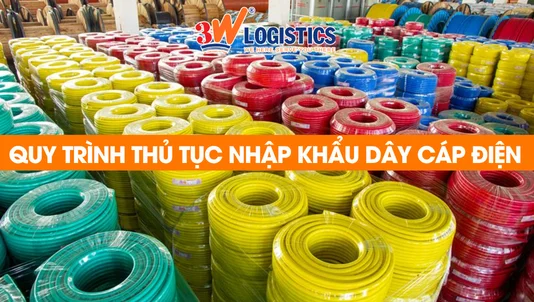
Electric Cable and Wire Imports fall under the category of products and goods with the potential to cause safety hazards (Group 2 goods) under the specialized management of the Ministry of Science and Technology, as they directly relate to electrical safety during use.
This is precisely what makes electric cable and wire import procedures significantly more complex than most ordinary electrical equipment categories – the vast majority of residential-use electric wires and cables must obtain conformity certification and bear the CR mark before being permitted to circulate on the market, rather than simply going through standard customs declaration and duty payment.
Demand for imported electric cables and wires in Vietnam remains consistently high due to the continuous pace of residential and industrial construction and power infrastructure development. However, quite a few businesses run into difficulties in electric cable and wire import procedures when they misdeclare the HS code among the various 8544 subheadings, or overlook the conformity certification requirement for each cable type based on its rated voltage.
In this article, 3W Logistics presents the complete electric cable and wire import procedure under current regulations – from legal conditions, 8-digit HS codes, duty calculation methods, documentation, and step-by-step procedures, to real-world risks, from the perspective of a forwarder experienced in handling imported electrical equipment and electrical supplies.
1. Legal Conditions for Importing Electric Cables and Wires into Vietnam
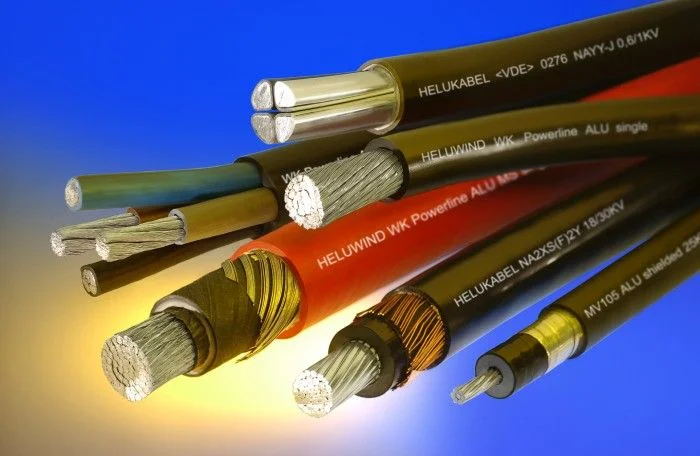
Electric cables and wires are not on the list of prohibited import goods; however, since they belong to the group of products with the potential to cause safety hazards, most types of residential-use electric cables and wires must undergo a conformity certification process before being permitted to circulate in Vietnam.
| Condition | Detailed Content |
|---|---|
| Mandatory conformity certification | Electric wires and cables with a rated voltage up to 450/750V fall under the scope of QCVN 4:2009/BKHCN, requiring mandatory conformity certification and the CR mark before circulation |
| Medium- and high-voltage power cables | Power cables with voltage above 1,000V (medium- and high-voltage) used for power industry projects may be subject to additional separate technical inspection requirements under regulations of the Ministry of Industry and Trade and power sector standards |
| State quality inspection registration | Carried out through the National Single Window Portal before customs clearance, combined with conformity certification under method 5 or method 7 depending on the agreement with the certification body |
| Product labeling | Vietnamese-language supplementary label under Decree 43/2017/ND-CP and 111/2021/ND-CP: wire cross-section, rated voltage, conductor material, origin, importing unit |
Practical note: The most common mistake in electric cable and wire import procedures is when a business prepares only standard customs documentation, forgetting that nearly all residential low-voltage electric wires and cables are subject to mandatory conformity certification. Without registering for quality inspection and obtaining conformity certification before the goods arrive, the shipment cannot clear customs until the full dossier is complete, extending storage time at the port and generating significant extra costs – especially for shipments tied to project timelines already committed to the developer.
2. 8-Digit HS Codes and Import Duty for Electric Cables and Wires
Electric cables and wires fall under heading 8544 (Insulated wire, cable, and other insulated electric conductors). Correctly determining the 8-digit HS code in electric cable and wire import procedures depends on the rated voltage, wire construction, and whether connectors are pre-fitted.
| Product Type | 8-Digit HS Code | Detailed Description | Import Duty (MFN) |
|---|---|---|---|
| Single-core low-voltage wire, no connector | 8544.49.90 | Insulated electric wire, voltage ≤1,000V, without pre-fitted connectors – the most common code when importing residential electric wire | 0-5% |
| Wire/cable with connectors, low-voltage | 8544.42.00 | Wire/cable with voltage ≤1,000V with pre-fitted connectors, commonly used for household electrical appliances and machinery power cords | 5-10% |
| Medium- and high-voltage power cable | 8544.60.00 | Power cables with voltage above 1,000V, used for transmission projects and substations | 0-5% |
| Coaxial cable | 8544.20.00 | Signal cable, TV cable, network cable in coaxial form – not covered by QCVN 4:2009/BKHCN | 10-20% |
| Ignition wiring sets and wiring harnesses for motor vehicles | 8544.30.00 | Specialized wiring harnesses installed on cars, motorcycles, and ships – managed under separate transport industry regulations | 15-20% |
Important note on HS codes and duties: With a valid C/O from China (ACFTA/RCEP), South Korea (VKFTA), or ASEAN (ATIGA), import duty on electric cables and wires can drop significantly below the MFN rate, even to 0% for many subheadings. However, in electric cable and wire import procedures, the biggest HS code risk is not the duty rate itself but misclassifying between wire with connectors and without, or confusing power cable (subject to conformity certification) with signal/network cable (not subject to conformity certification) – this mistake directly affects whether CR certification is required, not merely how much duty is owed.
3. Documentation for Electric Cable and Wire Import Procedures
The documentation set for electric cable and wire import procedures includes an additional layer of quality inspection registration and conformity certification compared to ordinary goods, under Circular 38/2015/TT-BTC (amended by Circular 39/2018/TT-BTC).
| Document | When to Prepare | Important Notes |
|---|---|---|
| Sales Contract | Before making a deposit | Clearly state wire cross-section, rated voltage, manufacturing standard (IEC, TCVN), origin, and C/O provision terms |
| Commercial Invoice & Packing List | Before the goods are shipped | Fully record product name, cross-section, reel/batch length, and weight for each cable type |
| Bill of Lading | After the goods are loaded on the vessel | Electric cables are usually shipped in dry containers; large cable reels require confirming appropriate weight capacity and container size |
| Catalogue/technical documents | Before HS code declaration | Serves as the basis for determining voltage, cross-section, and construction to apply the correct HS code and determine whether QCVN 4:2009/BKHCN applies |
| State quality inspection registration | Before the goods arrive at port | Registered through the National Single Window Portal, tied to the conformity certification process at a designated certification body |
| C/O (Certificate of Origin) | Before the goods are shipped | Necessary to enjoy special preferential import duty under the corresponding FTA if the agreement’s conditions are met |
| Certificate of Conformity (CR) | After test results are available | Submitted as a supplement to customs to complete clearance; also the basis for affixing the CR mark before circulation |
| Electronic customs declaration (VNACCS/VCIS) | Once the dossier is complete | Declare the correct HS code under heading 8544, note the quality inspection registration number and C/O number (if any) on the declaration |
4. Step-by-Step Electric Cable and Wire Import Procedure
Step 1: Determine the Cable Type and Whether QCVN 4:2009/BKHCN Applies
Check the technical specifications (rated voltage, cross-section, construction) of the cable to be imported to determine whether the product falls under mandatory conformity certification – this is the step that determines the entire timeline of electric cable and wire import procedures.
Step 2: Negotiate the Contract and Prepare Technical Documents
Sign the electric cable purchase contract, clearly stating the manufacturing standard, cross-section, and rated voltage; request the supplier to send technical catalogues and test reports (if available) to support quality inspection registration.
Step 3: Register for Quality Inspection and Conformity Certification
Register for quality inspection through the National Single Window Portal, and simultaneously work with the designated certification body to conduct conformity assessment under the appropriate method before the goods arrive.
Step 4: Transport the Goods to a Vietnamese Port
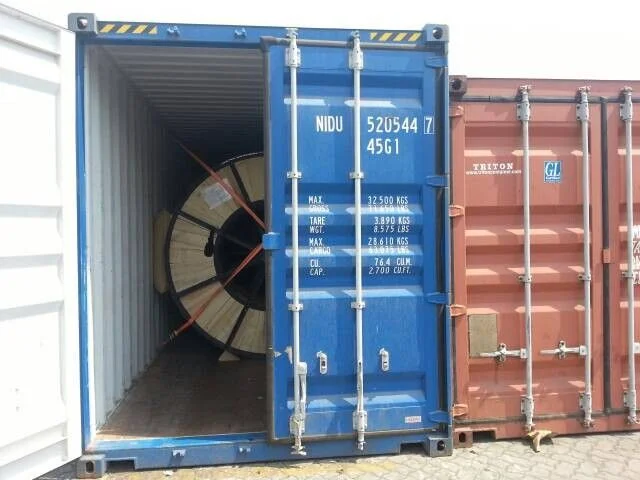
Electric cables and wires are usually shipped in standard dry containers; for large, heavy cable reels, container weight capacity and appropriate loading/unloading arrangements must be calculated to avoid damaging the insulation layer.
Step 5: Customs Declaration and Test Sampling (if required)
Open the VNACCS/VCIS declaration with the complete HS code and quality inspection registration number. For shipments without a valid conformity certificate yet, the certification body will take test samples at the port or storage warehouse.
Step 6: Complete Conformity Certification, Clear Customs, and Release Goods for Circulation
Once a satisfactory conformity certificate is obtained, submit it as a supplement to customs to complete clearance, and affix the CR mark to the product or packaging before putting the electric cables and wires into market circulation.
5. How to Calculate Import Duty for Electric Cables and Wires
Electric cables and wires are not subject to special consumption tax, only import duty and VAT. For example, for a shipment of residential electric wire imported from China (HS code 8544.49.90), with a CIF value of VND 600 million, comparing cases with and without C/O Form E:
| Duty/Cost Item | Without C/O (MFN 5%) | With C/O Form E (0%) |
|---|---|---|
| CIF value | VND 600,000,000 | VND 600,000,000 |
| Import duty | 5% × 600M = VND 30,000,000 | 0% × 600M = VND 0 |
| VAT (10%) | 10% × (600+30)M = VND 63,000,000 | 10% × (600+0)M = VND 60,000,000 |
| Total duty payable | VND 93,000,000 (~93M) | VND 60,000,000 (~60M) |
| Savings with C/O | ~VND 33,000,000 – significant for shipments serving projects with large cable volumes, though this saving does not replace the mandatory conformity certification requirement. | |
From 3W Logistics’ real-world experience: With electric cables and wires, the most common mistake we see in electric cable and wire import procedures is not related to duty but to businesses placing large orders before clearly confirming whether the product is subject to conformity certification – if the conformity certificate is not yet available when the goods arrive, the shipment is forced to wait at port during sample testing, generating significant container demurrage costs, especially for shipments tied to committed construction timelines. We always recommend that clients work with the conformity certification body in parallel with the production and shipping timeline to avoid unplanned costs. – Ms. Apple, CCO, 3W Logistics
6. Common Risks in Electric Cable and Wire Import Procedures
Below are the most common risks in electric cable and wire import procedures that 3W Logistics has observed from real-world shipment handling for clients.
| Risk | Manifestation | Prevention |
|---|---|---|
| Overlooking the conformity certification requirement | Only standard customs documentation is prepared, with no quality inspection registration – the shipment cannot clear customs when customs cross-checks the Group 2 goods list | Check whether the product falls under QCVN 4:2009/BKHCN right from the contract negotiation stage |
| Applying the wrong HS code among 8544 subheadings | Confusing wire with connectors and without, or power cable with signal cable – customs reclassifies and collects the duty difference retroactively under Decree 128/2020/ND-CP | Request a detailed technical catalogue from the manufacturer before declaration; consult a forwarder experienced with electrical equipment categories |
| Incorrect declaration of actual cross-section or weight | The actual wire cross-section or cable reel weight does not match the declaration – suspected of trade fraud, leading to a physical inspection of the entire shipment | Carefully cross-check catalogue specifications against the actual shipment before preparing the invoice and packing list |
| Delays from waiting on conformity test results | Not registering for conformity certification in parallel with shipping time – goods arriving at port must still wait for sampling and testing, generating container demurrage fees | Work with the conformity certification body as soon as the contract is signed, using production/shipping time to complete testing |
| Labeling missing mandatory technical specifications | Missing rated voltage, cross-section, or conductor material on the Vietnamese supplementary label – customs holds the goods and requires the label to be supplemented at the port | Prepare a complete supplementary label sample under Decree 43/2017/ND-CP and 111/2021/ND-CP before the goods arrive at port |
FAQ – Frequently Asked Questions About Electric Cable and Wire Import Procedures
Question 1: What documents are needed for electric cable and wire import procedures?
The complete documentation set for electric cable and wire import procedures includes: Sales Contract; Commercial Invoice and Packing List; Bill of Lading; Catalogue/technical documents; State quality inspection registration; Certificate of Conformity (CR); C/O (if seeking FTA preferences); Electronic customs declaration (VNACCS/VCIS).
Question 2: Is conformity certification mandatory for imported electric cables and wires?
Yes, in most cases. Electric wires and cables with a rated voltage up to 450/750V fall under the mandatory scope of QCVN 4:2009/BKHCN, requiring conformity certification and the CR mark before circulation. This is a point businesses need to determine right from the start when planning electric cable and wire import procedures, to avoid confusion with signal/network cables that are not subject to this management scheme.
Question 3: How many types of duty apply when importing electric cables and wires?
Electric cables and wires are subject to only two layers of duty: (1) Import duty calculated on the CIF value, ranging 0-20% under MFN depending on the subheading, which can be significantly reduced with a valid FTA C/O; (2) VAT of 10% calculated on the total of CIF plus import duty. Electric cables and wires are not subject to special consumption tax.
Question 4: How long do electric cable and wire import procedures take?
The total time from signing the contract to the goods arriving at the warehouse is typically 25-45 days if conformity certification is proactively registered in parallel with the production/shipping timeline. This includes: shipping from China 7-15 days, from Europe 25-35 days; quality inspection registration and customs declaration 3-5 days; testing and issuance of the conformity certificate 7-15 days if test results are not already available.
How Does 3W Logistics Support Electric Cable and Wire Import Procedures?
With experience handling a diverse range of imported electrical equipment and electrical supplies, and registration as an OTI-NVOCC with an FMC bond (Federal Maritime Commission) in the United States, 3W Logistics provides a comprehensive service for businesses regarding electric cable and wire import procedures – from HS code consultation through to the goods arriving at the distribution warehouse.
- Consulting to determine the correct HS code based on voltage and construction: Correctly classifying between subheadings 8544.42, 8544.49, and 8544.60, avoiding the risk of reclassification and retroactive duty collection.
- Checking whether QCVN 4:2009/BKHCN applies before placing the order: Determining whether the product is subject to mandatory conformity certification, helping businesses plan their timeline accurately.
- Support with quality inspection registration and conformity certification: Coordinating with the designated certification body, using production/shipping time to complete testing early.
- Support obtaining the correct FTA form of C/O from the supplier: Guiding Chinese suppliers to obtain Form E, and Korean suppliers to obtain Form VK, to optimize import duty costs.
- Electronic customs declaration (VNACCS/VCIS) and handling issues at the border gate: Declaring the correct HS code, tracking testing progress, and submitting the conformity certificate as a timely supplement.
Why choose 3W Logistics for your imported electric cable shipment? Electric cable and wire import procedures require handling customs regulations and electrical safety conformity certification requirements simultaneously – from accurate HS code classification based on voltage/construction to coordinating testing with the certification body on schedule. We accompany you from the HS code determination step through to the goods arriving at the warehouse – helping businesses shorten clearance time and avoid unnecessary extra costs. Contact 3W for specific advice before signing your import contract.
Address: 34 Bach Dang, Tan Son Hoa Ward, Ho Chi Minh City
Hotline: +84 28 3535 0087
____________________________
3W Logistics Hanoi Branch
Address: 81A Tran Quoc Toan, Cua Nam Ward, Hanoi
Hotline: +84 24 3202 0482
____________________________
3W Logistics Hai Phong Branch
Address: 8A Lo 28 Le Hong Phong, Gia Vien Ward, Hai Phong
Hotline: +84 225 355 5939
____________________________
3W LOGISTICS CO., LTD – We here serve you there!
Email: quote@3w-logistics.com
Website: www.3w-logistics.com

Ms. Apple is the CCO (Chief Commercial Officer) at 3W Logistics, with over 10 years of experience in sales and business operations management.
At 3W Logistics, Ms. Apple is responsible for commercial strategy, corporate customer development, managing a team of more than 50 sales professionals, and improving business performance in the logistics sector.
With practical experience in sales management and market development, Ms. Apple shares professional insights on business logistics solutions, international transportation, freight forwarding, customer management, trade lane development, and growth strategies in the logistics industry.


