

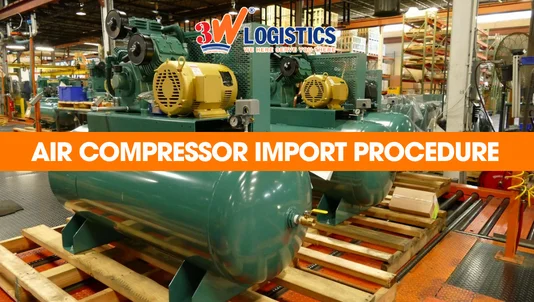
Importing air compressors into Vietnam is basically not on the list of prohibited or restricted import goods; however, for machine types with an integrated compressed air tank (rated working pressure above 0.7 bar), businesses are required to carry out state quality inspection and occupational safety inspection under the management of the Ministry of Labor, Invalids and Social Affairs, in addition to standard customs procedures.
An important point that businesses need to understand clearly when carrying out the air compressor import procedure is clearly distinguishing between two configurations: air compressors without a tank (such as separately imported screw compressor heads) are imported normally without needing quality inspection, while air compressors with an integrated air tank fall under Group 2 equipment according to QCVN 01:2008/BLĐTBXH, requiring mandatory quality inspection registration and technical safety inspection – this is a point many new businesses tend to confuse, leading to incorrect documentation preparation from the outset.
This article by 3W Logistics presents the entire air compressor import procedure according to current legal regulations and the latest tariff schedule – from legal conditions, HS codes, tax calculation, documentation, step-by-step process to actual risks, from the perspective of a forwarder experienced in handling industrial machinery and imported pressure equipment.
1. Legal conditions for importing air compressors into Vietnam
Air compressors are not on the list of prohibited import goods under Decree 69/2018/NĐ-CP (now Decree 187/2023/NĐ-CP); however, the applicable conditions will differ depending on whether the product configuration includes an integrated air tank.
| Condition | Detailed Content |
|---|---|
| Air compressor without a tank | Separately imported screw compressor heads or piston compressors without a pressure tank: imported normally, no state quality inspection required |
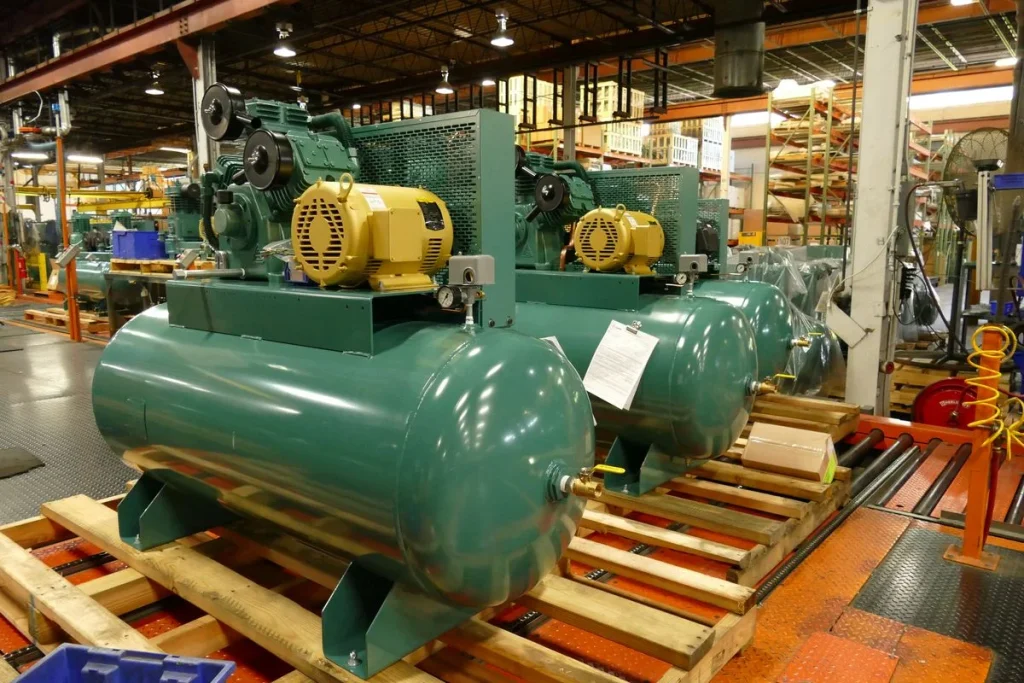
| Air compressor with a tank (pressure >0.7 bar) | Mandatory registration for quality inspection of imported goods and compliance with QCVN 01:2008/BLĐTBXH under Circular 22/2018/TT-BLĐTBXH, since compressed air tanks fall under Group 2 equipment with strict occupational safety requirements |
| Used compressed air tanks imported separately | Absolutely prohibited from import under Decree 69/2018/NĐ-CP due to fire and explosion safety risks, with no exceptions even if technically still in good condition |
| Complete used air compressor unit | Must comply with Decision 18/2019/QĐ-TTg: equipment age calculated from the year of manufacture to the time of import must not exceed 10 years |
| Occupational safety technical inspection after installation | A newly manufactured compressed air tank has an initial periodic inspection term of 3 years, carried out by an inspection organization designated by the Ministry of Labor, Invalids and Social Affairs |
Practical note: The most important point in the air compressor import procedure is to correctly determine the product configuration right from the contract negotiation stage – if a business intends to import an air compressor with a built-in tank to save on domestic installation costs, it should anticipate that the quality inspection registration and safety inspection steps will extend the customs clearance time compared to importing a separate compressor head and purchasing a domestically produced tank.
2. HS code and import tax for air compressors
Air compressors belong to group 84.14 of the Import-Export Tariff Schedule (Chapter 84), classified according to function and installation configuration; separately imported air tanks are declared under Chapter 73.
| Group/HS Code | Detailed Description | Import Tax (MFN) |
|---|---|---|
| 84.14 — Air or vacuum pumps, air or other gas compressors and fans | ||
| 8414.30 | Compressors used in refrigerating equipment (refrigeration compressors) | 0% |
| 8414.40 | Portable air compressors mounted on a wheeled frame, for household/general use | 0% |
| 8414.80.49 | Independently imported screw compressor head, without motor and complete housing (per Official Letter 3710/TCHQ-GSQL) | 0% |
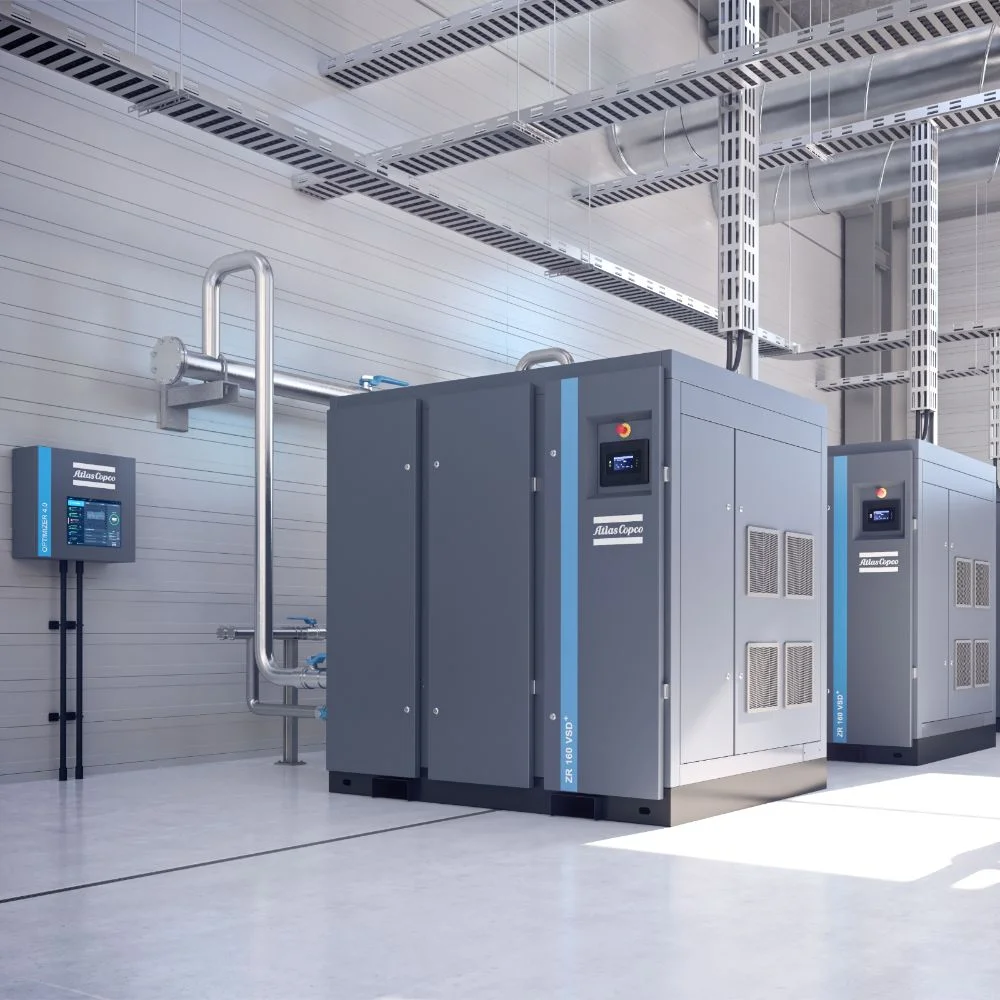
| 8414.80.9x | Other complete screw or piston air compressors not specified in the above subheadings – the most common group for industrial air compressors | 0% |
| 73.11 — Containers for compressed or liquefied gas, of iron or steel | ||
| 7311.00.xx | Compressed air tanks made of iron or steel, imported separately (not attached to a complete air compressor unit) | 0–5% |
Important tax note: This is the most important update point to note in the current procedure for importing air compressors: most HS codes under group 84.14 for air compressors already have an MFN import tax rate of 0%, so businesses do not need to obtain a C/O for additional preferential treatment. However, if importing the air tank separately under code 7311, some cases are still subject to an MFN tax rate, and a valid Form E C/O (ACFTA) helps bring the tax rate down to 0%. Both code groups are also subject to the standard 10% VAT.
3. Documentation required for air compressor import procedure
The documentation set for the air compressor import procedure will include an additional layer of quality inspection registration documents if the product has an integrated air tank that reaches the regulated pressure threshold.
| Document | When to Prepare | Important Notes |
|---|---|---|
| Sales Contract | Before making a deposit | Clearly state the model, capacity, whether or not there is an air tank, and the rated working pressure specification |
| Commercial Invoice & Packing List | Before the goods are shipped | Fully state the model, capacity, and configuration (with/without tank) for each type of machine |
| Bill of Lading | After the goods are loaded onto the vessel | Large industrial air compressors are typically transported using flat rack containers or as break-bulk cargo depending on size |
| Technical catalogue/datasheet | Before the goods are shipped | Necessary to determine the correct HS code and serves as the basis for quality inspection registration if there is a tank |
| Registration for quality inspection of imported goods | When the goods arrive at the port | Mandatory if the machine has an air tank with a pressure above 0.7 bar, under Circular 22/2018/TT-BLĐTBXH |
| C/O (Certificate of Origin) | Before the goods are shipped | Mainly valuable for separately imported air tanks (code 7311) if still subject to MFN tax; air compressors (8414) are already 0%, so it is not mandatory |
| Electronic customs declaration (VNACCS/VCIS) | When documentation is complete | Declare the correct HS code, clearly distinguishing between separately imported screw compressor heads and complete units with a tank |
4. Step-by-step air compressor import procedure
Step 1: Determine the product configuration and HS code
Determine whether the imported air compressor has an integrated air tank, and if so, what its rated working pressure is, in order to determine whether it is subject to mandatory quality inspection under Circular 22/2018/TT-BLĐTBXH.
Step 2: Negotiate the contract and request technical documentation
Sign the contract to purchase the air compressor, and request the supplier to provide a datasheet clearly stating the capacity, machine type (screw/piston), and tank specifications to determine the correct HS code under group 84.14.
Step 3: Register for quality inspection (if there is a tank >0.7 bar)
Submit the quality inspection registration application for imported goods via the National Single Window Portal before or as soon as the goods arrive at the port, as the basis for clearing the shipment that includes a compressed air tank.
Step 4: Transport the goods to a Vietnamese port
Industrial air compressors are usually transported in standard containers or on flat racks for larger equipment, requiring shock-resistant reinforcement for sensor components and pressure regulating valves during transportation.
Step 5: Customs declaration and clearance
Open a VNACCS/VCIS declaration with the full HS code, together with the quality inspection registration result (if applicable) and the C/O if tax preferences are needed for the separately imported tank portion.
Step 6: Occupational safety technical inspection after installation
After installation at the site of use, the business carries out the initial technical safety inspection for the compressed air tank (periodic inspection every 3 years as required), completing all conditions for putting the equipment into official operation.
5. How to calculate import tax for air compressors
Air compressors are not subject to special consumption tax, only import tax and 10% VAT. For example, with a shipment of a 37kW screw air compressor with an air tank imported from Germany (HS code 8414.80.9x, MFN tax rate 0%), CIF value of 2 billion VND:
| Tax / Cost Item | Amount |
|---|---|
| CIF value | 2,000,000,000 VND |
| Import tax | 0% × 2 billion = 0 VND |
| VAT (10%) | 10% × (2,000+0)M = 200,000,000 VND |
| Total tax payable | 200,000,000 VND (~200 million) |
| Note | With HS codes already at the MFN 0% level, the main tax cost comes from VAT; businesses should also budget for quality inspection registration and safety inspection costs (not counted as tax) when the machine has an integrated air tank that reaches the regulated threshold. |
From 3W Logistics’s practical experience: With air compressors, the most common mistake we have recorded is many businesses fail to carefully check the tank pressure specification before signing the contract, resulting in the goods arriving at the port only to discover they are subject to mandatory quality inspection registration under Circular 22/2018/TT-BLĐTBXH, unexpectedly extending the customs clearance time. In addition, some businesses want to separately import used compressed air tanks to save costs but are unaware that this item is absolutely prohibited from import under Decree 69/2018/NĐ-CP, resulting in the goods being completely denied customs clearance. – Ms. Apple, CCO, 3W Logistics
6. Common risks in the air compressor import procedure
| Risk | Manifestation | Prevention Method |
|---|---|---|
| Importing used compressed air tanks | Ordering separately imported used air tanks to save costs – the goods are completely denied customs clearance because they fall under the list of absolutely prohibited imports | Only purchase new air tanks, whether domestically produced or 100% newly imported with complete factory documentation |
| Overlooking quality inspection registration | The air compressor has a tank with a pressure above 0.7 bar but quality inspection is not registered when the goods arrive, making it ineligible for customs clearance | Check the tank pressure specification right from the contract negotiation stage, and prepare the quality inspection registration documentation in parallel |
| Incorrect HS code between separately imported heads and complete units | Confusion between a separately imported screw compressor head (8414.80.49) and a complete unit with motor, housing, and tank – customs reclassifies the goods and collects the tax difference | Cross-check the actual configuration against the product catalogue before declaring the HS code, and refer to Official Letter 3710/TCHQ-GSQL if necessary |
| Importing used machines exceeding the permitted age | The used air compressor has an equipment age over 10 years – not eligible for import under Decision 18/2019/QĐ-TTg | Request the supplier to confirm the year of manufacture via the original label or catalogue before signing the contract |
| Overlooking periodic safety inspection after installation | The air tank’s 3-year inspection period has expired but it is still in operation, violating occupational safety regulations and potentially subject to penalties during an inspection | Set up a periodic inspection reminder schedule right after installation, and work with the designated inspection organization on time |
FAQ – Frequently Asked Questions about air compressor import procedure
Question 1: What documents are needed for the air compressor import procedure?
The complete documentation set for the air compressor import procedure includes: Sales Contract; Commercial Invoice and Packing List; Bill of Lading; Technical catalogue/datasheet; Quality inspection registration (if there is an air tank above 0.7 bar); C/O (if needed for the separately imported tank portion); Electronic customs declaration VNACCS/VCIS.
Question 2: Does an air compressor require quality inspection when imported?
Not always. An air compressor without a tank (such as a separately imported screw compressor head) is imported normally. Only an air compressor with an integrated air tank whose rated working pressure is above 0.7 bar is required to register for quality inspection under Circular 22/2018/TT-BLĐTBXH – this is the core point in the air compressor import procedure that businesses need to clearly determine before signing the contract.
Question 3: Is it possible to import used compressed air tanks?
No. Separately imported used compressed air tanks fall under the list of goods absolutely prohibited from import under Decree 69/2018/NĐ-CP due to fire and explosion safety risks, with no exceptions. Businesses can only import a complete used air compressor unit (including an attached tank) if the equipment age does not exceed 10 years under Decision 18/2019/QĐ-TTg.
Question 4: How many types of tax must be paid when importing an air compressor?
Air compressors are subject to only two layers of tax: (1) Import tax calculated on the CIF value, with most HS codes under group 84.14 already at the MFN rate of 0%; separately imported air tanks under code 7311 may be subject to an MFN tax rate, which can be reduced to 0% with a valid Form E C/O; (2) VAT at the standard rate of 10%, calculated on the total CIF plus import tax. Air compressors are not subject to special consumption tax.
How does 3W Logistics support the procedure for importing air compressors?
With experience handling a wide range of industrial machinery and imported pressure equipment, and registered as an OTI-NVOCC with FMC bond (Federal Maritime Commission) in the US, 3W Logistics provides a complete service for businesses regarding the procedure for importing air compressors – from product configuration consulting to the goods arriving at the distribution warehouse.
Full-package logistics service at 3W Logistics:
- Consulting to determine whether the machine is subject to quality inspection: Cross-checking the tank pressure specification against the 0.7 bar regulatory threshold under Circular 22/2018/TT-BLĐTBXH.
- Determining the HS code and calculating actual tax according to the latest tariff schedule: Accurately distinguishing between a separately imported compressor head and a complete unit to avoid applying the wrong tax rate.
- Supporting quality inspection registration for imported goods: Coordinating with the designated inspection organization and closely tracking progress to shorten customs clearance time.
- Supporting the correct FTA-form C/O application from the supplier: Guiding Chinese and European suppliers to obtain the appropriate C/O for the separately imported tank portion to optimize costs.
- Electronic customs declaration VNACCS/VCIS and resolving issues at the border checkpoint: Declaring the correct HS code, coordinating submission of quality inspection results on time.
Why choose 3W Logistics for your air compressor import shipment? The procedure for importing air compressors requires accurately distinguishing the product configuration and clearly understanding the quality inspection and safety inspection regulations for machine types with a tank. We accompany you from the configuration consulting stage until the goods arrive at the warehouse – helping businesses shorten customs clearance time and avoid unnecessary additional costs. Contact 3W for specific advice before signing the import contract.
Address: 34 Bach Dang, Tan Son Hoa Ward, Ho Chi Minh City
Hotline: +84 28 3535 0087
____________________________
3W Logistics Hanoi Branch
Address: 81A Tran Quoc Toan, Cua Nam Ward, Hanoi
Hotline: +84 24 3202 0482
____________________________
3W Logistics Hai Phong Branch
Address: 8A Lot 28 Le Hong Phong, Gia Vien Ward, Hai Phong
Hotline: +84 225 355 5939
____________________________
3W LOGISTICS CO., LTD – We here serve you there!
Email: info@3w-logistics.com
Website: www.3w-logistics.com

Ms. Apple is the CCO (Chief Commercial Officer) at 3W Logistics, with over 10 years of experience in sales and business operations management.
At 3W Logistics, Ms. Apple is responsible for commercial strategy, corporate customer development, managing a team of more than 50 sales professionals, and improving business performance in the logistics sector.
With practical experience in sales management and market development, Ms. Apple shares professional insights on business logistics solutions, international transportation, freight forwarding, customer management, trade lane development, and growth strategies in the logistics industry.


