Importing plastic pellets is a frequent and ongoing need for thousands of manufacturers of packaging, plastic components, household goods, and construction materials in Vietnam.
Despite being one of the highest-volume and most regularly imported raw material categories, many businesses – particularly those new to importing – still make basic mistakes in the plastic pellets import procedures that lead to customs delays, tax recovery claims, or unnecessary demurrage costs.
In this article, 3W Logistics will walk through the complete plastic pellets import procedures under current regulations – from HS code classification, required documentation, and tax calculation to real-world risks to watch out for – from the perspective of a freight forwarder with over 10 years of experience handling imported plastic raw materials.
1. Are Imported Plastic Pellets Subject to Special Controls?
Virgin resin plastic pellets are not prohibited or restricted imports – no advance permit is required and no mandatory specialized inspection applies under normal regulations.
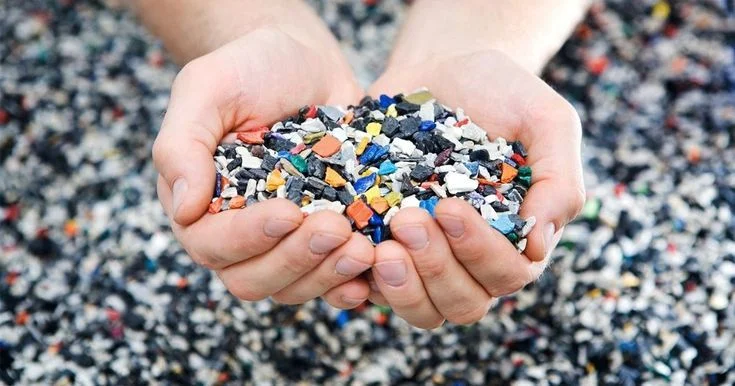
However, there is one important exception: recycled resin plastic pellets derived from imported plastic scrap must comply with the regulations under Decision 73/2014/QĐ-TTg and related circulars governing the import of scrap materials for use as production inputs. Businesses must clearly distinguish between the two types before initiating plastic pellets import procedures.
2. HS Code Classification for Imported Plastic Pellets
Correctly identifying the HS code is the most critical and most error-prone step in the plastic pellets import procedures. Plastic pellets are classified under Chapter 39 of the Import-Export Tariff Schedule – Plastics and articles thereof with numerous headings and subheadings depending on the polymer type.
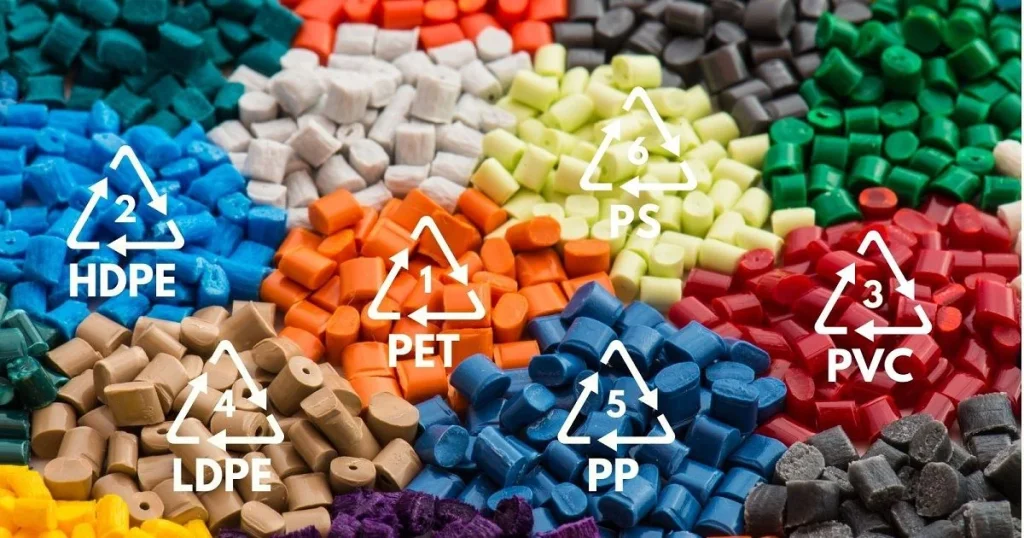
| Plastic Pellet Type | Reference HS Code | Common Applications |
|---|---|---|
| PP (Polypropylene) | 3902.10, 3902.20, 3902.30 | Packaging, automotive parts, household goods, textile fibers |
| PE (Polyethylene) – HDPE, LDPE, LLDPE | 3901.10, 3901.20, 3901.30, 3901.40 | Stretch film, plastic bags, pipes, containers |
| PET (Polyethylene Terephthalate) | 3907.61, 3907.69 | Water bottles, food packaging, polyester fiber |
| PVC (Polyvinyl Chloride) | 3904.10, 3904.21, 3904.22 | Water pipes, construction materials, electrical cables |
| ABS (Acrylonitrile Butadiene Styrene) | 3903.30 | Electronics components, equipment housings, toys |
| PS (Polystyrene) | 3903.11, 3903.19, 3903.20 | Foam boxes, packaging, single-use cups |
| PA (Polyamide / Nylon) | 3908.10, 3908.90 | Mechanical components, high-performance textile fibers |
Important note: The same type of plastic in virgin form, compound form (with additives), masterbatch form (color pellets), or recycled form will carry different HS codes and different duty rates. Do not attempt to determine the HS code based on the trade name or technical name provided by the supplier. Declaring an incorrect HS code in the plastic pellets import procedures is the most common mistake – and the one with the most severe consequences: tax recovery, administrative fines, and shipments held pending reclassification.
3. Documentation for Plastic Pellets Import Procedures
The documentation set for plastic pellets import procedures is relatively streamlined compared to many other specialized product categories – but it demands absolute consistency across all documents. A single discrepancy between the Invoice, C/O, and B/L is enough for customs to reject the C/O and apply MFN duty rates instead of the preferential FTA rate.
| Document | When to Prepare | Key Notes |
|---|---|---|
| Sales Contract | Before placing deposit | Clearly state the chemical name (polymer name), grade, Incoterms, and a clause requiring the supplier to provide a C/O |
| Commercial Invoice | Before shipment | Product name, HS code, unit price (USD/MT or USD/kg), quantity, and total value must match exactly with the Packing List and C/O |
| Packing List | Before shipment | Clearly state the number of bags/cartons, net weight per unit, and total gross weight – critical for reconciliation when customs weighs the cargo |
| Bill of Lading (B/L) | After goods are loaded | The commodity description on the B/L must be specific enough to identify the polymer type – an overly generic description (e.g. “plastic granules”) frequently triggers a physical customs inspection |
| C/O (Certificate of Origin) | Before shipment (supplier applies) | The decisive factor for duty rate – Form E for China, Form D for ASEAN, Form AK for South Korea… Must be requested at the contract negotiation stage; cannot be obtained after the goods have left the port of origin |
| Certificate of Analysis (CoA) | Before or concurrent with shipment | Customs or quality inspection authorities may request the CoA to confirm the correct polymer type and grade – always ask the supplier to include it with each shipment |
| Electronic Customs Declaration (VNACCS) | Once all documents are ready | Declare the correct HS code, customs value, and country of origin; an incorrect HS code is the single biggest risk in plastic pellets import procedures |
4. Step-by-Step Plastic Pellets Import Procedures
Step 1: Determine the HS Code and calculate duties before placing the order
Before signing a purchase contract, the importer must accurately identify the HS code for the plastic pellets to be imported – based on chemical name, polymer structure, grade, and form (virgin, compound, or recycled).
This is a step many businesses skip or handle carelessly, leading to classification disputes with customs after the goods have already arrived. If there is any uncertainty, consult an experienced freight forwarder or submit a written request for an advance ruling from the Customs Authority before declaring.
Step 2: Sign the contract and require the correct FTA C/O
When negotiating the purchase contract, the importer must include a clause requiring the supplier to obtain a C/O in the correct format corresponding to the goods’ origin. For plastic pellets from China – the largest supplier of plastic pellets to Vietnam – the C/O Form E under the ACFTA agreement is the document that determines the applicable duty rate.
Once the goods have left the port of origin, obtaining a supplementary C/O is impossible – this is a mistake many businesses make in the plastic pellets import procedures.
Step 3: Shipping and receipt of the Bill of Lading
Plastic pellets are typically shipped by sea in FCL (full container load – 20′ or 40′) for large volumes, or LCL (less than container load) for smaller trial orders. Pellets packed in 25kg bags generally do not require special storage conditions beyond keeping them dry – however, certain engineering-grade resins are sensitive to temperature and humidity and require attention to container conditions.
Step 4: Customs declaration upon vessel arrival
When the vessel arrives at a Vietnamese port, the forwarder receives the Arrival Notice and files the electronic customs declaration on VNACCS. Plastic pellets have a relatively flexible channel assignment – Green Channel (immediate release), Yellow Channel (document review), or Red Channel (physical inspection) – depending on the documentation quality and the importer’s compliance history. A complete and consistent file from an importer with a strong track record typically results in a Green Channel assignment and very fast clearance.
Step 5: Customs clearance, tax payment, and cargo collection
Once customs confirms the documentation is in order, the importer pays import duty and VAT (import duty on plastic pellets is 0% for most HS codes with a valid FTA C/O) and collects the Delivery Order (D/O) from the shipping line. The cargo is then transported to the warehouse or production facility.
5. How to Calculate Import Duties for Plastic Pellets
This is a section every importer needs to understand clearly before drawing up the financial plan for an order. The duty structure in the plastic pellets import procedures consists of import duty and VAT – with the FTA C/O directly determining the import duty payable.
Duty Rates by Country of Origin and Applicable FTA
| Country of Origin | Applicable C/O | Reference Import Duty | Notes |
|---|---|---|---|
| China | C/O Form E (ACFTA) | 0% | Applies to most HS codes for plastic pellets under Chapter 39 |
| South Korea | C/O Form KV (VKFTA) | 0% | Most HS codes have reached 0% under the VKFTA schedule |
| Thailand, Malaysia, Indonesia (ASEAN) | C/O Form D (ATIGA) | 0% | Most plastic pellet HS codes have reached 0% within the ASEAN bloc |
| Saudi Arabia, UAE, Middle East | No bilateral FTA | 3–10% (MFN) | Varies by HS code; major suppliers of PE and PP pellets but no FTA with Vietnam |
| United States | No bilateral FTA | 3–10% (MFN) | Varies by specific HS code; VAT of 8–10% applies in addition |
Worked Tax Calculation Example
Suppose a business imports 20 metric tons of PP plastic pellets from China, CIF value of USD 30,000, HS code 3902.10.00, MFN duty rate 3%, ACFTA duty rate 0%:
| Tax Item | Without C/O Form E (MFN 3%) | With C/O Form E (ACFTA 0%) |
|---|---|---|
| CIF Value | USD 30,000 | USD 30,000 |
| Import Duty | 3% × 30,000 = USD 900 | 0% × 30,000 = USD 0 |
| VAT (10%) | 10% × (30,000 + 900) = USD 3,090 | 10% × (30,000 + 0) = USD 3,000 |
| Total Tax Payable | USD 3,990 (~VND 102 million) | USD 3,000 (~VND 76 million) |
| Savings with C/O Form E | USD 990 (~VND 25 million) – from a single C/O obtained at no cost from the supplier. For businesses importing 5–10 containers per month, this adds up to hundreds of millions of VND each year. | |
From the real-world experience of 3W Logistics: Plastic pellets are a high-frequency import category – many of our clients bring in 2–4 containers every month. The duty gap between “with C/O” and “without C/O” on each individual shipment may not be as dramatic as it is for machinery, but accumulated over a year it is very significant. What makes it particularly frustrating is that some smaller Chinese plastic pellet suppliers simply do not apply for a C/O unless the buyer specifically requests it – and once the goods have left port, there is no way to recover that document. Building the C/O requirement into the contract from day one is a genuinely money-saving habit for any importing business. – Ms. Apple, CCO, 3W Logistics
6. Common Risks in Plastic Pellets Import Procedures
| Risk | How It Manifests | How to Prevent It |
|---|---|---|
| Incorrect HS Code Declaration | Customs determines a different HS code – back-taxes on the duty differential, administrative penalties, and shipment held pending reclassification | Require the supplier to provide a CoA and the full chemical name; consult an experienced forwarder or request an advance ruling from Customs before declaring |
| Invalid or Missing C/O | C/O information does not match the Invoice or B/L – customs rejects the FTA rate, requiring payment of the higher MFN duty | Review the C/O carefully before the goods leave the port of origin; ensure the product name, quantity, and value match 100% with the Invoice and B/L |
| Wrong Grade or Adulterated Goods | Pellets received differ in grade from what was ordered – directly affects finished product quality; triggers a commercial dispute with the supplier | Require a CoA with every shipment; for new suppliers, place a small trial order before committing to large volumes |
| Confusion Between Virgin and Recycled Resin | Recycled resin imported under standard procedures instead of the scrap import regime – environmental regulation violation, shipment seized for investigation | Confirm the exact status of the goods before signing the contract; if the material is recycled resin, follow the separate scrap import procedures |
| Moisture Damage from Substandard Packaging | 25kg bags punctured, moisture penetrates the pellets – certain engineering resins lose properties if they absorb moisture during transit | Require packaging to meet applicable standards and use a dry container; purchase cargo insurance and photograph the cargo condition upon unstuffing |
FAQ – Frequently Asked Questions About Plastic Pellets Import Procedures
Question 1: Do I need an import licence to import plastic pellets?
Virgin resin plastic pellets are not prohibited or restricted imports – no advance licence is required. Businesses simply need to file an electronic customs declaration on VNACCS with a complete commercial documentation set and pay duties as required to clear customs. Recycled resin derived from imported plastic scrap must follow a separate process under the Ministry of Natural Resources and Environment.
Question 2: What are the HS codes for PP and PE plastic pellets?
PP plastic pellets primarily fall under heading 3902 (polymers of propylene or other olefins), most commonly 3902.10. PE plastic pellets fall under heading 3901 (polymers of ethylene), with HDPE at 3901.20, LDPE at 3901.10, and LLDPE at 3901.30.
However, the specific HS code also depends on the product form (virgin, compound, masterbatch) and the technical specifications of the particular grade – do not determine the HS code without consulting a specialist.
Question 3: How much is the import duty on plastic pellets from China?
With a valid C/O Form E under the ACFTA agreement, most plastic pellet HS codes under Chapter 39 qualify for a 0% import duty rate. Without a C/O Form E, MFN duty typically ranges from 3–10% depending on the HS code. VAT of 8–10% also applies, calculated on the CIF value plus import duty – manufacturing businesses can reclaim this as input VAT.
Question 4: Are imported plastic pellets subject to quality inspection?
Virgin resin plastic pellets are not subject to mandatory quality inspection at the port of entry under normal circumstances. However, customs may assign a Red Channel (physical inspection) to verify the commodity type and HS code, particularly for first-time importers or shipments with unclear documentation.
Question 5: How long do plastic pellets import procedures take?
With a complete documentation set and a Green Channel assignment, plastic pellets import procedures typically take just 1–3 working days from vessel arrival. Yellow Channel (document review) adds approximately 1–2 days. Red Channel (physical inspection) adds a further 3–5 days depending on the port and the volume of cargo to be inspected.
How Does 3W Logistics Support Plastic Pellets Import Procedures?
As a freight forwarder registered as an OTI-NVOCC with FMC bond (Federal Maritime Commission) in the United States, with over 10 years of experience handling imported plastic raw materials, 3W Logistics provides end-to-end service for businesses navigating plastic pellets import procedures – from HS code consultation before the order is placed through to delivery at the production warehouse.
- HS Code advisory and duty calculation before contract signing: Identify the correct HS code for each plastic pellet type based on the CoA and technical specifications; calculate the actual duty cost for each country of origin and applicable FTA – giving businesses complete cost figures before negotiating purchase prices.
- Support in obtaining the correct FTA C/O from the supplier: Guide suppliers in applying for C/O Form E (China), Form D (ASEAN), Form KV (South Korea), or other applicable FTA forms; review the C/O before acceptance to ensure 100% consistency with the Invoice and B/L.
- Vessel booking and freight from major plastic pellet supply markets: Arrange FCL or LCL shipments from China, South Korea, Thailand, Saudi Arabia, the UAE, and other markets to Hai Phong, Da Nang, and Cat Lai (Ho Chi Minh City) ports.
- Electronic customs declaration (VNACCS): Our professional customs team handles the import declaration for plastic pellets, monitors channel assignment, and coordinates rapid responses when customs requests supplementary documents or a physical inspection.
- Support for first-time importers: Full A-to-Z process guidance, assistance with customs code registration, and development of a standard documentation set for subsequent plastic pellet shipments – reducing clearance time from the very first consignment.
Why choose 3W Logistics for imported plastic pellets? Plastic pellets are a high-frequency import with sensitive margins – every small procedural mistake in the plastic pellets import procedures has a direct impact on production costs. We do not just book freight – we make sure the HS code is correct, the C/O is in the right format, and the documentation is consistent from the outset so that cargo clears as quickly as possible at the lowest achievable duty cost. Contact 3W for a consultation before signing your purchase contract.
Address: 34 Bach Dang Street, Tan Son Hoa Ward, Ho Chi Minh City
Hotline: +84 28 3535 0087
____________________________
3W Logistics Hanoi Branch
Address: 81A Tran Quoc Toan Street, Cua Nam Ward, Hanoi
Hotline: +84 24 3202 0482
____________________________
3W Logistics Hai Phong Branch
Address: 8A Lot 28 Le Hong Phong Street, Gia Vien Ward, Hai Phong
Hotline: +84 225 355 5939
____________________________
3W LOGISTICS CO., LTD – We here serve you there!
Email: quote@3w-logistics.com
Website: www.3w-logistics.com

Ms. Apple is the CCO (Chief Commercial Officer) at 3W Logistics, with over 10 years of experience in sales and business operations management.
At 3W Logistics, Ms. Apple is responsible for commercial strategy, corporate customer development, managing a team of more than 50 sales professionals, and improving business performance in the logistics sector.
With practical experience in sales management and market development, Ms. Apple shares professional insights on business logistics solutions, international transportation, freight forwarding, customer management, trade lane development, and growth strategies in the logistics industry.


