
LED lights are one of the fastest-growing import categories in Vietnam’s lighting sector in recent years, sourced mainly from China, South Korea, and several ASEAN countries.
Despite being a common and seemingly simple product, the LED light import procedure falls under mandatory specialized inspection – requiring both a technical regulation conformity declaration and mandatory energy labeling before the product can be sold on the market.
In this article, 3W Logistics presents the complete LED light import procedure under current regulations – covering legal conditions, HS codes, tax calculation, required documents, step-by-step process, and real-world risks, from the perspective of a forwarder with over 10 years of experience handling imported lighting equipment.
1. Legal Conditions and Technical Regulations for Importing LED Lights
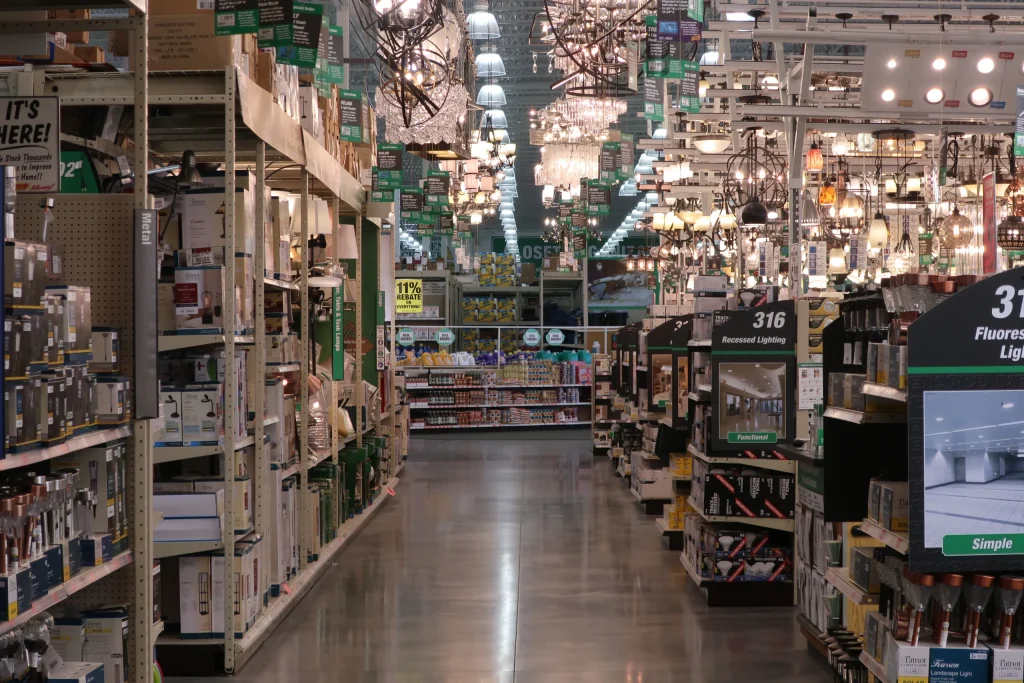
This is the biggest difference between the LED light import procedure and ordinary electronics imports: LED lights fall under the category of products subject to mandatory quality inspection and energy labeling before customs clearance.
| Condition | Details |
|---|---|
| Conformity declaration for LED lighting products | LED lights must be tested and declared conformant under QCVN 19:2019/BKHCN (National technical regulation on LED lighting products) before customs clearance or distribution on the market |
| Mandatory energy labeling | Under Decision 04/2017/QĐ-TTg and Circular 36/2016/TT-BCT, common-use LED lighting products fall under the category requiring an energy label, registered with the Ministry of Industry and Trade before distribution |
| Minimum Energy Performance Standards (MEPS) | Products must meet the minimum energy efficiency level under the corresponding TCVN standard – this is a prerequisite for obtaining a conformity certificate; failure results in denial of market authorization |
| State quality inspection registration | For first-time shipments or when no valid conformity certificate exists, businesses must register for quality inspection at the local Department of Standards, Metrology and Quality before customs clearance |
| Product technical documentation (catalogue, datasheet) | Importers need complete technical documentation: wattage, luminous flux (lumens), luminous efficacy (lm/W), voltage, and lifespan – required for testing and conformity declaration |
Practical note: In the LED light import procedure, the most common mistake is waiting until the shipment arrives at port before looking for a testing lab to complete conformity certification. Actual testing and conformity declaration takes 10-20 working days, while the shipment sits at port accruing container demurrage fees every day. If a valid conformity certificate already exists for the same model/product code from a previous shipment, processing is significantly faster since the existing test results can be reused.
2. HS Code and Import Tax for LED Lights
Determining the correct HS code is a critical step in the LED light import procedure, since each product form (standalone bulb versus complete fixture) falls under a different HS group with a different tax rate. LED bulbs (light-emitting diode lamps) fall under heading 8539, while complete LED fixtures/luminaires (panel lights, floodlights, recessed downlights, street lights) fall under heading 9405.
| LED Light Type | Reference HS Code | MFN Import Tax |
|---|---|---|
| LED bulbs (standalone bulb/tube) | 8539.50.00 | 0-5% |
| Recessed LED lights, panel lights, downlights | 9405.40.90 | 20% |
| LED floodlights, outdoor LED lights, street lights | 9405.40.99 | 20% |
| Chandeliers, decorative hanging LED lights | 9405.10.99 | 25% |
| LED strips, LED modules | 8539.50.00 / 9405.40.90 | 0-20% |
| LED drivers/power supplies | 8504.40.19 | 0-5% |
Important note on LED light HS codes: Many businesses confuse code 8539 (standalone bulbs with standard bases such as E27/E14/G9) with code 9405 (complete fixtures with a housing, where the bulb is not removable). Misclassifying the HS group in the LED light import procedure not only leads to incorrect tax assessment but can also trigger a customs valuation consultation, extending clearance time. It’s also essential to declare the correct wattage (W) and voltage (V) on the customs declaration so it matches the conformity dossier.
Preferential Import Tax on LED Lights by Origin
| Origin | Applicable C/O | Preferential Import Tax | Notes |
|---|---|---|---|
| China | C/O Form E (ACFTA) | 0-5% | The largest source of LED lights imported into Vietnam; most LED tariff lines under ACFTA have already dropped to 0% or near 0% |
| South Korea | C/O Form KV (VKFTA) | 0-8% | High-end LED lights, industrial lighting modules; tax rates decreasing gradually under the VKFTA roadmap |
| ASEAN (Thailand, Malaysia) | C/O Form D (ATIGA) | 0% | Applies when the product meets the minimum 40% ASEAN local content requirement |
| EU (Germany, Netherlands) | C/O Form EUR.1 (EVFTA) | 0-10% | European-brand LED lights, mainly high-end lines for large-scale projects |
| No C/O | Standard MFN tax applies | 20-25% | Significant tax difference compared with having a Form E C/O, especially for high-value shipments |
3. Documents Required for the LED Light Import Procedure
Preparing complete and accurate documents from the outset can significantly shorten the overall time of the LED light import procedure. Compared with ordinary electronics, the document set for the LED light import procedure includes an additional layer – the conformity declaration and energy-label registration – two mandatory documents that many new importers often prepare incompletely or incorrectly.
| Document | When to Prepare | Important Notes |
|---|---|---|
| Sales Contract | Before deposit | Clearly state model, wattage (W), luminous flux (lumens), voltage, quantity, and Incoterms; the supplier should be asked to send the datasheet in advance to prepare the conformity dossier in parallel |
| Commercial Invoice | Before shipment departs | Include model, wattage, quantity, and unit price in full; the information must match exactly with the registered conformity dossier |
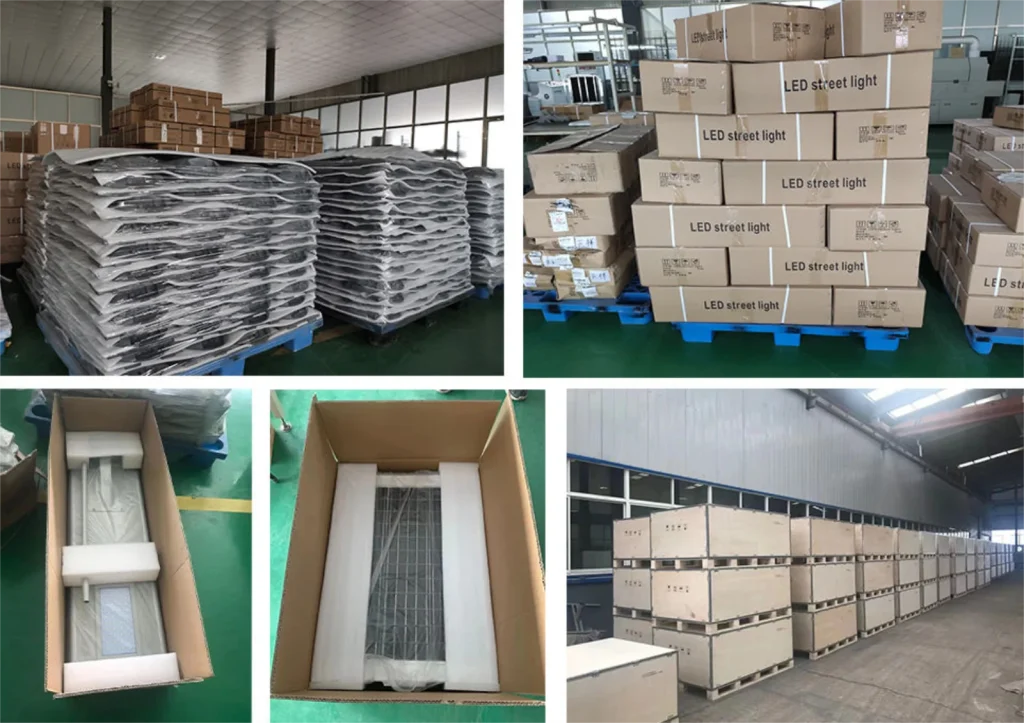
| Packing List | Before shipment departs | State the number of cartons, weight, and packing method clearly – LED lights are fragile, so shock-resistant packing details must be described |
| Bill of Lading / Airway Bill | After the shipment departs | LED lights typically ship by sea (container) for large volumes or by air for sample/urgent orders |
| C/O (Certificate of Origin) | Before shipment departs (supplier applies) | For goods from China, a Form E C/O secures the preferential ACFTA rate instead of the 20-25% MFN rate |
| Conformity Certificate (QCVN 19:2019/BKHCN) | Before the shipment reaches port (if not already held) | Mandatory for every LED model imported for the first time; testing and certificate issuance takes 10-20 working days at a designated testing lab |
| Energy Label Registration Dossier | Before distribution to the market | Submitted to the Ministry of Industry and Trade under Circular 36/2016/TT-BCT; applies to common-use LED lighting (bulbs, tubes), not mandatory for all decorative light types |
| Electronic Customs Declaration (VNACCS) | Once all documents are ready | Declare the correct HS code by product form (8539 or 9405), wattage, and voltage; attach the quality inspection registration number or the valid conformity certificate |
4. Step-by-Step LED Light Import Procedure
The LED light import procedure consists of 6 main steps, from preparing legal documents through to customs clearance and market distribution.
Step 1: Determine the HS code and check whether the model needs new conformity testing
Before placing an order, the business needs to determine the correct HS code based on the product form and check whether the intended LED model already has a valid conformity certificate from a previous shipment. If it’s a completely new model, contact a designated testing lab to prepare test samples in parallel with the ordering process, which can significantly shorten the overall time of the LED light import procedure.
Step 2: Negotiate the contract and request a C/O from the supplier
Sign the sales contract, clearly stating the model, wattage, and technical specifications, and request the C/O directly within the contract terms. For goods from China, ask the supplier to obtain a Form E C/O to benefit from the preferential ACFTA rate – a C/O cannot be requested retroactively once the goods have left the country of origin.
Step 3: Submit test samples and complete the conformity declaration (for new models)
Send LED light samples to a designated testing lab to check the criteria under QCVN 19:2019/BKHCN: luminous efficacy, electrical safety, and electromagnetic compatibility (EMC). Once the results pass, submit the conformity declaration dossier at the local Department of Standards, Metrology and Quality.
Step 4: Ship the goods to Vietnam
LED lights are mainly shipped by sea for large-volume shipments (packed in 20’/40′ containers) or by air for sample shipments or urgent orders. Pay attention to shock-resistant and moisture-resistant packing, since LED lights and their internal electronic components are prone to damage during transport.
Step 5: Register for quality inspection and file the customs declaration
When the shipment arrives at port, the forwarder registers for state quality inspection (if no valid conformity certificate exists) or submits a copy of the existing conformity certificate, while filing the VNACCS declaration with the full HS code, C/O number, and quality inspection information. This step determines the clearance speed of the entire LED light import procedure.
Step 6: Clear customs, complete energy labeling, and bring goods to market
After customs clearance and payment of import tax and VAT, the business must complete energy label registration (if the product falls under the mandatory category) before distributing the product to the market. Skipping the energy labeling step, even after customs clearance, can still result in penalties during market inspection.
5. How to Calculate Import Tax on LED Lights
Tax calculation is the step businesses care about most when researching the LED light import procedure, since it directly affects the final retail price. Unlike automobiles, LED lights are not subject to special consumption tax and only incur two layers of tax: import tax and 10% VAT. For example, for a shipment of recessed LED panel lights imported from China, HS code 9405.40.90, with a CIF value of 500 million VND, comparing with a Form E C/O (3% import tax) versus without a C/O (20% MFN tax):
| Tax / Cost Item | Without C/O (MFN 20%) | With Form E C/O (3%) |
|---|---|---|
| CIF Value | 500,000,000 VND | 500,000,000 VND |
| Import Tax | 20% × 500M = 100,000,000 VND | 3% × 500M = 15,000,000 VND |
| VAT (10%) | 10% × (500+100)M = 60,000,000 VND | 10% × (500+15)M = 51,500,000 VND |
| Total Tax Payable | 160,000,000 VND | 66,500,000 VND |
| Savings with a Form E C/O | 93,500,000 VND – a difference of nearly 100 million VND from a single Form E C/O obtained from a Chinese supplier, on a shipment worth 500 million VND. | |
From 3W Logistics’ real-world experience: In the LED light import procedure, the costliest mistake we encounter isn’t about tax – it’s about conformity certification. Many businesses import a small sample batch to test the market, then place a large order without realizing the model’s specifications have changed from the sample already covered by the conformity declaration – resulting in the entire large shipment being held pending retesting from scratch. We always advise clients to verify technical specifications precisely between batches before placing large orders. – Ms. Apple, CCO, 3W Logistics
6. Common Risks in the LED Light Import Procedure
Most risks in the LED light import procedure stem from slow preparation of conformity documents or a missing C/O, rather than from shipping or ordinary customs declaration issues.
| Risk | Symptom | Prevention |
|---|---|---|
| No conformity certificate when goods reach port | Goods sit at port awaiting testing for 10-20 days, generating significant container demurrage and storage fees | Send test samples in parallel with the shipping timeline; don’t wait until the goods arrive at port to start the conformity process |
| No C/O or an invalid C/O | Must pay the 20-25% MFN tax instead of 0-5% under ACFTA/VKFTA – the difference can reach hundreds of millions of VND on large shipments | Require the C/O directly in the contract terms; verify the C/O matches the Invoice and B/L before the goods are loaded |
| Actual specifications differ from the conformity dossier | The model’s wattage or luminous flux has changed from the declared sample – treated as a non-conforming product, requiring full retesting | Verify exact specifications with the supplier before every shipment, especially when placing a large order after a sample batch |
| Incorrect HS code between heading 8539 and 9405 | Confusing standalone bulbs with complete fixtures leads to incorrect tax assessment, a customs valuation consultation, and delayed clearance | Confirm the HS code based on the exact product structure before filing the declaration; consult a forwarder experienced with lighting products |
| Missed energy label registration | Goods cleared through customs but distributed without an energy label – resulting in penalties during market surveillance inspections | Check whether the product falls under the mandatory energy labeling category and complete registration before bringing goods to market |
FAQ – Frequently Asked Questions About the LED Light Import Procedure
Question 1: What documents are required for the LED light import procedure?
The complete document set for the LED light import procedure includes:
- Sales contract stating full technical specifications (wattage, luminous flux, voltage);
- Commercial Invoice and Packing List;
- Bill of Lading or Airway Bill;
- C/O under the applicable FTA (Form E, Form KV, Form D…);
- Conformity certificate under QCVN 19:2019/BKHCN;
- Energy label registration dossier (if the product falls under the mandatory category);
- Electronic customs declaration (VNACCS).
Question 2: Is conformity declaration mandatory for imported LED lights?
Yes. Under QCVN 19:2019/BKHCN, most LED lighting products fall under the category requiring mandatory conformity declaration before customs clearance or distribution on the market. This is the most important difference between the LED light import procedure and ordinary consumer electronics that are not subject to specialized inspection.
Question 3: Do LED lights imported from China qualify for tax incentives?
Yes – with a valid Form E C/O under the ACFTA agreement, most LED light tariff lines from China are reduced to 0-5% instead of the 20-25% MFN rate. Businesses need to request the Form E C/O directly in the contract terms, as it cannot be obtained retroactively once the goods have left China.
Question 4: How long does the LED light import procedure take?
If the model already has a valid conformity certificate, the LED light import procedure can be completed within 5-7 days after the shipment arrives at port. For a new model requiring first-time conformity testing, the total timeline usually extends to 15-25 days, pending test results from the designated laboratory before clearance can be granted.
How 3W Logistics Supports the LED Light Import Procedure
As a freight forwarding company registered as an OTI-NVOCC with FMC bond (Federal Maritime Commission) in the U.S., with years of experience handling imported electrical and lighting equipment, 3W Logistics provides a full-service solution for the LED light import procedure – from HS code consultation and conformity support through to customs clearance and market readiness.
- HS code consultation and accurate tax calculation before ordering: Determine the correct HS code based on product form (standalone bulbs under heading 8539 or complete fixtures under heading 9405); calculate import tax and VAT for each origin and applicable FTA.
- Support connecting with QCVN 19:2019/BKHCN conformity testing labs: Introduce designated testing labs, guide sample and technical dossier preparation; track testing progress in parallel with shipping to shorten the overall clearance timeline.
- Support obtaining the correct FTA C/O from suppliers: Guide Chinese suppliers in obtaining a Form E C/O, Korean suppliers in obtaining a Form KV C/O; verify the C/O received before the goods are loaded to ensure validity.
- Sea freight and air freight from China, South Korea, and ASEAN: Arrange vessel/flight schedules suited to LED lights – a fragile product requiring careful packing and handling; track shipments in real time.
- Coordinate quality inspection registration and energy labeling: Prepare the state quality inspection registration dossier; support energy label registration with the Ministry of Industry and Trade before goods reach the market.
- Electronic customs declaration (VNACCS) and issue resolution at the border: Declare the correct HS code, wattage, and voltage; monitor the customs channel and quickly respond when customs requests additional documents or technical clarification.
Why choose 3W Logistics for your LED light import shipment? The LED light import procedure requires handling several layers of complexity simultaneously – an accurate HS code, conformity declaration under QCVN 19:2019/BKHCN, energy label registration, and optimized FTA C/O usage. A single mistake in conformity certification or the C/O during the LED light import procedure can leave a shipment sitting at port for weeks or generate unnecessary tax costs. We stand by our clients from HS code determination through to customs clearance and market readiness – helping businesses avoid the most costly mistakes. Contact 3W for specific consultation before signing your import contract.
Address: 34 Bach Dang Street, Tan Son Hoa Ward, Ho Chi Minh City
Hotline: +84 28 3535 0087
____________________________
3W Logistics Hanoi Branch
Address: 81A Tran Quoc Toan Street, Cua Nam Ward, Hanoi
Hotline: +84 24 3202 0482
____________________________
3W Logistics Hai Phong Branch
Address: 8A Lot 28 Le Hong Phong Street, Gia Vien Ward, Hai Phong
Hotline: +84 225 355 5939
____________________________
3W LOGISTICS CO., LTD – We here serve you there!
Email: quote@3w-logistics.com
Website: www.3w-logistics.com

Ms. Apple is the CCO (Chief Commercial Officer) at 3W Logistics, with over 10 years of experience in sales and business operations management.
At 3W Logistics, Ms. Apple is responsible for commercial strategy, corporate customer development, managing a team of more than 50 sales professionals, and improving business performance in the logistics sector.
With practical experience in sales management and market development, Ms. Apple shares professional insights on business logistics solutions, international transportation, freight forwarding, customer management, trade lane development, and growth strategies in the logistics industry.


