

Importing fruits from the US is always an attractive but challenging business segment for many agricultural import enterprises in Vietnam. The demand for premium, safe fruits such as American apples, grapes, and cherries is growing strongly, opening up significant profit opportunities. However, like other fresh food products, this commodity group is subject to strict phytosanitary and food safety controls under customs regulations, creating many difficulties in the import procedures for fruits from the US.
Having a thorough understanding of the Fruit Import Procedures from the US and current regulations is a critical factor that helps businesses stay proactive in their operations. Without careful preparation, businesses can easily face the risk of cargo being held at the port, incurring large storage costs, or more seriously, being forced to re-export or destroy the entire shipment, causing severe financial losses.
1. Requirements for Importing Fruits from the US into Vietnam
Not every type of American fruit is freely permitted for import into Vietnam. Before conducting commercial negotiations, signing contracts, or scheduling shipments, businesses must carefully review the following core legal requirements to ensure their goods are eligible for customs clearance.
Requirements for the Type of Fruit
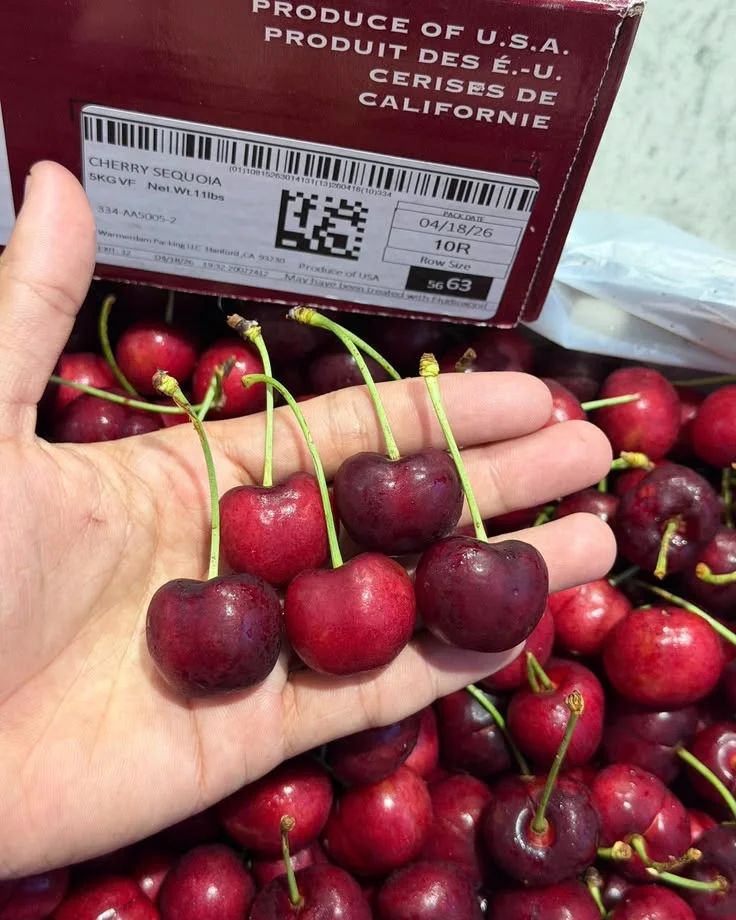
Fresh fruits intended for import from the US to Vietnam must be on the list of commodities that have undergone Pest Risk Analysis (PRA) by the Plant Protection Department (Ministry of Agriculture and Rural Development of Vietnam) and have officially been granted market access. To date, some popular US fruits that are permitted for import include: Apples, Grapes, Cherries, Oranges, Blueberries, and Pears. If a business imports a fruit variety that has not yet been granted market access, the shipment will certainly be refused entry at the border gate.
Requirements for the US Exporter
The orchard and packing house on the American partner’s side must be registered and issued an identification code by the competent US authority (such as the United States Department of Agriculture – USDA) and approved and recognized by Vietnam’s Plant Protection Department as meeting standards for hygiene, safety, and pest treatment (e.g., irradiation or cold treatment methods in accordance with the phytosanitary protocol between the two countries).
Requirements for the Importing Enterprise
Vietnamese businesses carrying out fruit import procedures from the US must hold a valid business registration that includes import-export activities in agricultural products or fresh food. Additionally, businesses must have ready cold storage infrastructure that meets standards, or a cold warehouse rental contract to store goods immediately after pulling the cargo from the port.
2. HS Codes for Fruits Imported from the US
Accurately identifying the HS code (Harmonized System) is a mandatory step for businesses to look up preferential import duty rates, value-added tax (VAT), and prepare the corresponding sector-specific management policies. Fresh fruits for import fall under Chapter 08: Edible fruit and nuts; peel of citrus fruit or melons.
HS Code for Apples: 0808.10.00
HS Code for Grapes: 0806.10.00
HS Code for Cherries: 0809.29.00
HS Code for Oranges: 0805.10.00
HS Code for Blueberries: 0810.40.00
HS Code for Kiwi: 0810.50.00
Important note on Value Added Tax (VAT): According to current tax regulations, fresh fruits at the stage of self-production, harvest for sale, and at the import stage are not subject to VAT. However, when an importing business sells commercially (reselling to distributors, supermarkets, or stores), a VAT rate of 5% applies at this domestic trading stage.
Each type of fruit has a different HS code – do not attempt to guess the HS code based solely on the product name. Authoritative lookup tools include:
- General Department of Vietnam Customs: customs.gov.vn – search by name or code number
- VNACCS/VCIS System: Direct lookup when filing electronic declarations
- Tariff Classification Consultation: Businesses may submit a written request to the Provincial/City Customs Department for official HS code confirmation before shipping to avoid future disputes
- HS Code Lookup Tool: https://caselaw.vn/tra-cuu-ma-hs – search by name or code number
Note: Declaring an incorrect HS code can result in tax recovery demands, the shipment being held pending reclassification, and increased storage costs. If uncertain, businesses may submit a written request for advance tariff classification to the General Department of Customs.
3. Required Documentation for Importing Fruits from the US
The documentation set for fruit import procedures from the US is divided into two main groups: mandatory commercial documents and sector-specific management documents. Discrepancies between these documents are the most common reason cargo is detained at the port.
Standard Commercial and Transport Documents
- Commercial Invoice: Clearly states the value of goods, quantity, and applicable Incoterms (typically CIF or FOB).
- Packing List: Details the number of cartons/packages, net weight, and gross weight of the entire fruit shipment.
- Bill of Lading: Ocean Bill of Lading (for refrigerated containers) or Airway Bill (for air freight), confirming ownership and transport of the shipment.
- Certificate of Origin (C/O): Certifies that the goods were produced in the United States for verification purposes (not used for tariff reduction).
Sector-Specific Management Documents
- Phytosanitary Import Permit: An approval document issued by Vietnam’s Plant Protection Department to the importing enterprise prior to the goods’ arrival.
- Phytosanitary Certificate (Original): A document issued by the USDA confirming that the fruits have undergone pest treatment meeting export standards.
- Phytosanitary Inspection and Food Safety Registration: A successful online registration on the National Single Window system after the goods arrive at a Vietnamese port.
4. Fruit Import Procedures from the US
Fresh fruits fall into the category of perishable goods. Therefore, executing the fruit import procedures from the US requires absolute precision at every time milestone.
Step 1: Apply for a Phytosanitary Import Permit
Before confirming a vessel sailing schedule in the US, businesses must prepare a dossier to submit to the Plant Protection Department to obtain an Import Permit. The electronic dossier review typically takes 5 to 7 working days. If the goods arrive at port before this permit is obtained, the business will face very heavy administrative penalties.
Step 2: Book Reefer Container/Air Freight and Review Draft Documents
The business arranges a reefer container maintaining a stable temperature for sea freight, or books air freight services (commonly used for premium cherries). At this stage, request the American partner to provide a draft Phytosanitary Certificate to cross-check information against the obtained Import Permit, ensuring there are no discrepancies in any characters.
Step 3: Register for Phytosanitary Inspection on the National Single Window Upon Arrival
Upon receiving the Arrival Notice, the customs declarant registers the phytosanitary inspection and food safety check dossier on the National Single Window system. Once the dossier is approved, an acceptance reference number is returned, which the business prints out as the basis for physical sampling.
Step 4: Submit the Customs Declaration and Conduct Phytosanitary Sampling at the Port
The business transmits the electronic customs declaration via VNACCS software (fresh fruit cargo is always classified under Yellow or Red channel). Next, coordinate with the Plant Quarantine Sub-Department at the border gate to go directly to the port or warehouse, break the container seal, conduct a visual inspection, and take actual fruit samples for laboratory analysis.
Step 5: Transfer Goods to Temporary Cold Storage
To protect fruit quality from over-ripening or spoilage due to ambient port temperatures, businesses may submit a request to Customs for permission to “transfer goods for preservation” at a specialized cold warehouse. At this stage, goods may only be stored – selling them on the market is strictly prohibited.
Step 6: Receive Phytosanitary Results and Complete Official Customs Clearance
Within 24–48 hours, if the sample analysis results meet standards (no microorganisms, fungal diseases, or insects listed on Vietnam’s prohibited list), the Plant Quarantine Sub-Department will issue a Conformity Certificate for import. The business submits this certificate to Customs and fulfills import duty obligations to officially clear the shipment.
5. Potential Risks When Carrying Out Fruit Import Procedures
The fresh fruit import business always carries a high rate of risk at the customs border gate. Anticipating these incidents helps businesses proactively develop timely contingency plans.
- Document Error Risk: The Phytosanitary Certificate has the fruit’s scientific name written incorrectly, is missing a USDA confirmation stamp, or the packing house code differs from the initial declaration. This error forces the business to request a replacement certificate (Phytosanitary Replacement Certificate), causing delays of several weeks.
- Cold Chain Disruption Risk: A reefer container suffers a power failure aboard the vessel, or the customs clearance process takes too long, causing the fruit to undergo thermal shock, over-ripen, or rot – resulting in 100% loss of the shipment’s value.
- Detection of Prohibited Insects or Pests: During physical phytosanitary sampling, if live insects from Vietnam’s Group I quarantine pest list are found, the shipment will be denied clearance and must be immediately re-exported or destroyed on-site.
6. How to Calculate Import Duties on Fruits from the US
Since Vietnam and the United States currently have no bilateral Free Trade Agreement (FTA) in effect, fresh fruits imported from the US are not entitled to any preferential tariff rates. The applicable import duty is the default Most Favored Nation (MFN) rate.
Import Duty Calculation Formula:
Import Duty Payable = CIF Value × MFN Tariff Rate
Where the CIF value includes: Ex-works value of goods + International freight charges + Marine/air cargo insurance premium.
Practical Example: A business imports a shipment of US Cherries with a declared CIF value of USD 50,000 (approximately VND 1,250,000,000). The MFN tariff rate for fresh cherries is 10%.
- Import Duty = VND 1,250,000,000 × 10% = VND 125,000,000.
- VAT at import stage = VND 0 (as fresh agricultural products at the import stage are not subject to VAT).
- Total tax obligation at port the business must fulfill: VND 125,000,000.
7. FAQ – Frequently Asked Questions About Fruit Import Procedures from the US
Question 1: How can I verify whether a US orchard has been issued an export code (registration number) for Vietnam?
Businesses can proactively look up the list of US packing houses and growing regions that have been approved by Vietnam’s Plant Protection Department directly on the Department’s official website (ppd.gov.vn). Avoid signing contracts with unregistered orchards that are not yet included in the national linked database system.
Question 2: How long is a Phytosanitary Import Permit valid?
The validity period of a phytosanitary import permit is typically 1 year from the date of issuance, or it will expire once the business has imported the full quantity/volume of goods approved and specifically stated on that permit.
Question 3: What should be done if the original Phytosanitary Certificate is lost during express courier delivery?
Vietnamese customs and phytosanitary authorities are required to inspect and collect the original document. If it is lost, the business must immediately contact their US partner to request that the USDA issue a Certified True Copy or reissue a replacement certificate in accordance with international regulations before the subsequent procedures can proceed.
Question 4: Should a new business with no experience handle fresh fruit import procedures on their own?
Due to the nature of fresh perishable goods and the extremely stringent phytosanitary regulations from the Plant Protection Department, new businesses should choose reputable logistics service providers or freight forwarders specializing in cold chain shipping lanes to delegate the procedures, minimizing documentation errors and customs clearance delays.
How Does 3W Logistics Support Fruit Import Procedures from the US?
As a freight forwarding company registered as an OTI-NVOCC with an FMC Bond (Federal Maritime Commission) in the US and with over 10 years of experience handling import-export cargo by sea, 3W Logistics provides a comprehensive end-to-end service for businesses regarding fruit import procedures from the US – from advising on supplier selection all the way to delivery at the receiving warehouse or distribution point.
- Import Condition Consulting and Quality Standard Identification: Verify whether the intended fruit type meets GLOBALG.A.P, EU, or Vietnamese phytosanitary standards; accurately determine the HS code; and calculate risk costs (duties, quarantine, storage) so businesses have a complete cost picture before signing contracts with US suppliers.
- Phytosanitary Certificate (Plant Health Certificate) Application Support: Guide and remind the US supplier to obtain a compliant Phytosanitary Certificate from the USDA, and review the certificate before shipment to ensure 100% alignment with the Invoice and Bill of Lading – preventing the risk of customs rejection due to missing quarantine documents.
- Vessel Booking and Freight from the US: Arrange FCL or LCL shipments from major US ports (Los Angeles, Long Beach, Savannah, New York, Houston, Oakland) to Vietnamese ports (Hai Phong, Da Nang, Cat Lai HCMC) using specialized reefer containers to maintain appropriate temperature and humidity.
- Phytosanitary Inspection Coordination: Connect businesses with Vietnam’s Plant Protection Department, assist in preparing the import quarantine dossier at the port, and monitor the review progress to ensure cargo clears quarantine in the shortest possible time.
- Electronic Customs Declaration (VNACCS): A professional customs declaration team handles import declarations, cross-checks HS codes and cargo values, and determines the required quarantine type — minimizing processing time when Customs has additional requests or conducts physical inspections.
- Yellow/Red Channel Inspection Handling: Fruits imported from the US are always prioritized for inspection by Customs due to food security concerns – 3W Logistics assists businesses in preparing complete documentation (origin certificates, health certificates, COA) and handles any Customs requirements as quickly as possible.
- Domestic Transport from Port to Cold Warehouse/Distribution Point: Arrange specialized refrigerated trucks, dedicated cranes, and low-temperature storage facilities suited to the perishable nature of various fruits (strawberries, grapes, apples, oranges, lemons, etc.) – ensuring quality from port to final point of consumption.
Head Office – 3W Logistics Ho Chi Minh City Branch
Address: 34 Bach Dang, Tan Son Hoa Ward, Ho Chi Minh City
Hotline: +84 28 3535 0087
____________________________
3W Logistics Hanoi Branch
Address: 81A Tran Quoc Toan, Cua Nam Ward, Hanoi
Hotline: +84 24 3202 0482
____________________________
3W Logistics Hai Phong Branch
Address: 8A Lot 28 Le Hong Phong, Gia Vien Ward, Hai Phong
Hotline: +84 225 355 5939
____________________________
3W LOGISTICS CO., LTD – We here serve you there!
Email: quote@3w-logistics.com
Website: www.3w-logistics.com

Ms. Apple is the CCO (Chief Commercial Officer) at 3W Logistics, with over 10 years of experience in sales and business operations management.
At 3W Logistics, Ms. Apple is responsible for commercial strategy, corporate customer development, managing a team of more than 50 sales professionals, and improving business performance in the logistics sector.
With practical experience in sales management and market development, Ms. Apple shares professional insights on business logistics solutions, international transportation, freight forwarding, customer management, trade lane development, and growth strategies in the logistics industry.


