
Importing frozen meat is one of the most strictly controlled commodity segments in Vietnam’s import-export legal framework – not only in terms of tariffs but also animal quarantine, food safety, and cold chain storage conditions throughout the entire shipping process. Businesses wishing to import frozen meat must have a thorough understanding of the entire process, from origin requirements and specialized documentation to quarantine procedures, before goods are permitted to clear customs and enter the market.
This article provides a comprehensive overview of frozen meat import procedures under current regulations, from the practical perspective of a freight forwarding company with many years of experience handling cold food cargo.
1. Requirements for Importing Frozen Meat into Vietnam
Before negotiating prices or booking a reefer container, businesses must confirm that the shipment and the slaughterhouse/processing facility in the exporting country meet Vietnam’s legal requirements. If goods arrive at port without meeting quarantine conditions, all costs of re-export or destruction are borne by the importer.
Requirements for the Exporting Facility
Under the provisions of Circular 25/2016/TT-BNNPTNT and guiding documents issued by the Department of Animal Health (Ministry of Agriculture and Rural Development), imported frozen meat must originate from:
- A country recognized by Vietnam as being permitted to export meat to Vietnam – the Department of Animal Health publishes and regularly updates this list. Not every country is included, even major meat-producing nations.
- A slaughterhouse/processing facility approved by Vietnam’s Department of Animal Health – meaning the specific plant must be on the list of facilities authorized to export to Vietnam, not merely compliant with standards in its home country.
- The product must be accompanied by a Veterinary/Health Certificate issued by the competent veterinary authority of the exporting country for each individual shipment.
Requirements for the Product
| Criteria | Specific Requirements | Inspecting Authority |
|---|---|---|
| Animal Quarantine | Must have a Veterinary Certificate from the exporting country; must pass quarantine inspection at the Vietnamese border gate | Department of Animal Health / Regional Animal Quarantine Sub-Department |
| Food Safety | Testing of microbiological indicators, antibiotic residues, and hormones in accordance with Vietnamese technical standards | State Food Safety Inspection Authority |
| Product Labeling | A Vietnamese secondary label is mandatory before the product enters circulation; must clearly state origin, expiry date, and storage conditions | Customs / Market Management Authority |
| Storage Temperature | Frozen meat must be maintained at ≤ -18°C throughout; chilled meat at ≤ 4°C – a temperature data logger is required | Quarantine Inspector at Border Gate |
| Product Declaration | Frozen meat being imported for the first time must undergo conformity declaration or self-declaration prior to customs clearance | Ministry of Agriculture and Rural Development / Provincial Department of Agriculture |
2. HS Codes and Import Duties for Frozen Meat
Correctly identifying the HS code is a critical step in frozen meat import procedures – an incorrect HS code not only leads to tax recovery demands but also prolongs customs clearance and may result in administrative penalties.
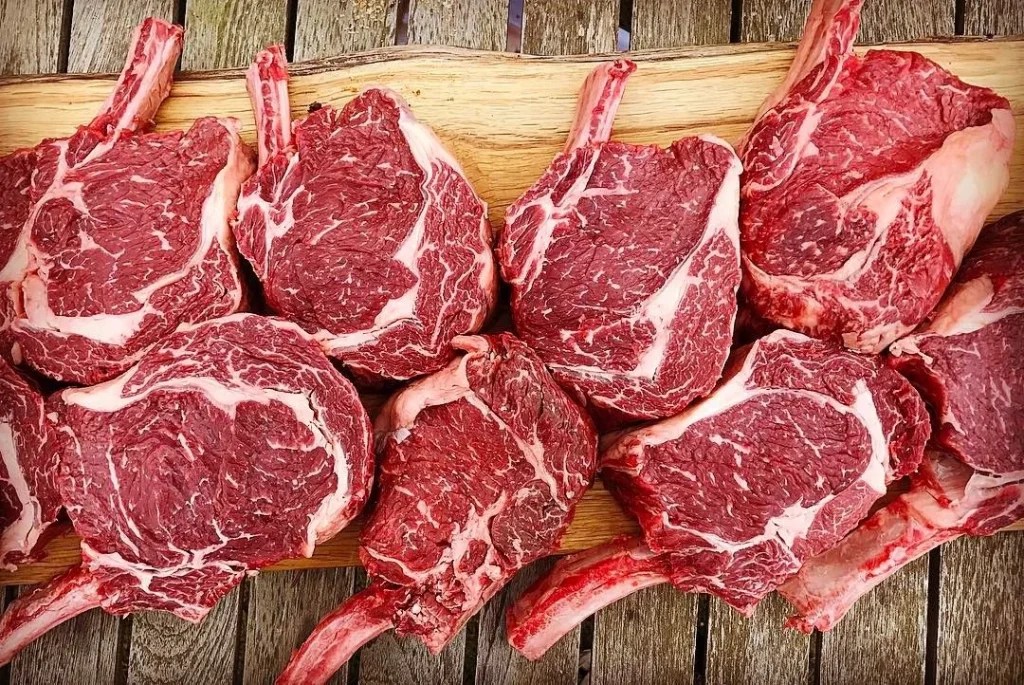
Imported frozen meat falls primarily under Chapter 02 of the Import-Export Tariff Schedule:
- 0201, 0202: Fresh/chilled and frozen beef
- 0203: Fresh/chilled and frozen pork
- 0207: Fresh/chilled and frozen poultry meat (chicken, duck, turkey, etc.)
- 0206: Edible offal of bovine animals, swine, sheep, goats, horses, etc.
- 0210: Meat and edible offal, salted, smoked, or dried
Import duties on frozen meat vary depending on the type of meat, country of origin, and applicable trade agreement. For beef from Australia or New Zealand, businesses may benefit from near-zero AANZFTA/VAFTA tariff rates with a valid C/O. Meat from the US is currently subject to higher MFN rates due to the absence of a bilateral FTA. In addition to import duty, businesses must also pay VAT of 8–10% calculated on the CIF value plus the import duty.
Each type of product has a different HS code – do not attempt to guess it based on the product name alone. Authoritative lookup tools include:
- General Department of Vietnam Customs: customs.gov.vn – search by name or code number
- VNACCS/VCIS System: Direct lookup when filing electronic declarations
- Tariff Classification Consultation: Businesses may submit a written request to the Provincial/City Customs Department for official HS code confirmation before shipment to avoid future disputes
- HS Code Lookup Tool: https://caselaw.vn/tra-cuu-ma-hs – search by name or code number
Practical note: By-products (offal, heart, liver, feet, etc.) and whole carcasses carry significantly different HS codes and duty rates. Do not infer an HS code from the common product name – consult an experienced freight forwarder or submit a formal inquiry to the Customs Department before filing declarations.
3. Documentation for Frozen Meat Import Procedures
The documentation set for frozen meat import procedures is divided into two groups: commercial documents prepared before goods are loaded, and sector-specific documents generated after goods arrive at port. The absence of any document in the specialized group will result in cargo being held at port and incurring very high cold storage costs.
| Document | When to Prepare | Important Notes |
|---|---|---|
| Sales Contract | Before placing a deposit | Clearly specify the meat type, expected HS code, storage conditions, Incoterms, and responsibilities for obtaining C/O and Health Certificate |
| Commercial Invoice & Packing List | Before goods are exported | Product description, HS code, and declared value must be consistent with the C/O and Health Certificate – a single discrepancy will result in the entire dossier being rejected |
| Bill of Lading | After goods are loaded on vessel | Clearly state that goods are transported in a reefer container with the set temperature; must match the customs declaration exactly |
| Certificate of Origin (C/O) | Before goods are exported (obtained by supplier) | Determines whether the FTA preferential rate or MFN rate applies – must be requested from the supplier at the outset; cannot be supplemented after goods have left the port |
| Health / Veterinary Certificate | Before goods are exported (issued by the exporting country’s veterinary authority) | The most critical document specific to meat imports – if absent or not conforming to the template required by Vietnam’s Department of Animal Health, customs clearance will be refused |
| Quarantine Import Registration | Before goods arrive at port (register in advance) | Submitted to the Regional Animal Quarantine Sub-Department at the border gate – can be registered online via the VNACCS portal to reduce waiting time |
| Food Safety Certificate / Product Self-Declaration | Before the first shipment arrives | Mandatory for the first import of each product/supplier combination; subsequent shipments from the same supplier and product are exempt if documentation is already on file |
| Electronic Customs Declaration (VNACCS) | When full documentation is ready | Declare the correct HS code and clearly indicate this is a quarantine-controlled commodity – the system will automatically require quarantine clearance results before allowing customs release |
4. Step-by-Step Frozen Meat Import Procedure
Step 1: Verify Source Conditions Before Signing the Contract
This is the most important – and most frequently overlooked – step. Businesses must confirm: whether the exporting country is on Vietnam’s approved list for meat exports; whether the specific processing plant has been approved by Vietnam’s Department of Animal Health; and whether the intended product falls under any import prohibition or restriction. Check the Department of Animal Health website (cucthuy.gov.vn) or contact the Regional Animal Quarantine Sub-Department at the intended border gate directly.
Step 2: Sign the Contract, Place the Order, and Request Specialized Documents
When negotiating a frozen meat purchase contract, businesses must include contractual clauses requiring the supplier to: obtain a C/O in the format corresponding to the applicable FTA; provide a Veterinary/Health Certificate conforming to the template required by Vietnam’s Department of Animal Health; and provide a temperature data logger throughout the entire shipping journey. These requirements cannot be added after the goods have departed the port of export.
Step 3: Register for Quarantine Inspection Before Goods Arrive
After goods are loaded and a Bill of Lading is available, the business or forwarder submits a Quarantine Import Registration to the Regional Animal Quarantine Sub-Department at the intended border gate. Advance registration significantly reduces quarantine waiting time when the goods actually arrive at port – particularly important for frozen meat, as each day a reefer container is held at the port generates very high costs.
Step 4: File the Customs Declaration and Await Quarantine Results
When the vessel arrives at port (Cat Lai, Hai Phong, Tien Sa, etc.), the business or forwarder submits the electronic customs declaration on VNACCS. Imported frozen meat is always classified under Yellow or Red channel – never Green channel – as it is a commodity group subject to mandatory sector-specific inspection. Simultaneously, the inspection team from the Regional Animal Quarantine Sub-Department conducts a physical inspection of the shipment at the port or cold warehouse.
Step 5: Quarantine Inspection and Food Safety Testing
Quarantine inspectors examine: packaging condition, container temperature (data logger), cross-reference of the Health Certificate against the actual shipment, and collect samples for microbiological and antibiotic residue testing. The waiting time for laboratory results is typically 5–10 working days depending on the scope of testing. If all results meet requirements, the Animal Quarantine Sub-Department issues an Import Quarantine Certificate – this is the mandatory document for customs to release the shipment.
Step 6: Customs Clearance, Tax Payment, and Cargo Collection
Upon receipt of a satisfactory Import Quarantine Certificate, Customs completes the clearance process and confirms the tax obligations (import duty + VAT). The business pays the taxes, obtains the Delivery Order (D/O) from the shipping line, and transports the frozen meat to a cold warehouse while maintaining the required temperature throughout.
5. Costs and Timeframes for Frozen Meat Import Procedures
| Cost Item | Reference Rate | Notes |
|---|---|---|
| Reefer container freight (FCL 20’/40′) | USD 300–600/container higher than standard containers, depending on the trade lane | Reefer electricity surcharges at the port apply additionally while the container awaits customs clearance |
| Quarantine inspection fee at border gate | VND 1–3 million/shipment depending on volume | Official fee from the Animal Quarantine Sub-Department – excludes lab testing fees if in-depth testing is required |
| Food safety laboratory testing fee | VND 2–8 million/test depending on number of indicators | Typically incurred during periodic inspections or for first shipments from a new supplier |
| Customs declaration fee | VND 1–3 million/declaration | Forwarder fee for VNACCS filing and channel monitoring |
| Reefer container demurrage at port | USD 50–150/container/day after free time expires | The most painful cost item if quarantine is prolonged – must be minimized by registering for quarantine early |
| Import duty (depending on origin) | 0% (FTA) to 15–30% (MFN) depending on meat type and HS code | A valid FTA C/O yields significant savings – especially for Australian beef and Brazilian chicken |
| VAT | 8–10% on (CIF value + Import Duty) | Businesses with proper invoicing are eligible for input VAT refunds |
Total process timeline from the time goods arrive at port to delivery at a cold warehouse typically takes 10–20 working days, with quarantine inspection and laboratory result waiting time accounting for the majority of this period. Businesses should carefully calculate reefer container free time and storage costs to avoid unexpected financial burdens.
6. Common Risks and Prevention Measures
| Risk | How It Manifests | Prevention Measures |
|---|---|---|
| Processing plant not approved by the Department of Animal Health | Goods arrive at port, quarantine authority refuses entry – entire shipment must be re-exported | Verify the list of approved facilities at cucthuy.gov.vn before signing the contract |
| Health Certificate with incorrect template or missing information | Department of Animal Health rejects the document – cargo is held, reefer container demurrage accumulates | Provide the exporter with the Health Certificate template required by Vietnam’s Department of Animal Health before goods are shipped |
| Cold chain breach during transit | Data logger records temperature exceeding the threshold – shipment is deemed non-compliant with food safety standards | Require a calibrated data logger inside the container; review the temperature report immediately upon the vessel’s arrival |
| Antibiotic residues exceeding permissible limits | Laboratory results fail – the entire shipment must be destroyed or re-exported | Require the supplier to provide internal test results before shipping; prioritize suppliers with a proven import track record in Vietnam |
| No FTA C/O — MFN duty applied | Must pay MFN duty of 10–30% instead of 0% FTA rate – a difference of hundreds of millions of VND on large shipments | Require the supplier to obtain a C/O under the correct applicable FTA as a contractual clause from the very beginning |
FAQ – Frequently Asked Questions About Frozen Meat Import Procedures
Question 1: What documents are required to import frozen meat into Vietnam?
The frozen meat import documentation set includes: a Sales Contract, Commercial Invoice, Packing List, Bill of Lading, C/O (Certificate of Origin under the applicable FTA), a Veterinary/Health Certificate issued by the exporting country’s veterinary authority, a Quarantine Import Registration submitted to the Regional Animal Quarantine Sub-Department, a product declaration or self-declaration dossier (for first-time imports), and an electronic customs declaration on VNACCS.
Question 2: Is imported frozen meat subject to quarantine inspection?
Yes, it is mandatory. All frozen meat imported into Vietnam must undergo animal quarantine inspection at the border gate, conducted by the Regional Animal Quarantine Sub-Department. This requirement cannot be bypassed, and goods will not be cleared through customs without a satisfactory Import Quarantine Certificate.
Question 3: What are the import duties on frozen meat?
Import duties on frozen meat depend on the type of meat, HS code, and applicable trade agreement. Beef from Australia or New Zealand may be eligible for a 0% rate under AANZFTA; chicken from Brazil or the US is subject to MFN rates that can range from 10–30%. In addition to import duty, a VAT of 8–10% is applied on the CIF value plus the import duty.
Question 4: From which countries is frozen meat imported into Vietnam?
The major frozen meat import markets into Vietnam include: Australia and New Zealand (beef), the US (beef and chicken), Brazil (chicken and pork), India (buffalo meat), South Korea, and Canada. However, businesses must verify the list of approved countries and processing facilities published by Vietnam’s Department of Animal Health before placing any orders.
Question 5: How long does it take to clear imported frozen meat through customs?
The entire process from the time goods arrive at port to customs clearance typically takes 10–20 working days, of which 5–10 days are spent waiting for quarantine inspection results and food safety laboratory testing. Registering for quarantine before goods arrive and preparing a complete documentation set is the most effective way to shorten this timeline.
How Does 3W Logistics Support Frozen Meat Import Procedures?
With over 10 years of experience handling cold food cargo by sea and registered as an OTI-NVOCC with an FMC Bond (Federal Maritime Commission) in the US, 3W Logistics provides end-to-end services for businesses regarding frozen meat import procedures – from pre-contract consultation through to delivery at the business’s cold warehouse.
- Pre-order condition consulting: Confirm whether the exporting country and processing facility are approved by the Department of Animal Health; calculate actual tax costs based on origin and applicable FTA.
- C/O and Health Certificate preparation support: Guide foreign suppliers in preparing a Health Certificate that conforms to Vietnam’s Department of Animal Health requirements and the applicable FTA C/O – preventing the risk of documentation rejection upon arrival.
- Reefer container booking and freight: Arrange refrigerated containers from major overseas ports to Vietnam, monitor temperature throughout the journey, and provide data logger reports to quarantine authorities.
- Quarantine registration and Animal Health coordination: Register for quarantine inspection before goods arrive to minimize waiting time; assist in preparing the quarantine dossier and tracking the Certificate issuance process.
- Electronic customs declaration (VNACCS): A professional customs declaration team handles frozen meat import filings, monitors the customs channel, and resolves any requirements raised by Customs as quickly as possible.
- Domestic cold chain transport: Arrange refrigerated trucks from the port to the business’s cold warehouse, ensuring the required temperature is maintained throughout the entire domestic delivery process.
Why choose 3W Logistics for your frozen meat shipment? Frozen meat is the most sensitive commodity group in food logistics – every day cargo is held at port means a day of reefer demurrage costs and product quality risk. We understand where the bottlenecks lie in the quarantine process and know how to navigate them to clear your goods as quickly as possible. Contact 3W for consultation before signing your purchase contract.
Address: 34 Bach Dang, Tan Son Hoa Ward, Ho Chi Minh City
Hotline: +84 28 3535 0087
____________________________
3W Logistics Hanoi Branch
Address: 81A Tran Quoc Toan, Cua Nam Ward, Hanoi
Hotline: +84 24 3202 0482
____________________________
3W Logistics Hai Phong Branch
Address: 8A Lot 28 Le Hong Phong, Gia Vien Ward, Hai Phong
Hotline: +84 225 355 5939
____________________________
3W LOGISTICS CO., LTD – We here serve you there!
Email: quote@3w-logistics.com
Website: www.3w-logistics.com

Ms. Apple is the CCO (Chief Commercial Officer) at 3W Logistics, with over 10 years of experience in sales and business operations management.
At 3W Logistics, Ms. Apple is responsible for commercial strategy, corporate customer development, managing a team of more than 50 sales professionals, and improving business performance in the logistics sector.
With practical experience in sales management and market development, Ms. Apple shares professional insights on business logistics solutions, international transportation, freight forwarding, customer management, trade lane development, and growth strategies in the logistics industry.


